15 HR Tasks You Should Automate in 2026
Discover the 15 essential HR tasks that should be automated in 2026 to boost efficiency, reduce errors, and free up your team for strategic work.
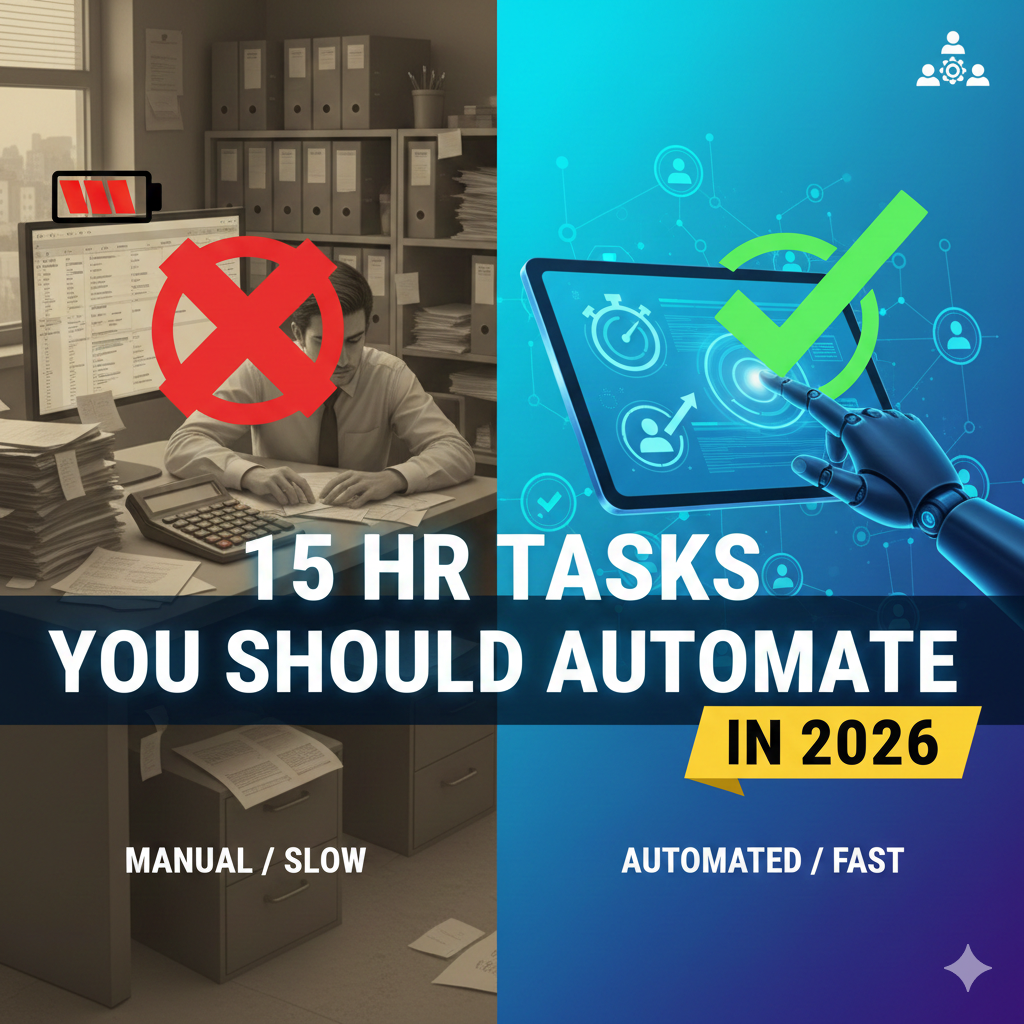
The HR landscape is evolving at breakneck speed. Gone are the days when human resources meant drowning in paperwork and endless filing cabinets. In 2026, successful HR departments focus on people strategy, culture building, and creating exceptional employee experiences.
Yet many HR teams still find themselves bogged down by repetitive administrative tasks that consume precious time and energy. This is where automation becomes your secret weapon – transforming routine operations while eliminating errors and ensuring compliance.
By automating mundane tasks, HR professionals can redirect their focus toward initiatives that truly drive organizational success. Here are 15 specific HR functions that you should prioritize for automation to maximize efficiency and impact.
Why HR Automation is No Longer Optional
Before diving into the specific tasks, it’s crucial to understand why automation has become essential for modern HR operations. Manual processes aren’t just time-consuming – they’re risky. A single payroll error or compliance oversight can damage employee trust and create costly legal issues.
Automation delivers benefits beyond mere efficiency:
- Error Reduction: Eliminates human mistakes in critical processes
- Compliance Assurance: Maintains consistent adherence to regulations
- Employee Satisfaction: Provides the digital experiences workers expect
- Strategic Focus: Frees HR teams for high-impact initiatives
- Cost Savings: Reduces operational expenses through efficiency gains
15 HR Functions Ready for Automation
1. Payroll Processing
Payroll represents the most critical yet error-prone HR function. Manual calculations risk miscalculations that can severely damage employee trust and satisfaction. Automated payroll systems handle complex calculations, tax withholdings, and deductions while ensuring timely, accurate payments every time.
Key Benefits:
- Eliminates calculation errors
- Ensures compliance with tax regulations
- Provides real-time reporting and analytics
- Integrates seamlessly with time tracking systems
2. Employee Onboarding
First impressions matter tremendously in the employee experience. Manual onboarding processes often result in lost paperwork, delayed setup, and confused new hires. Automated onboarding creates a streamlined journey that makes new employees feel welcomed and prepared from day one.
Automation Features:
- Digital document collection and e-signatures
- Automated task assignment and tracking
- Equipment and access provisioning workflows
- Progress monitoring and reminder systems
3. Recruitment and Applicant Tracking
Manually reviewing hundreds of resumes is incredibly inefficient and prone to bias. Applicant Tracking Systems (ATS) can screen candidates based on predefined criteria, schedule interviews automatically, and maintain consistent communication throughout the hiring process.
Core Capabilities:
- Resume parsing and candidate scoring
- Automated interview scheduling
- Candidate communication workflows
- Reporting and analytics on hiring metrics
4. Time and Attendance Tracking
Paper timesheets and manual calculations are relics of the past. Modern time tracking solutions allow employees to clock in via mobile apps or biometric scanners, automatically syncing data with payroll systems to eliminate errors and time theft.
Advanced Features:
- Real-time attendance monitoring
- Overtime calculation and alerts
- Integration with project management tools
- Detailed analytics and reporting
5. Leave and Absence Management
Managing vacation requests through email chains creates confusion and scheduling conflicts. Automated leave management systems provide self-service portals where employees can check balances, submit requests, and receive instant approvals while keeping team calendars updated.
System Benefits:
- Real-time leave balance tracking
- Automated approval workflows
- Calendar integration and conflict detection
- Comprehensive absence reporting
6. Performance Reviews
Traditional annual reviews are often chaotic affairs filled with paperwork and scheduling nightmares. Performance management automation streamlines the entire process from goal setting to final evaluations, enabling more frequent and meaningful feedback cycles.
Enhanced Capabilities:
- Automated review cycle management
- 360-degree feedback collection
- Goal tracking and progress monitoring
- Performance analytics and insights
7. Benefits Administration
The complexity of managing health insurance, retirement plans, and various employee benefits can be overwhelming. Automated benefits platforms provide self-service enrollment, real-time plan comparisons, and seamless data integration with providers.
Key Features:
- Self-service enrollment portals
- Plan comparison tools
- Automated eligibility management
- Provider data synchronization
8. Compliance and Reporting
Staying current with ever-changing labor laws and regulations is a constant challenge. Compliance automation tools monitor regulatory changes, update policies accordingly, and generate required reports automatically to avoid costly violations.
Compliance Tools:
- Regulatory change monitoring
- Automated policy updates
- Report generation and filing
- Audit trail maintenance
9. Learning and Development
Manual training assignment and tracking is inefficient and often incomplete. Learning Management Systems (LMS) automatically assign role-based training, track completion rates, and issue certificates while maintaining detailed learning records.
LMS Benefits:
- Role-based training automation
- Progress tracking and reporting
- Certification management
- Skills gap analysis
10. Employee Offboarding
Proper offboarding protects both the organization and departing employees. Automated workflows ensure timely access revocation, asset recovery, and exit interview completion while maintaining security and positive relationships.
Offboarding Workflows:
- Access revocation automation
- Asset tracking and recovery
- Exit interview scheduling
- Knowledge transfer facilitation
11. Employment Contract Generation
Creating individual contracts for each new hire is time-intensive and error-prone. Contract automation pulls data from recruiting systems to populate standardized templates, ensuring legal accuracy and consistency across all agreements.
Contract Automation:
- Template-based generation
- Data integration from HR systems
- Legal compliance checking
- Digital signature workflows
12. Expense Management
Processing expense reports manually is tedious for both employees and administrators. Modern expense management systems allow photo receipt capture, automatic categorization, and policy compliance checking with streamlined approval workflows.
Expense Features:
- Mobile receipt capture
- Automatic categorization
- Policy compliance checking
- Integrated approval workflows
13. Employee Satisfaction Surveys
Understanding employee sentiment requires consistent feedback collection. Automated survey tools conduct regular pulse surveys, analyze responses in real-time, and provide actionable insights without manual intervention.
Survey Automation:
- Scheduled pulse surveys
- Real-time response analysis
- Sentiment tracking over time
- Actionable insight generation
14. Internal Communications
Keeping everyone informed shouldn’t require constant manual effort. Automated communication tools schedule announcements, send targeted messages based on employee attributes, and ensure consistent information distribution across the organization.
Communication Tools:
- Scheduled message distribution
- Audience targeting and segmentation
- Multi-channel delivery options
- Engagement tracking and analytics
15. Employee Data Management
Maintaining accurate employee records is fundamental to HR operations. Self-service portals allow employees to update their information directly, ensuring data accuracy while reducing administrative burden on HR staff.
Data Management Features:
- Self-service update portals
- Data validation and verification
- Change tracking and audit logs
- Integration with other HR systems
Implementation Strategy for HR Automation
Successfully automating these HR functions requires a strategic approach:
Phase 1: Assessment and Prioritization
- Audit current processes and identify pain points
- Evaluate ROI potential for each automation opportunity
- Consider integration requirements with existing systems
- Plan resource allocation and timeline
Phase 2: Technology Selection
- Research vendors and solution capabilities
- Conduct pilot programs with key processes
- Evaluate user experience and adoption factors
- Negotiate contracts and implementation terms
Phase 3: Implementation and Training
- Develop change management strategies
- Provide comprehensive user training
- Monitor adoption rates and gather feedback
- Adjust processes based on early results
Phase 4: Optimization and Expansion
- Analyze performance metrics and outcomes
- Identify additional automation opportunities
- Scale successful implementations across the organization
- Continuously refine and improve processes
Measuring Success: Key Performance Indicators
Track these metrics to demonstrate automation value:
Efficiency Metrics:
- Time saved per process
- Processing error rates
- Employee self-service adoption
- Administrative cost reduction
Experience Metrics:
- Employee satisfaction scores
- Process completion times
- User adoption rates
- Support ticket volume
Strategic Metrics:
- HR team focus on strategic initiatives
- Compliance audit results
- Overall operational efficiency
- Return on automation investment
Future-Proofing Your HR Operations
The organizations that thrive in 2026 and beyond will be those that embrace automation strategically. By automating these 15 essential HR tasks, you’ll create a foundation for:
- Enhanced Employee Experience: Seamless, digital-first interactions
- Strategic HR Focus: More time for culture and talent development
- Operational Excellence: Consistent, error-free processes
- Competitive Advantage: Faster, more efficient operations
- Scalable Growth: Systems that grow with your organization
Conclusion: The Time for HR Automation is Now
The gap between administrative processing and strategic leadership continues to widen. Organizations that automate these critical HR functions will see dramatic improvements in efficiency, accuracy, and employee satisfaction.
The benefits extend far beyond cost savings – automation enables your HR team to focus on what truly matters: building an engaged, productive, and thriving workforce that drives business success.
Start by assessing your current processes and identifying the biggest bottlenecks. Modern HR automation tools are more accessible and affordable than ever, making this transformation achievable for organizations of all sizes.
Your employees expect digital experiences that match what they encounter in their personal lives. By automating these 15 HR tasks, you’ll not only meet those expectations but position your organization as a forward-thinking employer of choice in an increasingly competitive talent market.