Biometric vs Cloud: Choosing the Best Time and Attendance System
Discover the key differences between biometric and cloud-based time and attendance systems to make the right choice for your business.
Biometric vs Cloud: Choosing the Best Time and Attendance System
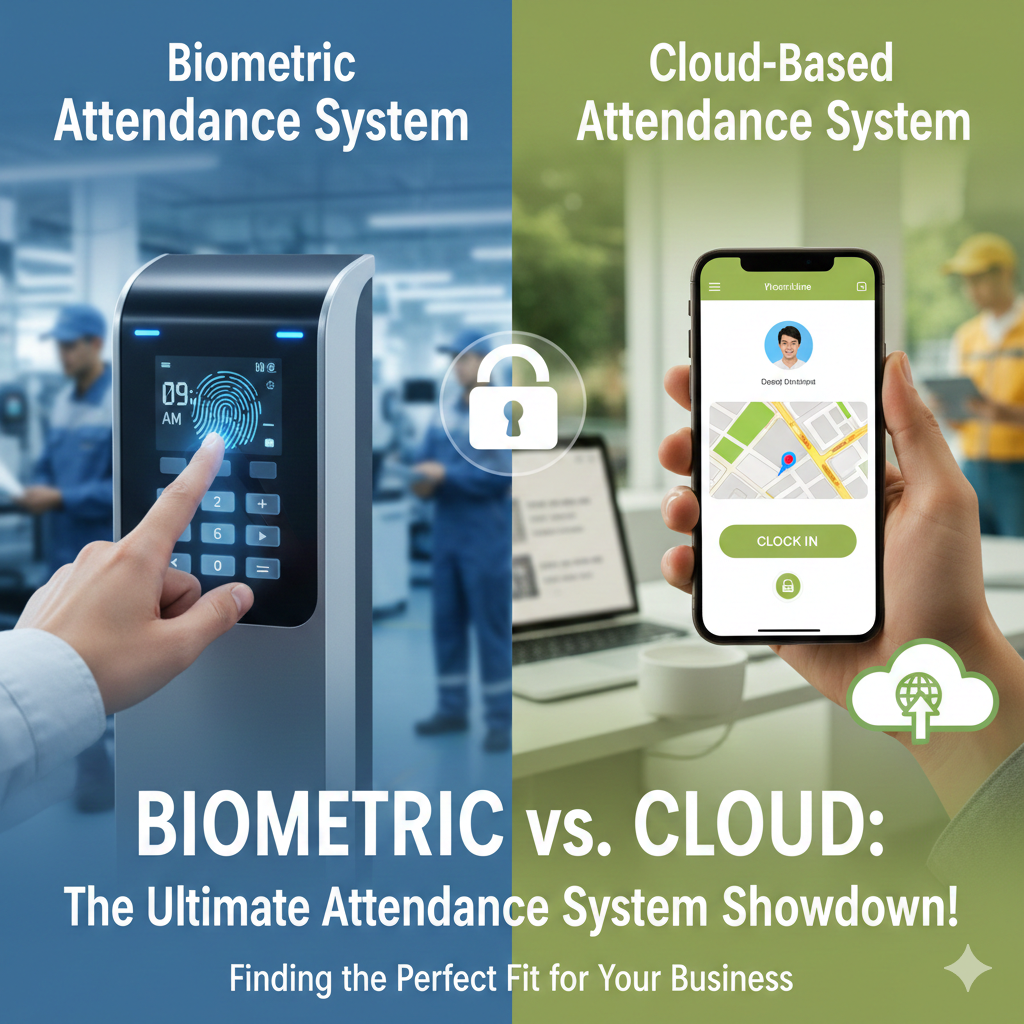
In today’s fast-paced business environment, choosing the right time and attendance system is crucial for operational efficiency and employee satisfaction. Two dominant technologies have emerged as leaders in this space: biometric systems and cloud-based solutions. Each offers unique advantages and faces distinct challenges.
This comprehensive guide will help you understand both systems, evaluate their strengths and weaknesses, and determine which solution best fits your organization’s needs.
Understanding Biometric Attendance Systems
Biometric attendance systems use unique biological characteristics to identify and track employees. Instead of traditional punch cards or PIN codes, employees use their fingerprints, facial recognition, iris scans, or voice patterns to clock in and out.
Key Features of Biometric Systems:
- Unique identification: Uses individual biological traits
- Hardware-dependent: Requires specialized scanners and terminals
- On-site operation: Functions at fixed physical locations
- High accuracy: Virtually eliminates identity fraud
Advantages of Biometric Systems
Unmatched Security and Accuracy Biometric systems provide the highest level of security in attendance tracking. Since biological traits are unique to each individual, the system completely eliminates “buddy punching” - where one employee clocks in for an absent colleague. This accuracy forms a reliable foundation for payroll calculations and compliance reporting.
No Lost Cards or Forgotten Passwords Employees become their own access key. This eliminates the administrative burden of replacing lost ID cards, resetting forgotten passwords, or managing physical tokens. The convenience factor significantly reduces help desk requests and administrative overhead.
Quick and Efficient Processing Once set up, the clocking process is instantaneous. A simple scan takes seconds, reducing queues during peak times when multiple employees need to clock in simultaneously.
Challenges of Biometric Systems
High Initial Investment The upfront costs can be substantial, particularly for smaller businesses. Hardware procurement, installation, and system integration require significant capital investment before seeing any returns.
Location Constraints Biometric systems are inherently tied to physical locations. They’re impractical for remote workers, field employees, or staff who work across multiple sites. This limitation becomes critical as work arrangements become more flexible.
Health and Privacy Considerations In health-conscious environments, shared biometric scanners can raise hygiene concerns. Additionally, storing and managing biometric data involves strict privacy regulations and security requirements that vary by jurisdiction.
Exploring Cloud-Based Attendance Systems
Cloud-based attendance systems operate through internet connectivity, allowing employees to clock in using smartphones, tablets, or computers via mobile apps or web portals. All data is stored and processed in the cloud, providing real-time access from anywhere.
Core Features of Cloud Systems:
- Internet-based operation: Accessible from any connected device
- Real-time synchronization: Instant data updates across all platforms
- Scalable architecture: Easy to add users and locations
- Integration capabilities: Connects with other business systems
Benefits of Cloud-Based Systems
Ultimate Flexibility and Remote Access Cloud systems excel in modern work environments. Employees can clock in from home offices, client sites, or while traveling. Managers gain real-time visibility into attendance patterns, can approve time-off requests, and generate reports from anywhere with internet access.
Cost-Effective Implementation With no specialized hardware requirements, initial costs remain low. Most cloud solutions operate on subscription models, allowing businesses to scale expenses with growth while maintaining predictable monthly costs.
Seamless Integration and Scalability Adding new employees or locations is straightforward, requiring no additional hardware. These systems typically integrate well with existing HR software, payroll systems, and project management tools, creating streamlined workflows.
Advanced Features and Analytics Cloud systems often include GPS tracking, geofencing capabilities, advanced reporting, and analytics dashboards. These features provide insights into productivity patterns and help optimize workforce management.
Limitations of Cloud Systems
Internet Dependency Reliable internet connectivity is essential for both employees and managers. Network outages or poor connectivity can disrupt time tracking, though many modern systems include offline modes for temporary data storage.
Potential Security Vulnerabilities While generally secure, cloud systems depend on third-party providers for data protection. Organizations must carefully evaluate security protocols, encryption standards, and compliance certifications of their chosen provider.
Trust-Based Operation Cloud systems rely more heavily on employee honesty compared to biometric systems. While GPS and geofencing provide location verification, determined individuals might find ways to circumvent these controls.
Making the Right Choice: Decision Framework
Choose Biometric Systems When:
- Physical presence is mandatory: Manufacturing, healthcare, retail, or construction environments
- Maximum security is required: High-security facilities or environments handling sensitive information
- All employees work on-site: Traditional office or production environments
- Long-term ROI is prioritized: Organizations that can absorb higher upfront costs for lower ongoing expenses
Choose Cloud-Based Systems When:
- Workforce flexibility is essential: Remote teams, hybrid work models, or field-based employees
- Rapid scaling is anticipated: Growing companies or seasonal workforce variations
- Integration needs are complex: Organizations using multiple HR and business management systems
- Budget constraints exist: Smaller businesses or startups with limited capital
The Hybrid Approach: Best of Both Worlds
Many forward-thinking organizations are adopting hybrid solutions, combining biometric systems for on-site workers with cloud-based tracking for remote employees. This approach provides:
- Complete workforce coverage: Every employee type is accommodated
- Optimal security levels: Each work environment gets appropriate protection
- Unified reporting: Consolidated view of all attendance data
- Flexible expansion: Easy adaptation as business needs evolve
Implementation Best Practices
Regardless of your choice, successful implementation requires:
Thorough Needs Assessment
- Analyze your workforce composition
- Evaluate current pain points
- Consider future growth plans
- Assess technical infrastructure
Stakeholder Engagement
- Involve HR, IT, and management teams
- Gather employee feedback
- Address privacy and security concerns
- Plan comprehensive training programs
Pilot Testing
- Start with a small group
- Monitor performance and acceptance
- Gather feedback and make adjustments
- Gradually expand to full deployment
Future Trends and Considerations
The attendance tracking landscape continues evolving with emerging technologies:
Artificial Intelligence Integration AI-powered systems are becoming smarter at detecting anomalies and providing predictive insights about attendance patterns.
Mobile-First Design As smartphones become ubiquitous, systems are increasingly optimized for mobile interfaces and functionality.
Enhanced Analytics Modern systems provide deeper insights into workforce productivity, helping organizations make data-driven decisions.
Privacy by Design New solutions are being built with privacy considerations from the ground up, addressing growing regulatory requirements.
Conclusion: Making an Informed Decision
The choice between biometric and cloud-based attendance systems shouldn’t be viewed as selecting a winner and loser. Instead, focus on which solution aligns best with your organizational structure, work culture, and strategic objectives.
If your organization prioritizes security, accuracy, and operates primarily from fixed locations, biometric systems offer unmatched reliability. For businesses embracing flexibility, remote work, and rapid scaling, cloud-based solutions provide the adaptability needed in today’s dynamic environment.
Consider starting with a thorough assessment of your specific needs, involving key stakeholders in the decision-making process, and potentially exploring hybrid solutions that combine the strengths of both approaches. The right attendance system will enhance operational efficiency while supporting your organization’s unique way of working.
Remember, the best system is the one that your employees will actually use consistently and that provides the data accuracy and insights your organization needs to thrive.