Decoding India's New Labour Codes: A Landmark Reform
Understand India's revolutionary labour code reforms that consolidate 29 laws into 4 comprehensive codes, transforming employment for 400 million workers.
Decoding India’s New Labour Codes: A Landmark Reform
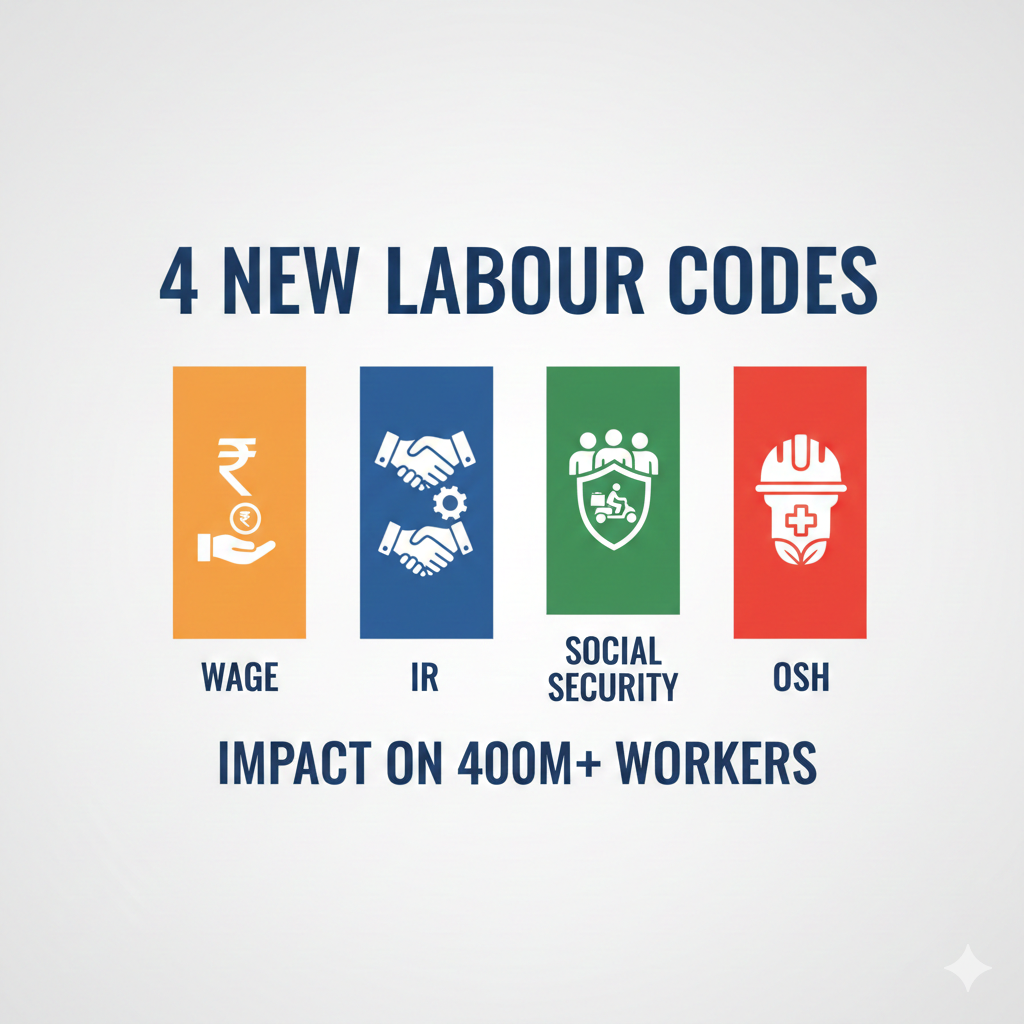
India’s employment landscape has undergone a seismic transformation with the introduction of comprehensive labour code reforms. This monumental legislative overhaul consolidates 29 existing labour laws into four streamlined codes, impacting over 400 million workers across the nation.
These reforms represent more than just legal consolidation – they signify India’s commitment to creating a modern, equitable, and transparent employment ecosystem. The new codes aim to balance employer flexibility with enhanced worker protection, extending formal employment benefits to previously unprotected segments of the workforce.
This comprehensive guide examines the four new labour codes, their key provisions, implementation challenges, and the far-reaching implications for both employers and employees in India’s evolving economy.
The Genesis of Labour Law Reform
India’s labour legislation had grown into a complex web of 29 central laws and over 100 state-level regulations, creating confusion, compliance challenges, and enforcement difficulties. This fragmented approach hindered business growth while failing to protect many workers, particularly those in the informal economy.
The government’s ambitious reform initiative addresses these systemic issues by:
- Simplifying compliance through unified definitions and procedures
- Extending coverage to previously unprotected worker categories
- Modernizing regulations to reflect contemporary work arrangements
- Enhancing enforcement through digital mechanisms and standardized processes
- Promoting transparency in employer-employee relationships
The Four Pillars: Comprehensive Code Overview
1. The Code on Wages, 2019
This foundational code establishes uniform wage standards across all sectors and states, replacing four existing wage-related laws.
Key Provisions:
- Universal minimum wage coverage for all employees
- National floor wage as the baseline for state minimum wages
- Simplified wage definitions eliminating ambiguity in calculations
- Equal pay provisions mandating gender-neutral compensation
- Timely payment requirements with statutory penalties for delays
Impact on Wage Structure: The code mandates that basic wages constitute at least 50% of total compensation, significantly affecting salary structures across industries. This provision increases provident fund contributions and gratuity calculations while potentially reducing take-home pay for some employees.
2. Industrial Relations Code, 2020
This code modernizes the framework governing employer-employee relationships, trade unions, and industrial disputes.
Revolutionary Changes:
- Increased threshold for retrenchment approvals from 100 to 300 employees
- Simplified trade union registration with reduced membership requirements
- Enhanced worker participation through mandatory worker representation on company boards
- Streamlined dispute resolution mechanisms promoting negotiation over litigation
- Fixed-term employment recognition providing security for contract workers
Flexibility and Security Balance: The code provides employers greater operational flexibility while ensuring workers receive enhanced job security through formal recognition of fixed-term contracts and improved grievance redressal mechanisms.
3. Code on Social Security, 2020
This progressive legislation extends social security coverage to all workers, including those in the informal and gig economy.
Historic Expansion:
- Universal coverage extending beyond traditional employment relationships
- Gig worker inclusion providing social security for platform workers
- Unified social security framework consolidating multiple schemes
- Employer contribution requirements for informal sector workers
- Portable benefits allowing workers to carry benefits across jobs
Gig Economy Integration: For the first time, delivery partners, ride-hailing drivers, freelancers, and other gig workers gain access to provident fund, insurance, and maternity benefits, formalizing their previously precarious employment status.
4. Occupational Safety, Health and Working Conditions Code, 2020
This code establishes comprehensive safety standards applicable to all workplaces, regardless of sector or size.
Safety Revolution:
- Universal application covering all establishments with workers
- Comprehensive safety standards including mental health considerations
- Mandatory safety committees in establishments with specific employee thresholds
- Regular health checkups at employer expense
- Enhanced penalties for safety violations
- Digital compliance monitoring enabling transparent inspections
Women’s Workplace Rights: The code specifically addresses gender-related workplace safety, allowing women to work in all sectors and shifts while ensuring appropriate safety measures and facilities.
Transformative Changes: Impact Analysis
For Employees: Enhanced Rights and Protections
Immediate Benefits:
- Formalization of employment through mandatory appointment letters
- Reduced leave qualification period from 240 to 180 working days
- Equal treatment for contract workers including gratuity after one year
- Expanded social security access covering gig and informal workers
- Strengthened grievance mechanisms with time-bound resolution procedures
Long-term Advantages:
- Career portability through transferable social security benefits
- Enhanced job security with improved termination procedures
- Gender equality enforcement through equal pay mandates
- Health and safety protections extending to all work environments
- Collective bargaining strength through simplified union formation
For Employers: Compliance Simplification with Increased Responsibility
Operational Advantages:
- Unified compliance framework reducing regulatory complexity
- Digital documentation requirements streamlining administrative processes
- Flexible employment arrangements through recognized fixed-term contracts
- Standardized definitions eliminating interpretational ambiguities
- Single registration process for multiple compliances
New Obligations:
- Enhanced social security contributions for broader worker categories
- Mandatory health and safety investments across all establishments
- Equal pay compliance requiring compensation audits
- Digital record maintenance with real-time reporting capabilities
- Worker participation requirements in management decisions
Implementation Challenges and Mitigation Strategies
Compliance Transition
Key Challenges:
- System integration requirements for payroll and HR systems
- Training needs for HR teams on new regulations
- Cost implications of enhanced benefits and safety measures
- State-level variations in implementation timelines
- Technology infrastructure requirements for digital compliance
Strategic Approaches:
- Phased implementation allowing gradual system adaptation
- Professional consultation for complex compliance requirements
- Technology investment in integrated HR and payroll systems
- Employee communication programs explaining benefit changes
- Regular audit mechanisms ensuring ongoing compliance
Enforcement Mechanisms
Digital Infrastructure: The codes emphasize technology-driven compliance monitoring through:
- Online registration systems for faster processing
- Digital inspection protocols reducing corruption risks
- Automated reporting mechanisms ensuring accuracy
- Real-time compliance dashboards for regulatory oversight
- Mobile applications for worker grievance reporting
Economic Impact: Macro and Micro Perspectives
Macroeconomic Implications
Formalization Drive: The codes are expected to bring millions of workers into the formal economy, resulting in:
- Increased tax revenue through expanded formal employment
- Enhanced GDP calculations including previously unmeasured economic activity
- Improved labor productivity through better working conditions
- Foreign investment attraction due to transparent labor regulations
- Social security system strengthening through broader contribution base
Industry-Specific Impacts
Manufacturing Sector:
- Enhanced flexibility in hiring through fixed-term contracts
- Increased compliance costs due to expanded safety requirements
- Improved worker productivity through better conditions
Technology and Services:
- Formal recognition of gig workers improving talent retention
- Standardized employment practices across service delivery models
- Enhanced woman workforce participation through safety provisions
MSME Sector:
- Simplified compliance procedures reducing regulatory burden
- Gradual coverage expansion allowing adaptation time
- Technology support requirements for digital compliance
Global Context: International Best Practices
India’s labour code reforms align with international trends toward:
- Flexible employment arrangements balancing security and adaptability
- Universal social protection extending beyond traditional employment
- Gender equality enforcement through legislative mandates
- Digital governance improving transparency and efficiency
- Worker participation in organizational decision-making
Sectoral Analysis: Differential Impact
Information Technology
Positive Impacts:
- Clear framework for flexible working arrangements
- Simplified compliance for multi-location operations
- Enhanced talent mobility through portable benefits
Adaptation Requirements:
- Salary structure modifications to comply with wage ratio requirements
- Implementation of formal grievance mechanisms
- Enhanced safety protocols for remote and on-site workers
Manufacturing
Operational Changes:
- Increased threshold for retrenchment approvals providing operational flexibility
- Enhanced safety compliance requirements across production facilities
- Formal recognition of contract manufacturing workers
Investment Implications:
- Capital allocation for safety infrastructure improvements
- Technology investments for digital compliance monitoring
- Training programs for supervisory staff on new regulations
Service Industries
Coverage Expansion:
- Inclusion of domestic workers and security personnel
- Formal recognition of platform-based service providers
- Standardized employment terms across service categories
Compliance Integration:
- Unified registration processes across multiple service lines
- Standardized wage calculations for diverse service roles
- Enhanced worker grievance mechanisms
Technology Integration: Digital Transformation
HR System Requirements
Core Functionalities:
- Integrated wage calculations complying with new definitions
- Social security contribution management across multiple schemes
- Digital record maintenance with audit trail capabilities
- Automated compliance reporting to regulatory authorities
- Employee self-service portals for benefit access and grievance filing
Implementation Considerations:
- System compatibility with existing enterprise software
- Data migration strategies from legacy systems
- Security protocols for sensitive employee information
- User training programs for HR teams and employees
- Vendor selection criteria for specialized labor compliance software
Future Outlook: Long-term Implications
Economic Growth Trajectory
The labour codes are expected to contribute to sustained economic growth through:
- Increased consumer spending via enhanced worker incomes
- Innovation acceleration through improved labor market efficiency
- Foreign investment attraction due to transparent regulatory environment
- Productivity improvements through better working conditions
- Skill development promotion through formal training requirements
Social Transformation
Anticipated Changes:
- Reduced income inequality through minimum wage enforcement
- Enhanced gender participation in the workforce
- Improved social mobility through expanded educational and training opportunities
- Strengthened social safety nets providing economic security
- Cultural shifts toward formal employment preferences
Compliance Best Practices
For HR Professionals
Immediate Action Items:
- Comprehensive audit of current employment practices
- System upgrade planning for digital compliance requirements
- Policy revision aligning with new legal provisions
- Training program development for management and staff
- Vendor evaluation for compliance support services
Ongoing Obligations:
- Regular monitoring of regulatory updates and clarifications
- Periodic compliance audits ensuring continued adherence
- Employee communication regarding benefit changes and rights
- Documentation maintenance meeting digital requirements
- Grievance mechanism effectiveness monitoring and improvement
For Business Leaders
Strategic Considerations:
- Cost-benefit analysis of compliance investments versus penalties
- Technology infrastructure planning for long-term sustainability
- Talent strategy alignment with new employment frameworks
- Risk management addressing potential compliance gaps
- Stakeholder communication regarding operational changes
Conclusion: Embracing India’s Employment Revolution
India’s new labour codes represent a watershed moment in the country’s employment history. These comprehensive reforms balance the need for business flexibility with enhanced worker protection, creating a foundation for sustainable economic growth.
The success of these reforms depends on effective implementation by businesses, appropriate enforcement by regulatory authorities, and proactive adaptation by the workforce. Organizations that embrace these changes early will gain competitive advantages through improved employee relations, streamlined compliance, and enhanced operational efficiency.
Key Success Factors:
- Proactive compliance planning rather than reactive adjustments
- Technology investment in integrated HR and payroll systems
- Change management programs for smooth transition
- Continuous learning to stay current with evolving regulations
- Collaborative approach involving all stakeholders in implementation
The labour codes signal India’s commitment to creating a modern, inclusive, and transparent employment ecosystem. While challenges exist in implementation, the long-term benefits of these reforms will strengthen India’s position as a preferred global business destination while significantly improving the lives of millions of workers.
Organizations that view these changes as opportunities rather than obligations will be best positioned to thrive in India’s evolving employment landscape. The codes represent not just legal compliance requirements, but a chance to build more sustainable, equitable, and productive workplaces that benefit all stakeholders.
As these reforms take full effect, they will likely serve as a model for other developing economies seeking to modernize their labor frameworks while balancing growth with social equity. India’s labour code transformation is indeed a landmark reform with implications extending far beyond its borders.