Why Companies Are Using All-in-One HRMS Platforms
Discover why businesses are rapidly adopting all-in-one HRMS platforms. Learn the key benefits, features, and how these solutions are transforming HR for the future.
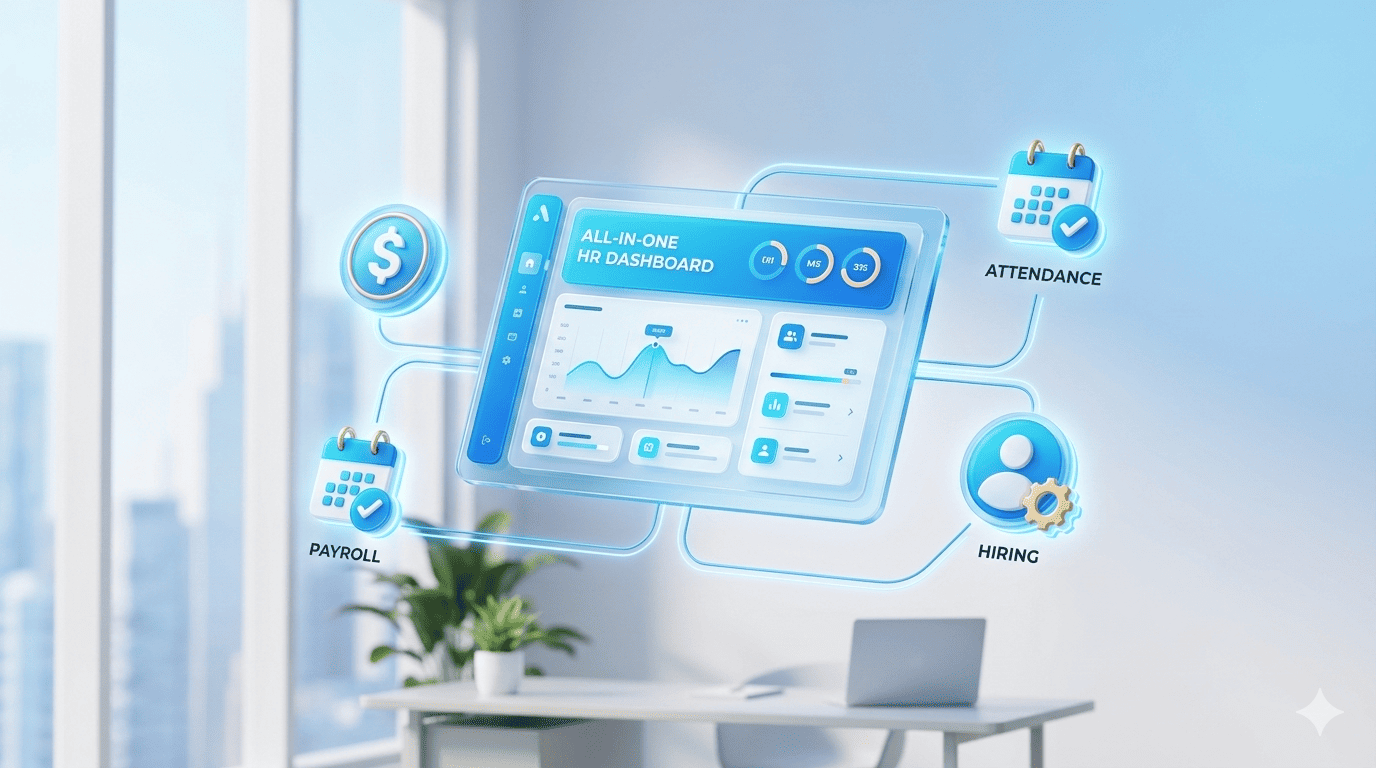
The way that modern businesses handle their employees is evolving. Conventional HR practices are gradually vanishing. For expanding teams, spreadsheets, manual approvals, and dispersed tools are no longer effective. As a result, a lot of businesses are switching to an all-in-one HRMS platform.
Businesses today demand accurate data, improved employee management, and quicker processes. As a result, businesses are spending money on HRMS software that unifies various HR tasks in one location. A single dashboard can handle everything, including payroll and hiring.
This blog will discuss the reasons behind businesses’ adoption of All-in-One HRMS platforms, their advantages, and how they are revolutionizing HR in the future.
An All-in-One HRMS Platform: What Is It?
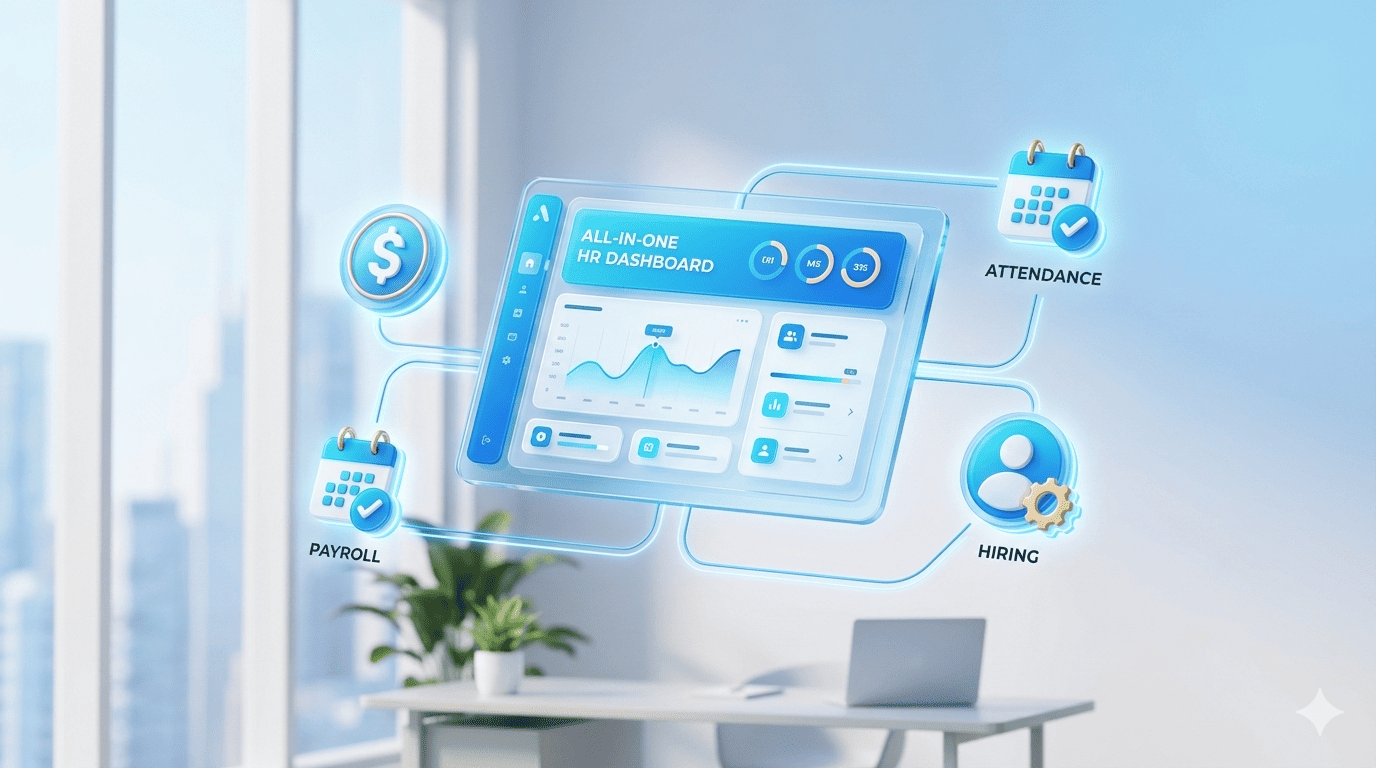
An all-in-one HRMS platform is a digital system that uses a single, centralized piece of software to handle all HR-related tasks. Businesses can handle everything from a single solution rather than utilizing several tools.
Typically, this kind of HR management software consists of:
- Management of employee databases
- Processing payroll
- Monitoring attendance
- Management of leaves
- Tools for recruitment
- Management of performance
- Self-service portals for employees
- HR reports and analytics
Businesses operate more smoothly as a result of the integration of all HR tasks. As a result, businesses no longer rely on disjointed software or manual procedures.
Why Conventional HR Systems Are Ineffective Today
Spreadsheets and simple HR tools are still used by many businesses. These approaches, however, give rise to a number of difficulties.
Firstly, manual HR procedures take too long. HR departments work long hours managing payroll, keeping track of attendance, and updating records.
Secondly, data errors start to occur frequently. Errors are common when HR data is kept in several files.
Thirdly, workers anticipate receiving HR services more quickly. Employee satisfaction is lowered by slow responses and delayed approvals.
As a result, companies are shifting to cutting-edge HRMS software that automates tedious tasks.
By offering a single digital workspace for HR operations, a contemporary all-in-one HRMS platform eliminates these issues.
Important Justifications for Companies Using an All-in-One HRMS Platform
1. Centralized Personnel Information
Centralized data management is one of the main benefits of an all-in-one HRMS platform. Employee data is kept in several files in conventional systems. To find information, HR teams must look through various systems. However, all employee records are kept in one location thanks to sophisticated HRMS software. HR operations become more efficient and well-organized as a result. Additionally, managers have easy access to information when they need it.
2. HR Task Automation
Automation is a key factor in the adoption of an All-in-One HRMS platform by businesses. Time is wasted on manual HR tasks. It takes continuous work to track attendance, calculate payroll, and approve leaves.
However, these procedures are automated by contemporary HR management software. For instance:
- Payroll computations are done automatically.
- Automated leave approvals are possible.
- Digital records of attendance are kept.
- Reports are produced instantly. HR teams are able to concentrate on strategic work instead of administrative duties as a result.
3. Better Payroll Administration
One of the trickiest HR jobs is payroll. Payroll errors may lead to employee discontent. As a result, companies in India use HRM software, which includes automated payroll systems.
A sophisticated all-in-one HRMS platform guarantees precise salary computations. Additionally, it manages compliance, bonuses, and tax deductions. Payroll becomes quicker and error-free as a result of this automation. Additionally, workers get paid on schedule.
4. Improved Leave and Attendance Management
Manually recording employee attendance is ineffective. Spreadsheets and registers are still used by many organizations. However, digital attendance systems are available with a contemporary all-in-one HRMS platform. Workers can record their attendance by:
- Apps for mobile devices
- Biometric gadgets
- Web-based dashboards In a similar vein, leave requests can be made online. Requests can be immediately approved by managers. As a result, managing leave and attendance becomes easy and transparent.
5. Improved Hiring Procedure
Coordination between several teams is necessary when hiring new staff. Conventional hiring practices are ineffective and slow. Nonetheless, recruitment management systems are part of contemporary HRMS software. This enables HR departments to:
- Post job vacancies
- Keep tabs on candidates
- Arrange for interviews
- Assess candidates Hiring becomes quicker since everything takes place in a single All-in-One HRMS Platform. Companies are able to draw in better talent as a result.
6. Improved Worker Experience
Organizations are starting to place a high premium on employee experience. The workforce of today expects HR tasks to be completed digitally. For instance, workers wish to:
- Examine your pay stubs.
- Request a leave of absence
- Update your personal information
- Monitor performance An employee self-service portal is offered by contemporary HR management software. Employees can access HR services at any time by using this portal. Employee satisfaction consequently rises dramatically.
7. HR Analytics in Real Time
When making business decisions, data is crucial. However, the insights offered by conventional HR systems are limited. Strong analytics and reporting capabilities are offered by an all-in-one HRMS platform. Supervisors are able to monitor the following:
- Performance of employees
- Trends in attendance
- Employing metrics
- Payroll costs These insights help businesses make better choices. HRMS software thus turns into a strategic business tool.
8. Better Management of Compliance
Businesses must abide by a number of labor laws and compliance guidelines. It is challenging to manually manage compliance. Nonetheless, compliance features are included in contemporary HRM software in India. A cutting-edge All-in-One HRMS Platform assists businesses in adhering to:
- Tax laws
- Payroll regulations
- Policies for employees Legal risks are decreased as a result. Additionally, HR teams are more comfortable handling compliance-related tasks.
9. Scalability for Expanding Companies
Flexible HR systems are essential for startups and expanding businesses. When the number of employees rises, traditional tools frequently break down. The best HRMS software, however, is made to be scalable. Growing teams are easily managed by an all-in-one HRMS platform. The software adjusts to new HR needs as businesses grow. As a result, companies don’t always need to switch systems.
10. Economy of Cost
A lot of companies think HR software is pricey. The reverse is frequently true, though. The use of several HR tools raises operating expenses. Businesses have to pay for various software solutions. All HR features, however, are combined into a single All-in-One HRMS Platform. As a result, companies cut back on software costs. Automation also lessens the workload for HR. As a result, businesses save money and time.
The Significance of HRMS Software for Contemporary Companies
Every business function is changing due to technology. This also applies to HR departments. Businesses that continue to use manual HR procedures find it difficult to maintain their competitiveness.
Nonetheless, companies that use HRMS software enjoy a number of benefits:
- Quicker HR processes
- Improved management of employees
- Better decision-making
- Increased engagement among employees Many businesses now view HR technology as crucial due to these advantages. Purchasing the best HRMS software is, therefore, turning into a calculated move.
Selecting the Best HRMS Software for Your Company
Not all HR solutions have the same features. As a result, companies need to carefully consider their options. The following characteristics should be present in the best HRMS software:
- Centralized management of employees
- Payroll system that is automated
- Monitoring of attendance and leave
- Tools for managing hiring
- System for evaluating performance
- HR reporting and analytics The software should also be simple to use. Cloud storage and mobile access should be supported by a contemporary All-in-One HRMS platform. This guarantees employees’ and HR teams’ flexibility.
All-in-One HRMS Platforms and the Future of HR
HR is going to be digital in the future. Businesses are shifting to automated and analytics-driven intelligent HR systems. HRMS software will incorporate cutting-edge technologies in the upcoming years, including:
- Artificial intelligence
- HR analytics that are predictive
- Workforce planning that is automated
- Intelligent tools for employee engagement As a result, companies that implement an all-in-one HRMS platform now will be better equipped for the future. Businesses that put off digital transformation could find it difficult to compete.
In conclusion
Smarter HR solutions are necessary for modern businesses. Conventional HR procedures are cumbersome, ineffective, and prone to mistakes. As a result, businesses are quickly implementing an all-in-one HRMS platform. By integrating payroll, attendance, hiring, and performance management into a single system, this kind of HR management software streamlines HR operations.
Additionally, HRMS software boosts employee satisfaction, decreases administrative work, and increases productivity.
The need for the best HRMS software will only grow as companies expand and change. Adopting a contemporary All-in-One HRMS platform is now essential for businesses looking for productivity, scalability, and improved workforce management.
FAQs
What is an all-in-one HRMS platform?
Why are companies shifting to all-in-one HRMS platforms?
What are the key benefits of using HRMS software?
How does an HRMS platform improve payroll management?
Can small businesses use an all-in-one HRMS platform?
How does HRMS software improve employee experience?
What features should I look for in the best HRMS software?
Is HRMS software cost-effective?
What is the future of HRMS platforms?
Similar blogs you may like