Direct Recruitment: Role in a Business, Process, Pros and Cons
Understand direct recruitment, its process, advantages and limitations, and practical tips for building an effective in-house hiring strategy.
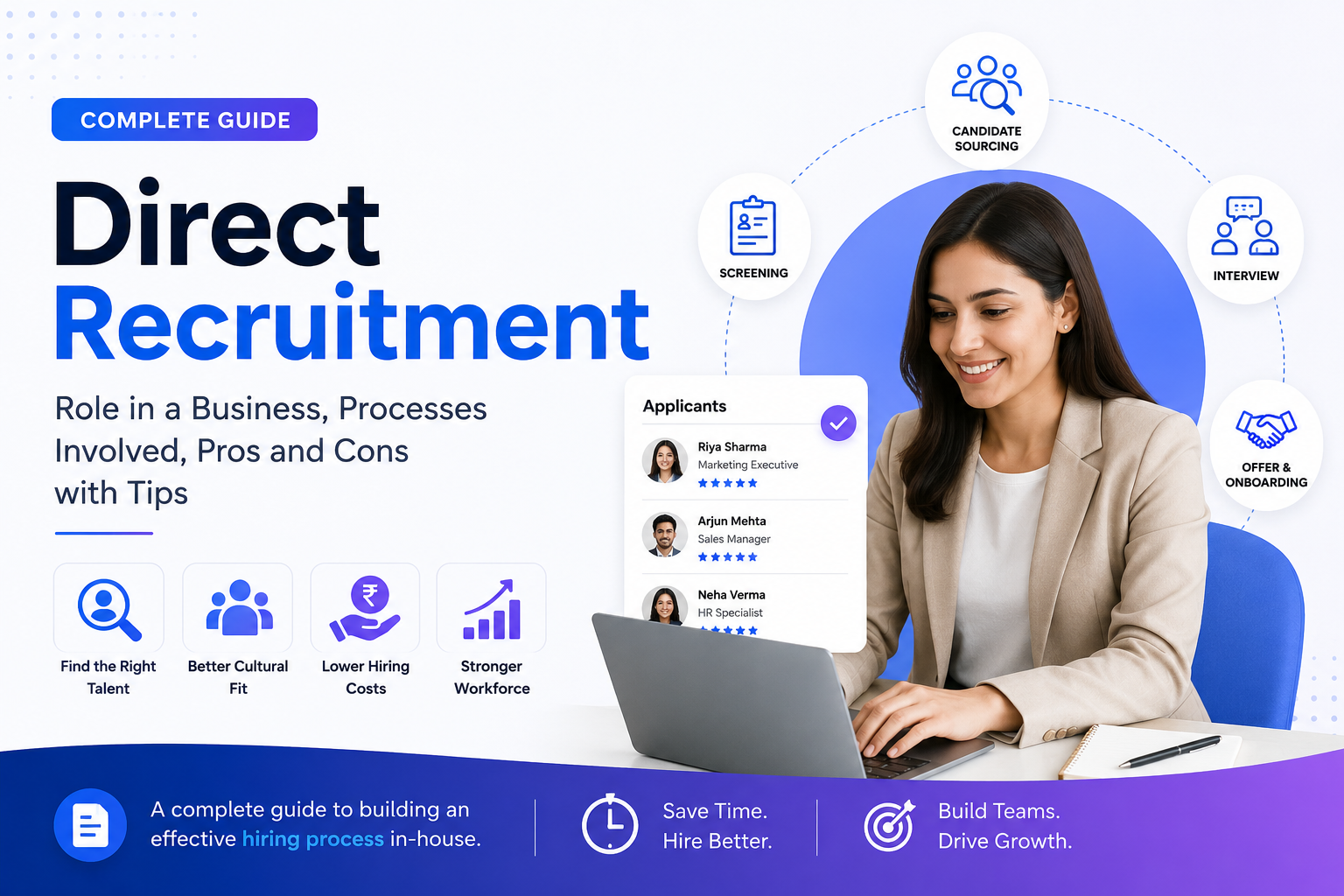
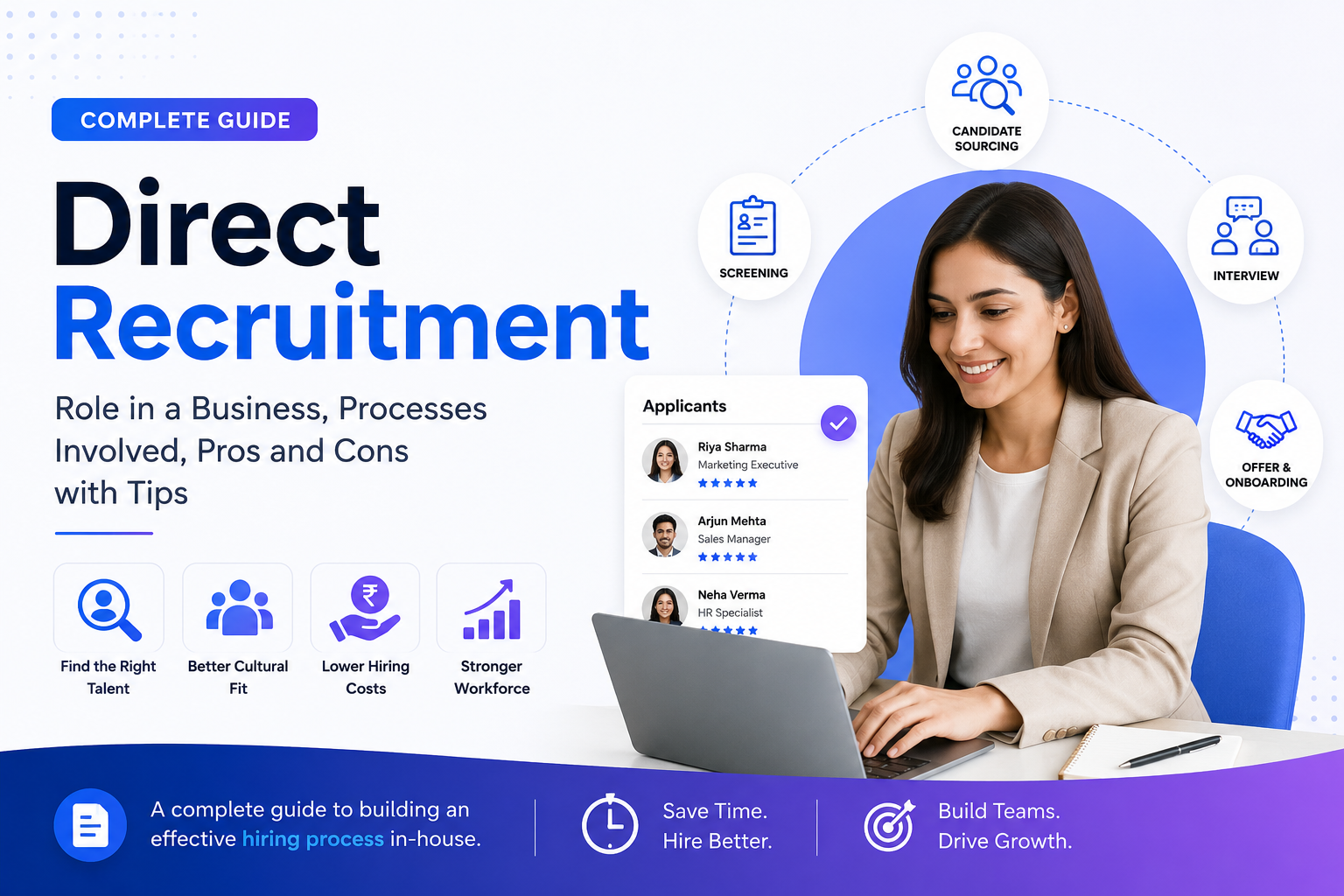
Direct recruitment is the practice of hiring employees through an organisation’s own HR team and hiring managers rather than using an external recruitment agency. It gives the business ownership of sourcing, screening, interviewing, offers, and onboarding.
Why direct recruitment matters
An in-house hiring process helps employers communicate their culture directly, build a consistent candidate experience, and create a long-term talent pipeline. It can also reduce agency costs for roles the organisation hires frequently.
Direct recruitment process
Plan the vacancy
Confirm the reason for hiring, required skills, level of experience, compensation range, and joining timeline. A well-defined requirement keeps the hiring team aligned.
Create a clear job description
Explain the role’s purpose, responsibilities, must-have qualifications, reporting line, work arrangement, and success measures. Avoid inflated requirements that discourage suitable applicants.
Source candidates
Use the careers page, job portals, professional networks, social media, campus hiring, and employee referrals. Keep track of source performance so future hiring spend goes to the channels that produce quality applicants.
Screen and assess
Use consistent screening questions, skill assessments where relevant, and structured interviews. Evaluate both job capability and the candidate’s ability to work within the team’s environment.
Select, offer, and onboard
Complete reference or background checks where required, make a timely offer, and maintain communication until joining. An organised onboarding plan reduces early attrition and helps the new employee become productive faster.
Advantages of direct recruitment
- Greater control over employer brand and candidate experience
- Lower recurring agency fees
- Stronger understanding of organisational culture and role requirements
- A reusable internal talent pool for future vacancies
- Better visibility into hiring data and outcomes
Limitations to prepare for
Direct hiring demands recruiter time, sourcing expertise, recruitment technology, and a consistent process. Niche or urgent roles may still benefit from a specialist partner. The right approach is often a balance: build internal capability while using external support strategically.
Tips for better direct hiring
Keep job descriptions realistic, respond promptly to applicants, involve hiring managers early, standardise interview scorecards, and review metrics such as time to hire, offer acceptance, cost per hire, and new-hire retention.
How ZestNexus helps
ZestNexus brings job posting, applicant tracking, interview coordination, offer management, and onboarding into a connected workflow. That gives HR teams a single view of every candidate and a more reliable process from vacancy to joining.
Frequently Asked Questions
What is direct recruitment?
Direct recruitment is hiring managed by an organisation’s own HR team and hiring managers, without a third-party recruitment agency.
What are the benefits of direct hiring?
It offers more control over candidate experience and employer brand, can reduce recurring agency costs, and helps build an internal talent pipeline.
Can direct recruitment work for specialised roles?
Yes, although organisations may choose to supplement their in-house process with specialist partners for difficult-to-fill or urgent positions.
Which metrics should HR track?
Useful measures include time to hire, cost per hire, source quality, offer acceptance rate, and new-hire retention.
Similar blogs you may like