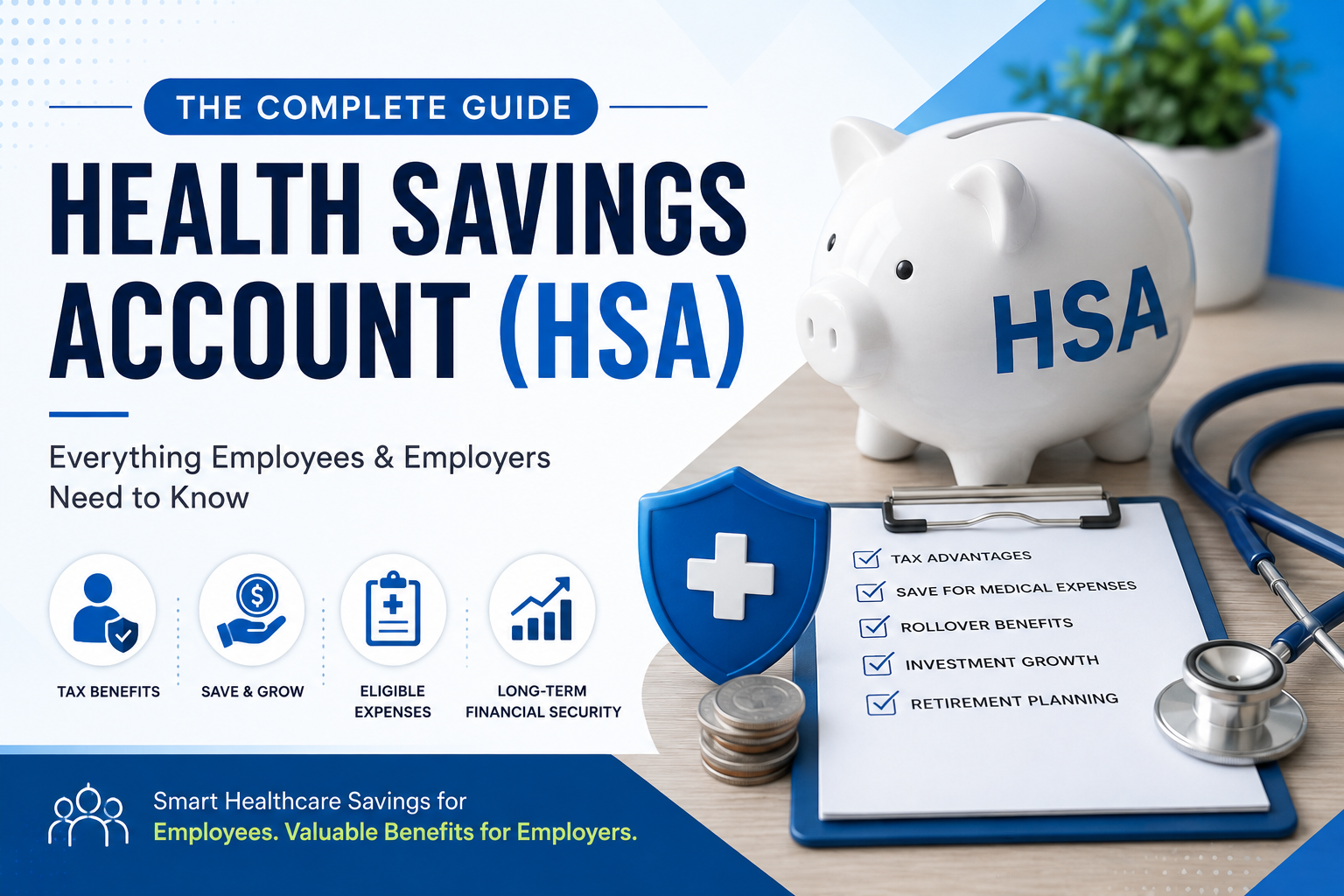
Health Savings Account (HSA): Complete Guide to Uses, Benefits & Eligibility
Learn how Health Savings Accounts (HSAs) work, their benefits, eligibility requirements, tax advantages, contribution rules, and how employers can manage HSA benefits.
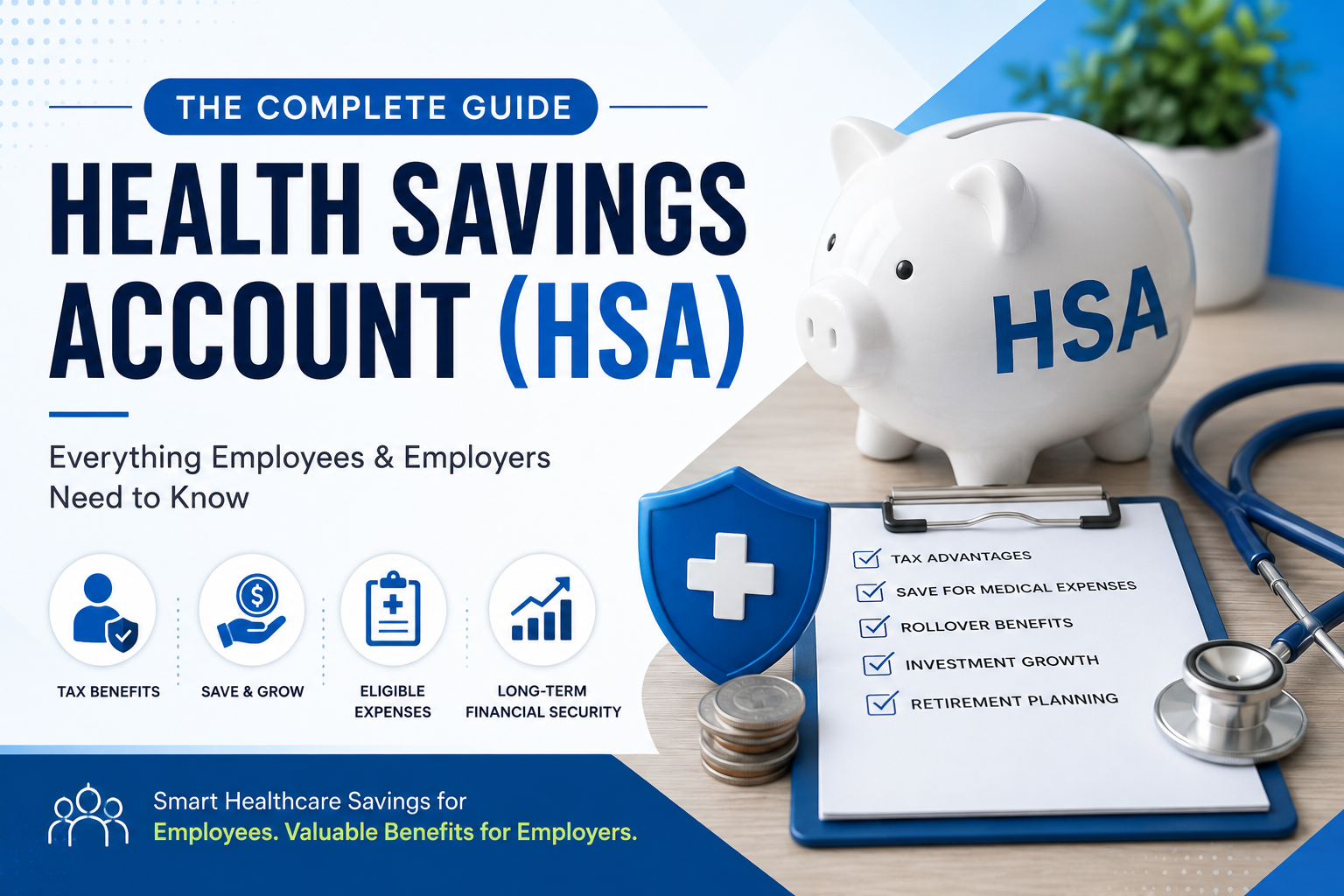
Healthcare costs can be difficult to manage, particularly as medical expenses continue to rise. A Health Savings Account (HSA) can help eligible employees save and pay for qualified healthcare expenses while providing certain tax advantages.
For employers, HSAs can also form an important part of an employee benefits package and provide employees with greater flexibility in managing healthcare costs.
In this guide, we’ll explore:
- What a Health Savings Account is
- How an HSA works
- HSA eligibility requirements
- Contribution limits
- Tax advantages
- Benefits and potential disadvantages
- HSA vs. HDHP
- How employers can contribute
- How HR software can help manage employee benefits
What Is a Health Savings Account (HSA)?
A Health Savings Account (HSA) is a tax-advantaged savings account that qualifying individuals can use to pay for eligible medical expenses.
HSAs are generally available to individuals enrolled in a High-Deductible Health Plan (HDHP).
Unlike some other healthcare accounts, the employee owns the money in an HSA. Unused funds can generally remain in the account and continue to be available in future years.
For HR teams, HSA-compatible benefits can provide employees with additional flexibility when planning and managing their healthcare expenses.
How Does an HSA Work?
An HSA works alongside a qualifying HDHP.
The account can be funded by:
- The employee
- The employer
- Both the employee and employer
Employees can then use their HSA funds to pay for qualified medical expenses, including eligible deductibles, copayments, coinsurance, and other qualifying healthcare expenses.
One of the key features of an HSA is that unused funds generally roll over from year to year. HSAs are also portable, meaning employees can generally retain their accounts when changing employers.
How an HSA Works
- The employee enrolls in a qualifying HDHP.
- An HSA is established with an HSA provider.
- The employee, employer, or both contribute funds.
- The employee incurs qualified medical expenses.
- HSA funds are used to pay eligible expenses.
- Any unused balance can generally roll over for future healthcare expenses.
HSA Contribution Limits
The IRS establishes annual HSA contribution limits, and these limits can change from year to year.
Contribution limits also differ depending on whether the employee has:
- Self-only HDHP coverage
- Family HDHP coverage
Employees who are 55 or older may also be eligible to make an additional catch-up contribution.
Because contribution limits and eligibility requirements can change periodically, employers and HR teams should verify the latest IRS guidance before communicating specific contribution amounts to employees.
Key Benefits of an HSA
1. Tax Advantages
HSAs can provide multiple tax benefits depending on how contributions are made and how funds are used.
Qualified withdrawals used for eligible medical expenses are generally tax-free.
2. Save for Medical Expenses
Employees can build a financial reserve for qualified healthcare expenses that may arise in the future.
3. Unused Funds Can Roll Over
HSAs generally do not follow a “use it or lose it” model.
Unused funds can typically remain in the account and roll over from one year to the next.
4. HSA Funds Can Be Invested
Once certain requirements are met, some HSA providers allow account holders to invest a portion of their balance.
This can potentially help employees build long-term healthcare savings.
5. Supports Retirement Planning
After age 65, HSA funds can be used tax-free for qualifying medical expenses, including eligible Medicare expenses.
Non-qualified withdrawals after age 65 are generally subject to ordinary income tax, but the additional 20% tax generally does not apply.
Potential Disadvantages of an HSA
While HSAs provide several benefits, they may not be suitable for everyone.
Higher Deductibles
HSAs are generally paired with HDHPs, which typically have higher deductibles than traditional health plans.
Higher Out-of-Pocket Costs
Employees who frequently use healthcare services may need to pay significant out-of-pocket costs before reaching their health plan’s deductible.
Understanding Eligible Expenses
Employees need to understand which expenses qualify for tax-free HSA withdrawals.
Using HSA funds for non-qualified expenses can result in tax consequences and, in many cases, an additional penalty.
Investment Decisions
Employees who invest HSA funds need to understand the investment options, associated risks, and fees before making investment decisions.
How HSA Withdrawals Work
For qualified medical expenses, there is generally no annual limit on how much an employee can withdraw, provided sufficient funds are available in the HSA.
Qualified withdrawals used for eligible medical expenses are generally tax-free.
However, withdrawals for non-qualified expenses can have tax consequences.
For individuals under age 65, a non-qualified withdrawal is generally subject to ordinary income tax as well as an additional 20% tax.
After age 65, the additional 20% tax generally does not apply, although non-qualified withdrawals are generally subject to ordinary income tax.
Eligibility to Establish an HSA
To contribute to an HSA, an individual generally needs to satisfy certain eligibility requirements.
Key requirements typically include:
- Being covered by a qualifying High-Deductible Health Plan (HDHP)
- Not having disqualifying additional health coverage
- Not being enrolled in Medicare
- Not being claimed as a dependent on another person’s tax return
- Meeting applicable IRS requirements for HSA contributions
Eligibility can depend on an individual’s specific circumstances. Employees should verify their eligibility before making contributions.
HSA vs. HDHP: What’s the Difference?
A High-Deductible Health Plan (HDHP) is a health insurance plan that generally has a higher deductible and lower premiums compared with some traditional health plans.
A Health Savings Account (HSA) is a tax-advantaged savings account that can be used to pay for qualified healthcare expenses.
They work together:
| HDHP | HSA |
|---|---|
| Health insurance plan | Tax-advantaged savings account |
| Provides healthcare coverage | Helps pay eligible healthcare expenses |
| Generally has a higher deductible | Holds funds for qualified medical expenses |
| May qualify an individual to contribute to an HSA | Requires HSA eligibility to contribute |
If an individual is enrolled in a qualifying HDHP and meets other IRS requirements, they may be eligible to contribute to an HSA.
Benefits of Combining an HDHP With an HSA
An HDHP combined with an HSA can provide several potential financial benefits:
- Potentially lower monthly insurance premiums
- Tax advantages for qualifying HSA contributions and distributions
- Ability to save for future healthcare expenses
- Rollover of unused HSA funds
- Potential investment opportunities
- Greater employee control over healthcare savings
This combination may be particularly useful for employees who can manage the higher deductible associated with an HDHP and want to build healthcare savings over time.
Can Employers Contribute to an HSA?
Yes. Employers can contribute to eligible employees’ HSAs as part of their employee benefits program.
Employer contributions can make a benefits package more attractive while helping employees manage healthcare expenses.
Employer contributions must follow applicable IRS rules and annual contribution limits.
HR teams should accurately track:
- Employee HSA eligibility
- Employer contributions
- Employee payroll deductions
- Total annual contributions
- Benefits information
Accurate tracking helps prevent contribution errors and supports proper payroll and benefits administration.
HSA Tax Benefits
One of the major advantages of an HSA is its favorable tax treatment.
Depending on the circumstances:
- Contributions may receive favorable tax treatment.
- Qualifying employer contributions are generally excluded from an employee’s income when applicable requirements are met.
- Earnings and interest can generally grow tax-free inside the HSA.
- Withdrawals used for qualifying medical expenses are generally tax-free.
Because tax treatment depends on applicable rules and individual circumstances, employees should refer to current IRS guidance or consult a qualified tax professional when necessary.
How HR Software Can Help Manage Employee Benefits
As organizations grow, managing employee benefits manually can become increasingly difficult.
HR teams may need to manage information related to:
- Employee benefits
- Payroll deductions
- Benefits eligibility
- Attendance
- Leave
- Compensation
- Employee records
Managing these processes across multiple systems can increase administrative work and create opportunities for data inconsistencies.
ZestNexus provides a centralized HR management platform that helps businesses manage employee information and streamline day-to-day HR operations.
A centralized HR system can help organizations:
- Reduce manual administrative work
- Improve employee data accuracy
- Centralize employee information
- Simplify payroll and benefits administration
- Improve employee experience
- Give HR teams more time for strategic initiatives
Final Thoughts
Health Savings Accounts can be a valuable financial planning tool for qualifying employees. Their tax advantages, rollover features, portability, and potential for long-term savings make HSAs an important component of many modern employee benefits programs.
For employers, clearly communicating HSA eligibility, contributions, qualified expenses, and withdrawal rules can help employees make better-informed decisions about their healthcare benefits.
HSA rules, eligibility requirements, and contribution limits can change over time. Employers and employees should refer to the latest IRS guidance or consult an appropriate tax or benefits professional for advice based on their individual circumstances.
By centralizing employee information and automating HR processes, ZestNexus helps businesses simplify employee management and build more efficient HR operations.
Frequently Asked Questions
What is a Health Savings Account (HSA)?
A Health Savings Account (HSA) is a tax-advantaged savings account that eligible individuals can use to pay for qualified medical expenses.
Who is eligible for an HSA?
Individuals generally need to be covered by a qualifying High-Deductible Health Plan (HDHP), not have disqualifying health coverage, not be enrolled in Medicare, and meet other applicable IRS requirements.
Do HSA funds expire?
Generally, no. Unused HSA funds can typically remain in the account and roll over from year to year.
Can an employer contribute to an HSA?
Yes. Employers can contribute to eligible employees’ HSAs, subject to applicable IRS rules and annual contribution limits.
Are HSA withdrawals tax-free?
Withdrawals used for qualified medical expenses are generally tax-free. Non-qualified withdrawals may be subject to income tax and, in some circumstances, an additional 20% tax.
What happens to an HSA after an employee changes jobs?
An HSA generally belongs to the employee rather than the employer, so employees can typically retain their HSA when they change jobs.
Can HSA funds be invested?
Some HSA providers allow account holders to invest a portion of their HSA balance after meeting certain requirements. Investment options, fees, and risks vary by provider.
How can HR software help manage employee benefits?
HR software such as ZestNexus can centralize employee information, payroll data, benefits information, and other HR processes, reducing manual administrative work and improving data accuracy.
Similar blogs you may like