What Is Sumptuary Allowance? Eligibility, Taxability & Payroll Treatment (2026 Guide)
Learn what Sumptuary Allowance is, who is eligible, how it is taxed, how it differs from expense reimbursement, and how HRMS software helps manage salary allowances.
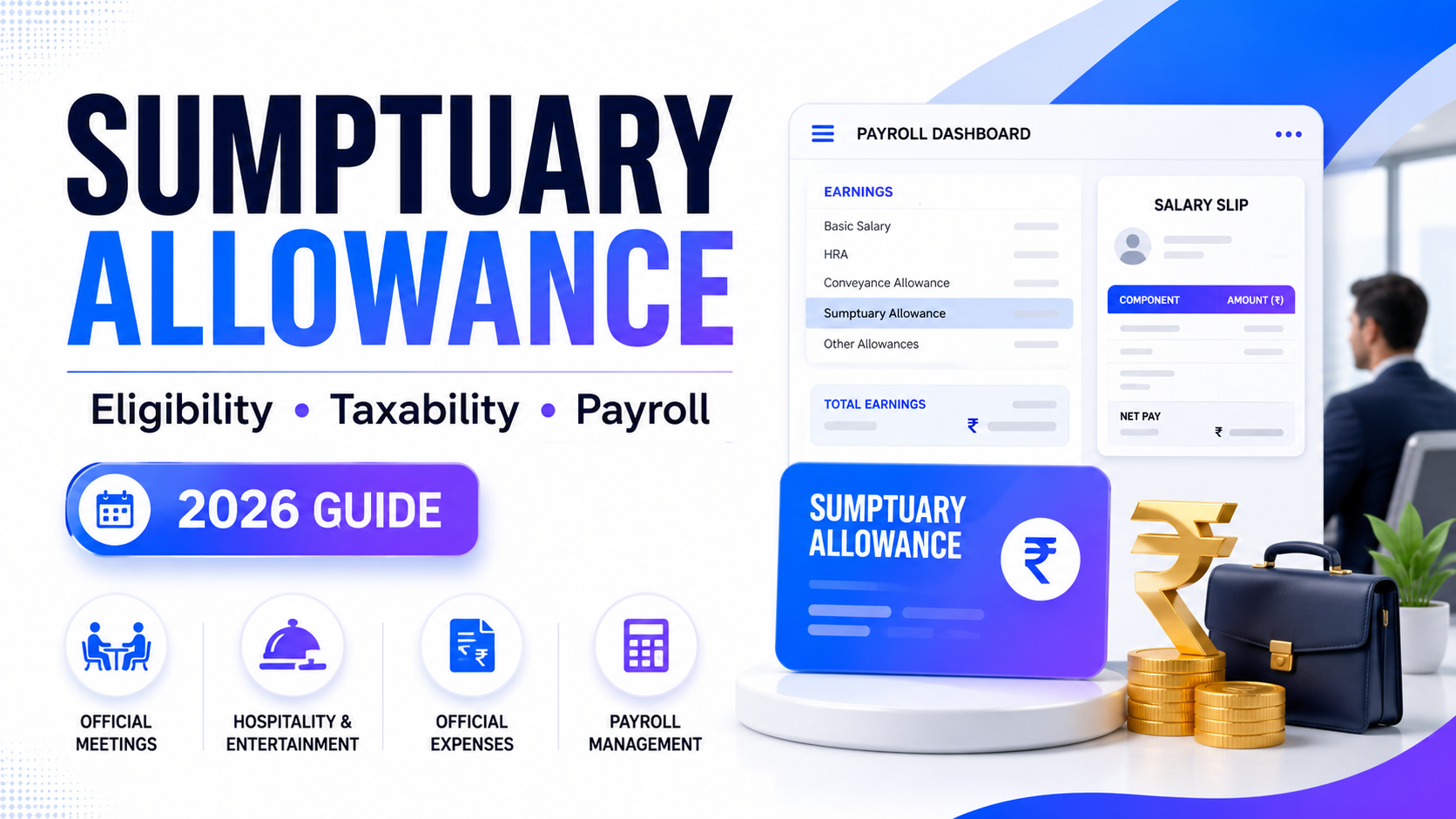
Employee compensation often includes more than just basic salary. Employers can offer several types of allowances to compensate employees for expenses incurred while performing official duties. One such allowance is the Sumptuary Allowance.
Although it is less common than allowances such as House Rent Allowance (HRA) or Conveyance Allowance, Sumptuary Allowance can be an important component of compensation for specific categories of employees, particularly in government and judicial services.
In this guide, you’ll learn:
- What Sumptuary Allowance is
- Why it is provided
- Who is eligible
- How it differs from expense reimbursement
- Its tax treatment
- Payroll best practices
What Is Sumptuary Allowance?
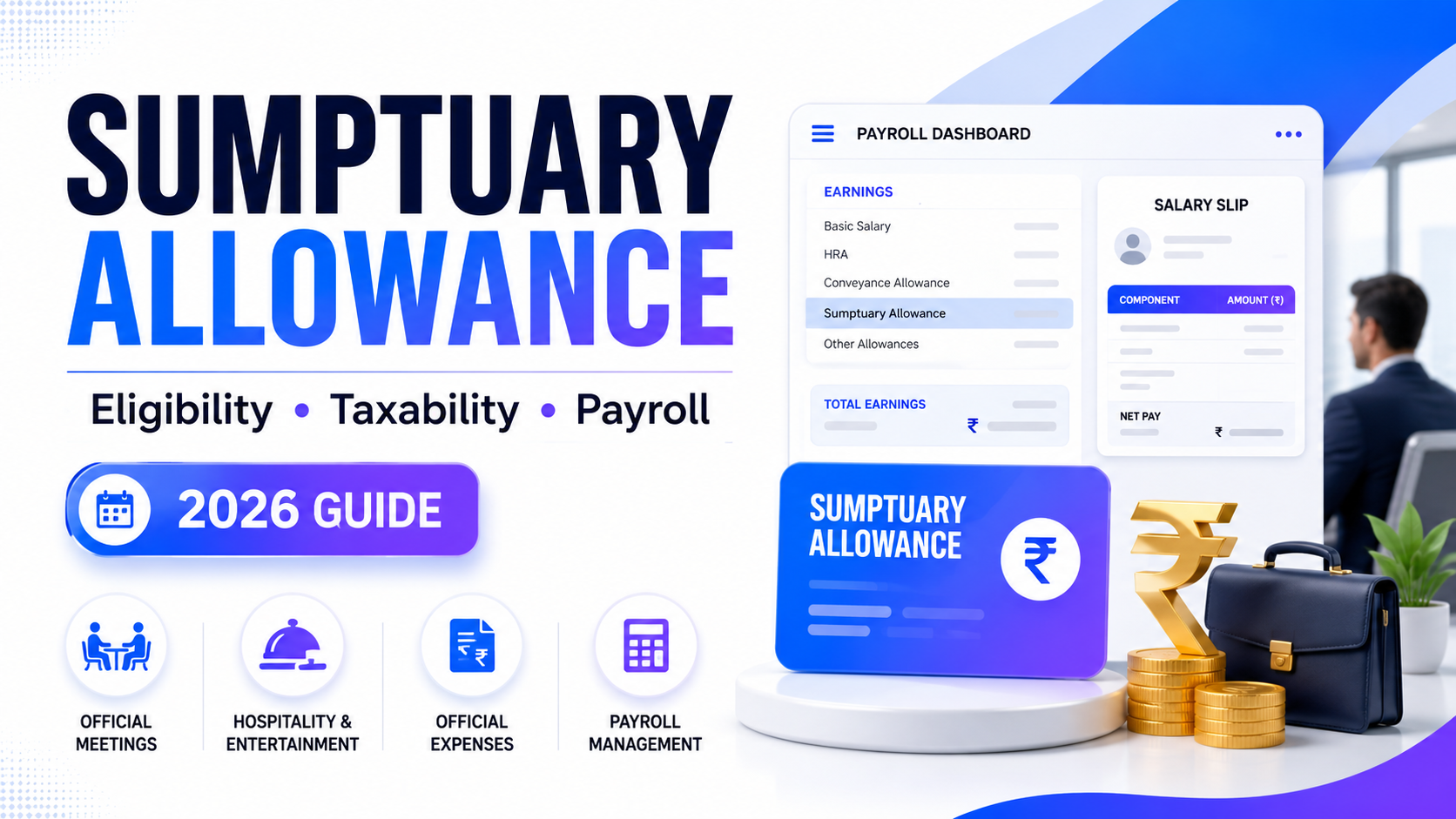
Sumptuary Allowance is a predefined amount paid to eligible employees for expenses associated with their official duties, including formal engagements, hospitality, and incidental expenses.
Unlike regular salary components intended for personal use, this allowance is generally meant to cover expenses incurred while:
- Entertaining official guests
- Conducting formal meetings
- Hosting government officials
- Performing official representation duties
- Managing official hospitality expenses
The term “sumptuary” generally relates to expenditure on hospitality, official entertainment, or the dignified representation of a particular office.
Why Is Sumptuary Allowance Provided?
Certain roles require employees to incur hospitality or representation expenses as part of their official responsibilities.
Organizations may provide a Sumptuary Allowance to cover expenses such as:
- Official meetings
- Hospitality for visitors
- Business entertainment
- Hosting government officials
- Administrative representation expenses
- Official functions
- Miscellaneous office-related hospitality costs
Instead of requiring employees to pay these expenses from their own pocket, employers may provide a predetermined monthly allowance.
Who Is Eligible for Sumptuary Allowance?
Eligibility depends on an organization’s compensation policy or applicable government rules.
Sumptuary Allowance may typically be granted to:
- Judicial officers
- Judges
- Senior government officials
- Administrative officers
- Public sector employees (where applicable)
- Executives with official representation responsibilities
Private-sector organizations may also offer hospitality or representation allowances, although they may not formally refer to them as Sumptuary Allowance.
Example of Sumptuary Allowance
Consider a senior administrative officer who regularly hosts formal briefings with government representatives and external stakeholders.
The organization provides ₹8,000 per month as a Sumptuary Allowance to cover incidental hospitality expenses.
The allowance is intended to support official responsibilities rather than personal spending and is processed through payroll according to company policy.
Sumptuary Allowance vs Expense Reimbursement
Although both help employees manage official expenses, they are structured differently.
| Sumptuary Allowance | Expense Reimbursement |
|---|---|
| Paid as a fixed allowance | Paid against actual expenses |
| Included in the salary structure | Processed after expense verification |
| May not require bills, depending on policy | Usually requires bills or receipts |
| Predetermined amount | Depends on actual expenditure |
| Processed through payroll | Processed through expense management |
The tax treatment may also differ depending on applicable tax regulations and the nature of the payment.
Is Sumptuary Allowance Taxable?
The taxability of Sumptuary Allowance depends on several factors, including:
- Employee category
- Applicable provisions of the Income Tax Act
- Nature of employment
- Government notifications
- Employer’s compensation structure
- Availability of any exemptions
In many cases, Sumptuary Allowance forms part of an employee’s taxable salary unless a specific exemption applies under applicable tax laws.
Note: Tax regulations may change over time and vary depending on individual circumstances. Employers should follow the latest applicable tax provisions, while employees should seek advice from a qualified tax professional when required.
Payroll Treatment of Sumptuary Allowance
From a payroll perspective, organizations should:
- Define eligibility criteria
- Add the allowance to the appropriate salary structure
- Apply the correct tax treatment
- Maintain accurate payroll records
- Display the allowance clearly on salary slips
- Configure payroll rules according to company policy
- Review the allowance periodically for compliance
A well-configured payroll management system helps reduce salary processing errors while improving payroll accuracy.
Best Practices for HR Teams
HR teams should follow a structured approach when introducing or managing Sumptuary Allowance.
Clearly Define Eligibility
Specify which employees are eligible to receive the allowance.
Document Allowance Amounts
Clearly define the allowance amount and payment frequency.
Explain the Purpose
Document what official expenses the allowance is intended to cover.
Ensure Correct Payroll Treatment
Configure payroll calculations and tax treatment according to applicable laws and company policies.
Review Compensation Policies
Review allowance policies periodically to ensure ongoing compliance.
Maintain Transparent Payroll Records
Maintain accurate records of salary structures, allowance amounts, payroll calculations, and deductions.
Communicate the Policy
Publish and communicate the policy clearly so eligible employees understand how the allowance works.
Manage Salary Allowances with ZestNexus HRMS
Managing multiple salary components manually becomes increasingly difficult as organizations grow. ZestNexus HRMS enables businesses to configure and manage different salary allowances through a centralized payroll platform.
With ZestNexus, organizations can:
- Create customized salary structures
- Configure taxable and non-taxable allowances
- Automate payroll calculations
- Generate accurate salary slips
- Manage statutory deductions
- Maintain payroll compliance
- Track employee compensation history
- Generate payroll reports and analytics
- Integrate allowances with attendance, leave, and payroll processing
By automating payroll workflows, ZestNexus minimizes manual calculations and helps HR teams process salaries accurately and efficiently.
Final Thoughts
Sumptuary Allowance is a salary-related allowance intended to support employees who incur official hospitality and representation expenses while performing their professional responsibilities.
Its applicability depends on the organization’s compensation structure, employee category, applicable policies, and prevailing tax regulations.
Using an integrated HRMS like ZestNexus helps organizations configure salary structures, manage allowances, automate payroll calculations, and maintain compliance—all from a single platform.
Frequently Asked Questions
What is Sumptuary Allowance?
Sumptuary Allowance is an allowance provided to certain employees to cover official hospitality, representation, and incidental expenses incurred while performing their professional responsibilities.
Who receives Sumptuary Allowance?
It is commonly provided to judicial officers, senior government officials, administrative officers, and employees whose roles require official representation. Some private organizations may also offer similar allowances.
Is Sumptuary Allowance taxable?
Generally, yes. Sumptuary Allowance may form part of an employee’s taxable salary unless a specific exemption applies under the applicable tax laws.
Is Sumptuary Allowance the same as expense reimbursement?
No. Sumptuary Allowance is typically a fixed amount included in an employee’s salary structure, whereas expense reimbursement is based on actual expenses supported by bills or receipts.
Can payroll software manage Sumptuary Allowance?
Yes. HRMS and payroll software like ZestNexus can configure custom allowances, automate payroll calculations, apply the correct tax treatment, and generate accurate salary slips.
Similar blogs you may like