What Is a Hostile Work Environment? How to Spot One and Prevent It
Learn what a hostile work environment is, common examples, legal considerations, workplace impacts, and practical steps HR leaders can take to prevent hostility at work.
What Is a Hostile Work Environment? How to Spot One and Prevent It
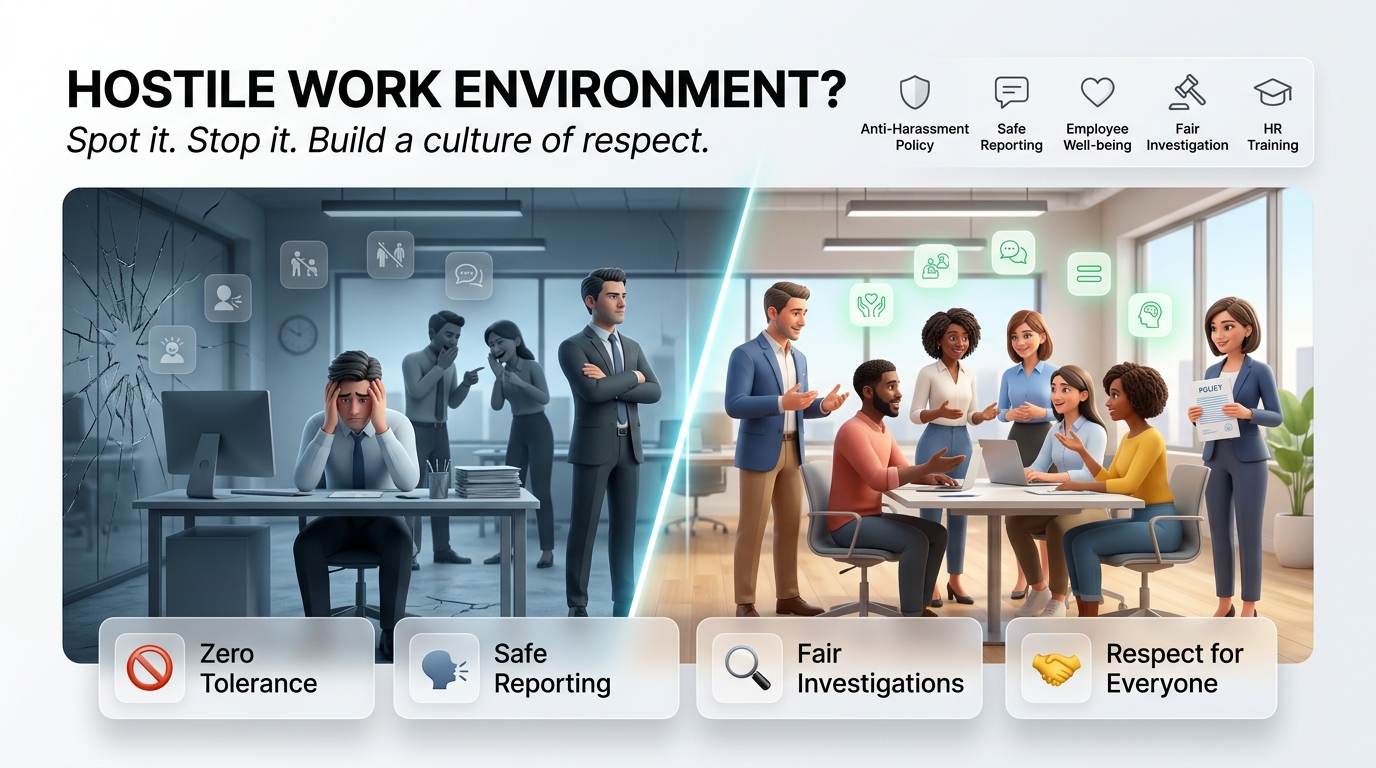
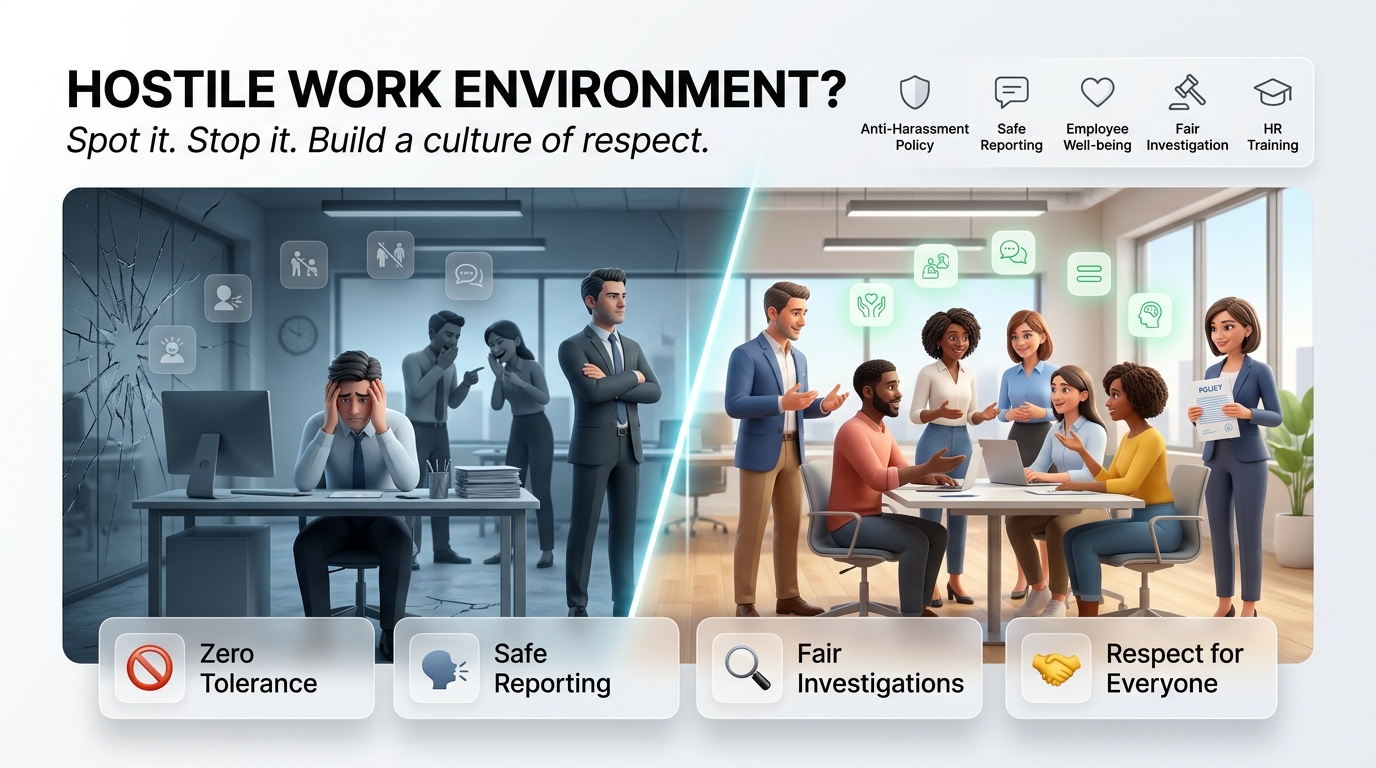
A healthy workplace should make employees feel safe, respected, and free from fear while performing their jobs. When negative behavior becomes persistent, aggressive, discriminatory, or intimidating, it can create a hostile work environment.
For employees, workplace hostility often leads to stress, anxiety, and reduced motivation. For employers, it can result in lower productivity, increased turnover, legal risks, and reputational damage.
Understanding how to identify and prevent a hostile work environment is essential for HR professionals, managers, and business leaders who want to foster a respectful and legally compliant workplace.
What Is a Hostile Work Environment?
A hostile work environment occurs when unwelcome conduct makes it difficult for an employee to perform their job effectively. This conduct may come from a manager, supervisor, coworker, customer, vendor, or another third party.
Examples of hostile behavior may include:
- Harassment
- Discrimination
- Bullying
- Threats or intimidation
- Offensive jokes or comments
- Sexual remarks or advances
- Repeated abusive behavior
It’s important to note that not every unpleasant workplace interaction qualifies as a hostile work environment. Personality conflicts, isolated disagreements, or occasional rude comments may be inappropriate, but they typically do not meet the legal standard.
In many jurisdictions, the behavior must be based on a legally protected characteristic such as:
- Race
- Gender
- Religion
- National origin
- Age
- Disability
- Pregnancy
- Sexual orientation
- Genetic information
- Other protected categories under applicable laws
Additionally, the conduct must be severe, pervasive, or persistent enough to interfere with an employee’s ability to work.
Common Examples of a Hostile Work Environment
Hostility can take many forms. Some common examples include:
- Repeated offensive jokes about an employee’s race, religion, gender, age, disability, or nationality
- Name-calling, slurs, or abusive language
- Threatening or intimidating behavior
- Aggressive conduct that compromises employee safety
- Sexual comments, gestures, or advances
- Excluding or targeting employees because of a protected characteristic
- Retaliating against employees who file complaints
- Displaying offensive images, messages, or materials
- Systematic bullying, humiliation, or harassment
These behaviors can create an environment where employees feel unsafe, anxious, and unable to perform their duties effectively.
When Does Workplace Behavior Become Legally Hostile?
Employers and HR professionals should evaluate several factors when determining whether behavior has crossed the line into a hostile work environment.
1. The Conduct Is Unwelcome
The affected employee did not invite, encourage, or consent to the behavior.
2. The Behavior Targets a Protected Characteristic
The conduct is linked to characteristics protected under employment laws.
3. The Conduct Is Severe or Pervasive
The behavior is either:
- Extremely serious, even if isolated, or
- Repeated frequently enough to create an abusive environment
4. It Interferes With Work Performance
The behavior negatively impacts the employee’s ability to perform their job or creates a workplace that feels intimidating, hostile, or offensive.
Questions Employers Should Ask
When assessing a potential hostile work environment, employers should consider:
- Does the behavior relate to a protected characteristic?
- Would a reasonable person view the environment as intimidating, offensive, or abusive?
- Has the behavior occurred repeatedly over time?
- Has it affected the employee’s ability to perform their job?
- Was management aware of the issue?
- Were complaints ignored or inadequately investigated?
Once an employer becomes aware of possible harassment or hostility, they have a responsibility to investigate and take corrective action promptly.
Effects of a Hostile Work Environment
A hostile workplace can negatively impact both employees and the organization as a whole.
Employee Well-Being
Employees exposed to hostility may experience:
- Anxiety
- Stress
- Depression
- Reduced morale
- Lower job satisfaction
As a result, absenteeism may increase and employee retention may decline.
Team Relationships
Hostility often damages trust among team members, leading to:
- Poor communication
- Reduced collaboration
- Departmental silos
- Increased workplace conflict
Productivity and Performance
Employees who feel unsafe or disrespected are less likely to perform at their best. Organizations may experience:
- Reduced engagement
- Lower productivity
- Decreased innovation
- Poor decision-making
Legal and Reputation Risks
Failure to address workplace hostility can expose organizations to:
- Regulatory investigations
- Employee complaints
- Lawsuits
- Financial penalties
- Employer branding challenges
These risks can make attracting and retaining top talent significantly more difficult.
How to Prevent a Hostile Work Environment
Preventing workplace hostility requires proactive effort, strong leadership, and a culture of accountability.
Create Clear Workplace Policies
Organizations should maintain policies that clearly define:
- Harassment
- Discrimination
- Bullying
- Retaliation
- Inappropriate workplace behavior
Policies should explain reporting procedures and disciplinary consequences.
Regular reviews help ensure policies remain aligned with legal requirements and organizational values.
Promote a Culture of Respect
Workplace culture starts with leadership.
Managers and executives should consistently demonstrate that harassment, discrimination, and intimidation will not be tolerated.
Organizations can strengthen respect by:
- Encouraging open communication
- Promoting inclusivity
- Using respectful language
- Modeling professional behavior
Train Employees and Managers
Training helps employees recognize inappropriate conduct and understand reporting procedures.
Effective training programs should cover:
- Harassment prevention
- Diversity and inclusion
- Workplace discrimination
- Respectful communication
- Bystander intervention
- Reporting processes
Provide Safe Reporting Channels
Employees should feel comfortable reporting concerns without fear of retaliation.
Organizations can support this by offering:
- HR reporting contacts
- Anonymous reporting options
- Ethics hotlines
- Digital reporting tools
Investigate Complaints Promptly
All complaints should be addressed quickly, fairly, and confidentially.
Investigations should:
- Remain impartial.
- Document findings thoroughly.
- Treat all parties fairly.
- Apply corrective action when misconduct is confirmed.
Monitor Workplace Culture
HR teams should proactively identify issues through:
- Employee surveys
- One-on-one meetings
- Exit interviews
- Team feedback sessions
Regular monitoring allows organizations to address concerns before they escalate.
Offer Employee Support
Employees experiencing workplace hostility may benefit from:
- Employee Assistance Programs (EAPs)
- Counseling services
- Wellness resources
- HR guidance and support
Support should continue throughout and after the resolution process.
Lead by Example
Leaders influence workplace culture more than policies alone.
Demonstrating fairness, empathy, transparency, and respect helps build employee trust and reinforces organizational values.
Why HR Technology Matters in Building a Respectful Workplace
Modern HR software can help organizations create safer and more transparent workplaces by enabling:
- Digital policy management
- Anonymous complaint reporting
- Incident documentation
- Employee surveys and feedback collection
- Training and compliance tracking
- Performance and behavior monitoring
- Centralized employee records
With tools like ZestNexus, HR teams can proactively identify concerns, maintain proper documentation, and foster a culture built on trust and accountability.
Final Thoughts
A hostile work environment can damage employee well-being, team performance, and organizational success. Left unchecked, it can lead to lower morale, reduced productivity, higher turnover, and significant legal risks.
The most effective approach is prevention.
Organizations that establish clear policies, provide regular training, encourage safe reporting, investigate concerns fairly, and foster a culture of respect are better positioned to create workplaces where employees feel valued, supported, and empowered to succeed.
Frequently Asked Questions
What is a hostile work environment?
A hostile work environment occurs when persistent harassment, discrimination, intimidation, or abusive conduct makes it difficult for an employee to perform their job or creates an offensive workplace atmosphere.
What are examples of a hostile work environment?
Examples include discriminatory remarks, repeated offensive jokes, sexual harassment, threats, bullying, retaliation, and displaying offensive materials in the workplace.
Does every workplace conflict qualify as a hostile work environment?
No. Occasional disagreements, personality conflicts, or isolated rude comments generally do not meet the legal definition of a hostile work environment.
What should employers do if an employee reports workplace hostility?
Employers should investigate the complaint promptly, document findings, maintain confidentiality, and take corrective action if misconduct is confirmed.
How can organizations prevent a hostile work environment?
Organizations can prevent hostility by creating clear policies, providing employee training, encouraging reporting, monitoring workplace culture, and promoting respectful leadership practices.
Similar blogs you may like