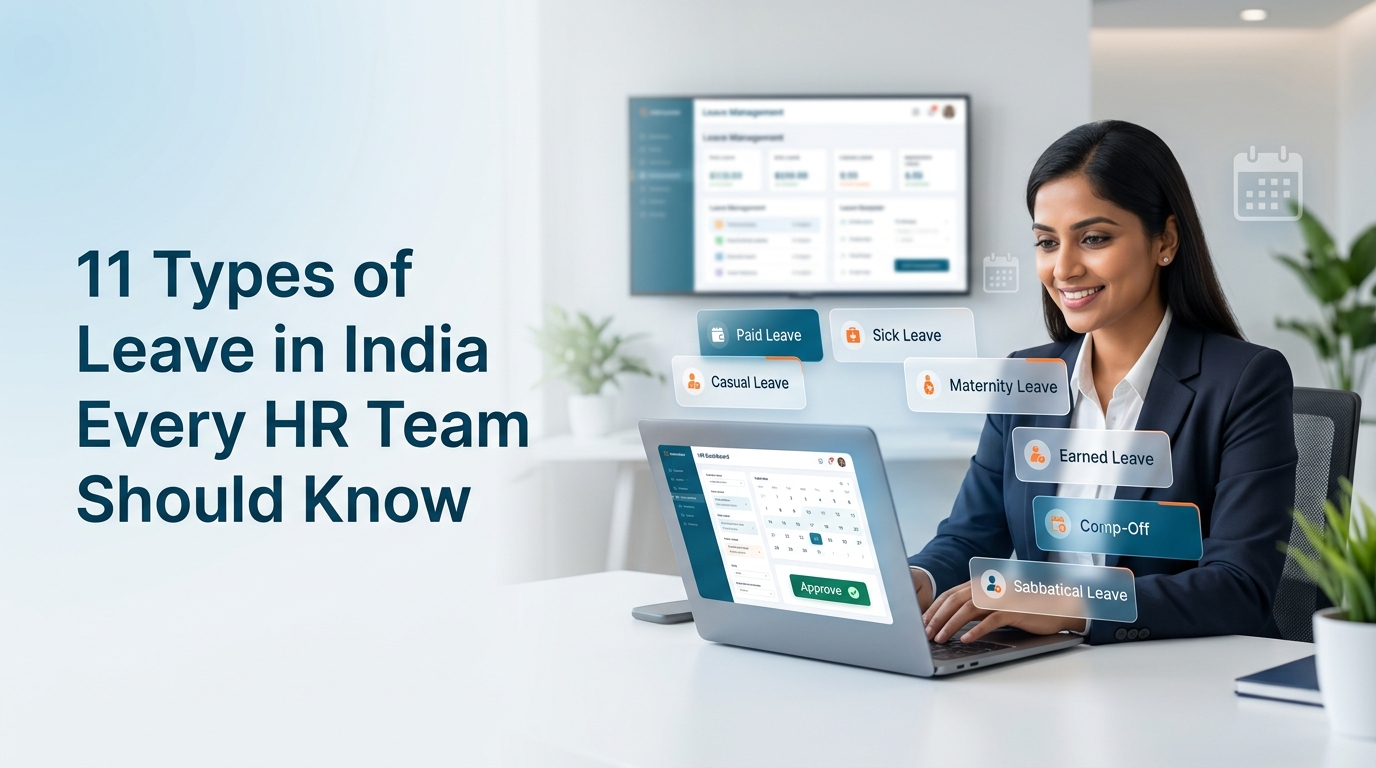
11 Types of Leave in India Every HR Team Should Know
A complete guide to leave types in India for HR teams. Understand earned leave, sick leave, maternity leave, comp-off, sabbatical leave, and smarter leave management practices.
Introduction
Leave policies are not just administrative documents. They directly affect employee experience, workforce planning, compliance, payroll processing, and workplace culture.
Managing leave in India can become complicated because leave entitlements may vary depending on:
- State-specific labour laws
- Industry practices
- Organizational policy
- Employment contracts
A structured leave policy helps HR teams maintain consistency, reduce confusion, and improve operational efficiency.
As organizations grow, handling leave requests manually through spreadsheets and emails becomes difficult. Modern HRMS platforms like ZestNexus help businesses streamline leave tracking, approvals, holiday calendars, and leave balances from a centralized platform.
In this guide, we’ll explain 11 important types of leave commonly used in Indian workplaces and how HR teams can manage them effectively.
1. Earned Leave (EL) / Privilege Leave / Annual Leave
Earned Leave, also called Privilege Leave or Annual Leave, is generally used for planned time off such as:
- Vacations
- Family events
- Personal travel
- Long breaks
In many organizations, employees earn leave based on the number of days worked during the year.
Common Policy Elements
- Annual leave accrual
- Carry-forward limits
- Leave encashment
- Approval timelines
- Maximum balance allowed
Why Earned Leave Matters
A well-managed earned leave policy helps employees recharge while ensuring workforce continuity.
2. Casual Leave (CL)
Casual Leave is meant for short-term and unexpected personal situations.
Employees typically use casual leave for:
- Urgent personal work
- Household matters
- Family emergencies
- Personal appointments
Compared to earned leave, casual leave is generally shorter and may require less advance notice.
HR Considerations
Organizations should clearly define:
- Maximum casual leave allowed
- Advance notice requirements
- Half-day leave rules
- Whether unused leave lapses or carries forward
3. Sick Leave (SL)
Sick Leave allows employees to take time off due to:
- Illness
- Injury
- Medical treatment
- Recovery periods
A clear sick leave policy supports employee well-being and workplace productivity.
HR Teams Should Define
- Whether medical certificates are required
- Minimum illness duration for documentation
- Paid vs unpaid sick leave rules
- Mental health leave coverage
Modern workplaces increasingly recognize mental wellness alongside physical health.
4. Maternity Leave
Maternity Leave is one of the most important statutory employee benefits in India.
Under the Maternity Benefit Act, eligible women employees may receive:
- 26 weeks of paid leave for the first two children
- 12 weeks for subsequent children
- Leave benefits for adoptive and commissioning mothers under certain conditions
Why It Matters
HR teams must ensure:
- Legal compliance
- Proper payroll coordination
- Smooth return-to-work planning
- Fair treatment during and after leave
Organizations with larger workforces may also need to comply with crèche-related provisions.
5. Paternity Leave
Paternity Leave allows fathers to support their partner and spend time with their newborn child.
While government employees may receive paternity leave under service rules, private-sector policies differ from company to company.
Why Paternity Leave Matters
Supportive parental leave policies help organizations:
- Promote work-life balance
- Encourage shared caregiving responsibilities
- Improve employee satisfaction
- Build inclusive workplace culture
6. Marriage Leave
Marriage Leave is generally an employer-defined leave benefit provided during an employee’s wedding period.
Employees may use it for:
- Wedding ceremonies
- Travel
- Family functions
Policy Areas to Define
- Number of leave days
- Eligibility conditions
- Documentation requirements
- Whether it is a one-time benefit
Though not legally mandatory, marriage leave can positively impact employee experience.
7. Bereavement Leave
Bereavement Leave, also called Compassionate Leave, is granted after the death of a family member or close relative.
It allows employees time for:
- Funeral arrangements
- Religious ceremonies
- Emotional recovery
- Family responsibilities
HR Policy Recommendations
Organizations should clearly define:
- Eligible relationships
- Number of leave days
- Approval process
- Extension conditions
A compassionate bereavement policy reflects organizational empathy and support.
8. Compensatory Off (Comp-Off)
Compensatory Off is granted when employees work on:
- Weekends
- Public holidays
- Scheduled off-days
Instead of overtime compensation, employees receive leave that can be used later.
HR Teams Should Define
- Approval authority
- Validity period
- Expiry rules
- Tracking process
Digital HRMS platforms simplify comp-off management and reduce disputes.
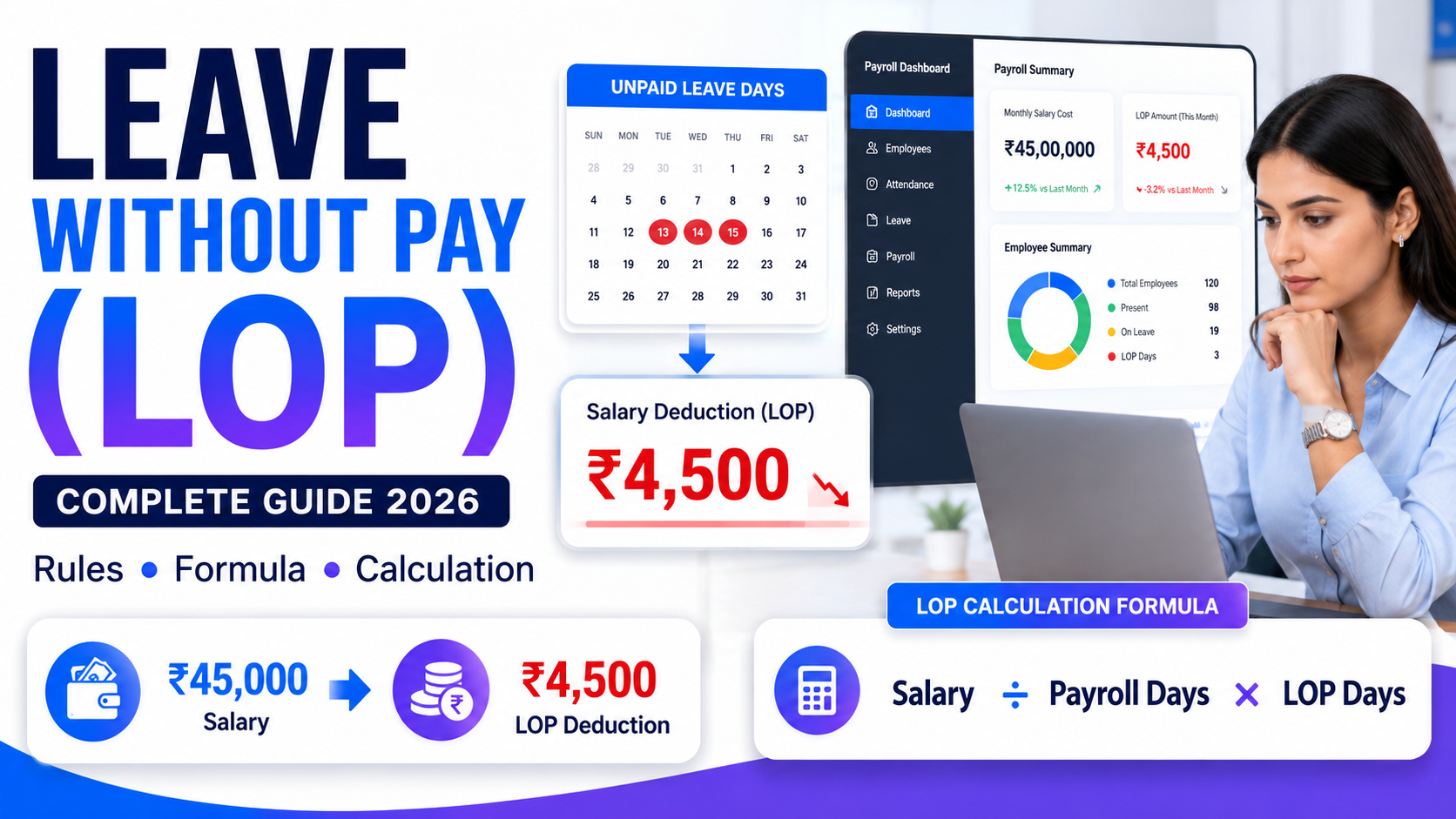
9. Leave Without Pay (LWP) / Loss of Pay (LOP)
Loss of Pay Leave applies when employees take leave without sufficient paid leave balance.
This may happen when:
- Leave balances are exhausted
- Leave requests are not approved
- Employees take extended absences
HR Teams Must Clarify
- Payroll deduction rules
- Approved unpaid leave procedures
- Unauthorized absence policies
- Attendance treatment
Clear communication prevents payroll confusion and disputes.
10. Public Holidays and Regional Holidays
Holiday structures in India often vary across:
- States
- Cities
- Religious observances
- Regional festivals
Organizations operating across multiple locations may require:
- Different holiday calendars
- Restricted holiday systems
- Location-specific leave planning
A centralized holiday management system helps ensure consistency across offices.
11. Sabbatical Leave
Sabbatical Leave refers to extended time away from work for:
- Higher education
- Research
- Personal development
- Family responsibilities
- Burnout recovery
Sabbaticals are usually longer than standard leave and may be paid or unpaid depending on company policy.
Organizations Should Define
- Minimum tenure requirements
- Duration allowed
- Return-to-work conditions
- Benefit eligibility during leave
Sabbaticals can improve long-term employee retention and engagement.
Why Businesses Need Smarter Leave Management
As organizations grow, manual leave management creates operational challenges such as:
- Incorrect leave balances
- Payroll errors
- Delayed approvals
- Policy confusion
- Poor visibility into workforce availability
Using an HRMS like ZestNexus helps organizations:
- Automate leave approvals
- Track leave balances accurately
- Configure custom leave policies
- Manage regional holiday calendars
- Improve transparency for employees and managers
Modern leave management systems reduce administrative workload while improving the employee experience.
Conclusion
A strong leave policy should achieve three goals:
- Maintain compliance with labour laws
- Support employee well-being
- Stay scalable for business growth
Whether it is earned leave, sick leave, maternity leave, comp-off, or sabbatical leave, every leave category contributes to a healthier and more organized workplace.
With structured leave management systems like ZestNexus, HR teams can simplify approvals, reduce manual errors, and manage workforce availability more efficiently.
Frequently Asked Questions
What are the main types of leave in India?
The most common leave types in India include Earned Leave, Casual Leave, Sick Leave, Maternity Leave, Paternity Leave, Marriage Leave, Bereavement Leave, Compensatory Off (Comp-Off), Sabbatical Leave, Public Holidays, and Leave Without Pay (LWP).
Is earned leave mandatory in India?
Earned leave provisions depend on applicable labour laws, state regulations, and company policies. Many organizations provide earned leave as part of statutory compliance and employee benefits.
Can employees combine different types of leave?
It depends on the organization’s leave policy. Some employers allow combinations of leave types, while others have restrictions based on operational requirements.
What is the difference between Leave Without Pay (LWP) and Loss of Pay (LOP)?
Loss of Pay usually refers to salary deductions when paid leave is unavailable or unauthorized, while Leave Without Pay may be formally approved according to company policy.
Is paternity leave mandatory for private companies in India?
No. Currently, there is no universal statutory requirement for paternity leave in the private sector. Availability depends on the employer’s leave policy.
How long is maternity leave in India?
Eligible women employees may receive up to 26 weeks of paid maternity leave for their first two children under the Maternity Benefit Act, subject to applicable eligibility criteria.
What is Compensatory Off (Comp-Off)?
Comp-Off is leave granted to employees who work on weekends, public holidays, or scheduled off-days due to business requirements, allowing them to take equivalent leave later.
Why should companies use HRMS software for leave management?
HRMS software automates leave approvals, accurately tracks leave balances, reduces payroll errors, improves transparency, simplifies policy management, and supports multiple holiday calendars from a single platform.
Similar blogs you may like