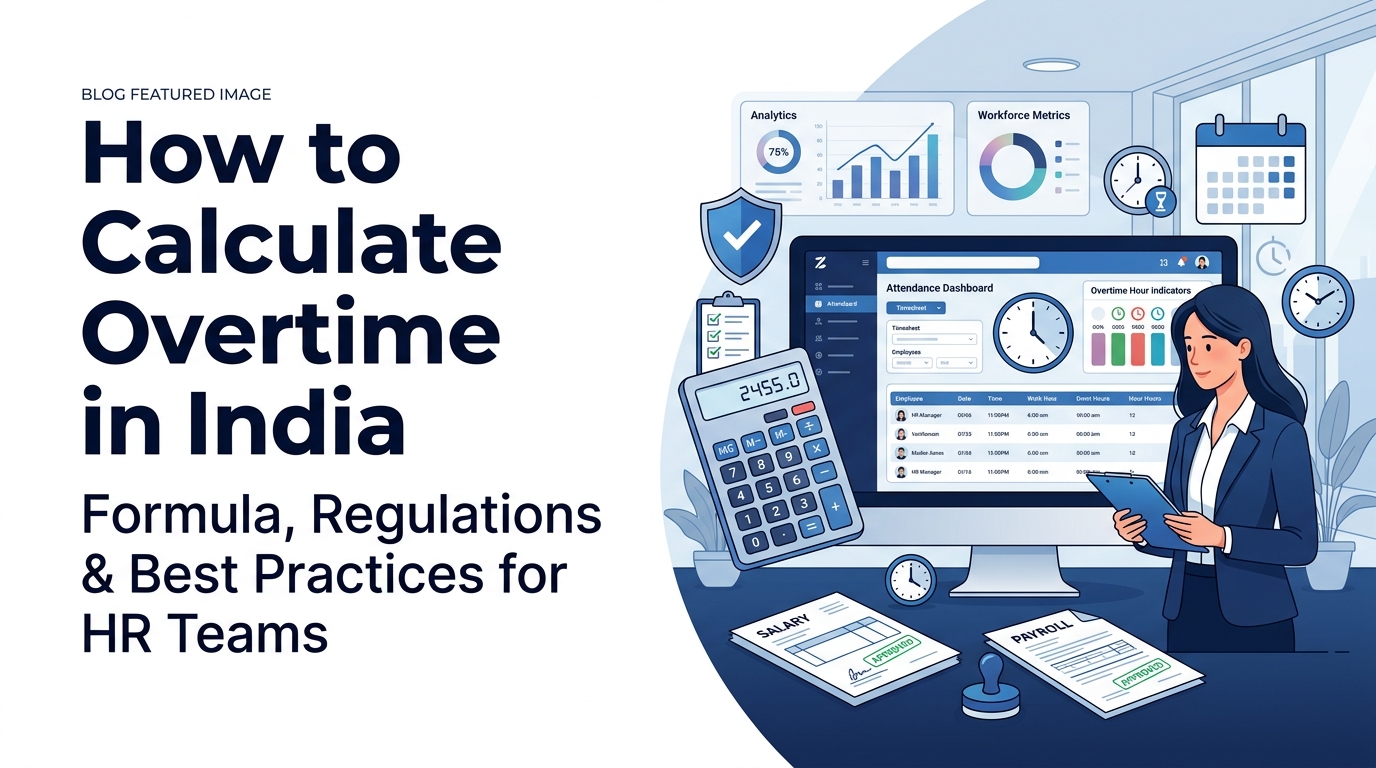
How to Calculate Overtime in India: Formula, Regulations & Best Practices for HR Teams
Learn how to calculate overtime pay in India, understand labor law requirements, avoid payroll errors, and simplify overtime management with HRMS software.
How to Calculate Overtime in India: Formula, Regulations & Best Practices for HR Teams
Managing overtime is an ongoing challenge for HR and payroll teams. Employees often work beyond their regular hours to meet project deadlines, handle seasonal workload spikes, or support business growth.
However, overtime management is about more than simply tracking extra hours. Organizations must ensure accurate calculations, timely payments, and compliance with labor laws.
Incorrect overtime calculations can lead to payroll errors, employee dissatisfaction, and legal complications.
In this guide, we’ll explore overtime pay calculations, Indian labor law requirements, common mistakes, and how an HRMS like ZestNexus can simplify overtime management.
What Is Overtime Pay?
Overtime pay is the additional compensation employees receive when they work beyond their standard working hours.
For example, if an employee’s regular working schedule is from 9:00 AM to 6:00 PM and they continue working until 8:00 PM, the additional two hours are considered overtime.
Under most labor regulations, overtime hours are compensated at a higher rate than normal working hours.
The purpose of overtime pay is to fairly compensate employees for the extra time and effort they contribute to the organization.
Why Accurate Overtime Calculation Matters
Accurate overtime calculations impact more than payroll. They influence employee satisfaction, compliance, and workforce productivity.
1. Improves Employee Satisfaction
Employees expect fair compensation for the additional hours they work. Accurate overtime payments help build trust and improve morale.
2. Supports Employee Retention
Fair compensation practices reduce employee frustration and contribute to higher retention rates.
3. Enhances Workplace Transparency
Consistent overtime calculations create a sense of fairness and transparency across the organization.
4. Reduces Compliance Risks
Proper overtime payments help organizations remain compliant with labor laws and avoid potential legal disputes.
Overtime Regulations in India
Overtime laws in India vary based on industry, employee category, and state regulations.
The Factories Act, 1948
Under the Factories Act:
- Employees working more than 9 hours per day or 48 hours per week may be eligible for overtime pay.
- Overtime is generally paid at twice the employee’s ordinary wage rate.
The Minimum Wages Act, 1948
The Act ensures that employees receive at least the minimum wage and are compensated appropriately for overtime work.
State Shops and Establishments Acts
Each state may have its own Shops and Establishments Act that governs:
- Working hour limits
- Overtime eligibility
- Overtime payment rates
- Industry-specific labor requirements
Because regulations vary by state, HR teams should regularly review applicable labor laws.
How to Calculate Overtime Pay for Salaried Employees
For salaried employees, overtime calculations are typically based on eligible salary components such as:
- Basic Salary
- Dearness Allowance (DA)
- Other eligible allowances (as per company policy)
Overtime Formula
Overtime Pay =
(2 × Eligible Monthly Salary Components ÷ Total Monthly Working Hours)
× Overtime Hours Worked
Overtime Calculation Example
Assumptions
| Component | Amount |
|---|---|
| Basic Salary | ₹100,000 |
| Dearness Allowance (DA) | ₹10,000 |
| Other Allowances | ₹4,000 |
| Working Days | 30 |
| Working Hours Per Day | 8 |
| Overtime Hours | 4 |
Step 1: Calculate Monthly Working Hours
30 × 8 = 240 HoursStep 2: Calculate Hourly Rate
₹114,000 ÷ 240 = ₹475Step 3: Calculate Overtime Rate
₹475 × 2 = ₹950Step 4: Calculate Overtime Payment
₹950 × 4 = ₹3,800Final Overtime Pay
The employee would receive:
₹3,800 as overtime compensation.
Common Overtime Calculation Mistakes
Even experienced HR teams can make mistakes while processing overtime.
Using Incorrect Overtime Rates
Many organizations mistakenly use the regular hourly rate instead of applying the legally required overtime multiplier.
Ignoring State-Specific Regulations
Different states have different overtime requirements. Failure to comply can result in penalties and legal issues.
Manual Attendance Errors
Missed punches, inaccurate timesheets, and incorrect attendance records can directly impact overtime calculations.
Poor Documentation
Lack of proper overtime approval records often leads to disputes and payroll inconsistencies.
Best Practices for Managing Overtime
Automate Attendance Tracking
Automated attendance systems improve accuracy and eliminate manual tracking errors.
Establish Clear Overtime Policies
Organizations should clearly define:
- Overtime eligibility
- Approval procedures
- Compensation rules
Conduct Regular Payroll Audits
Periodic payroll reviews help identify discrepancies before they become major issues.
Stay Updated on Labor Laws
HR teams should regularly monitor labor law updates and adjust payroll practices accordingly.
How ZestNexus Simplifies Overtime Management
As businesses grow, managing overtime manually becomes increasingly difficult.
ZestNexus offers an end-to-end HRMS solution that helps organizations:
- Automate attendance tracking
- Monitor employee working hours in real time
- Configure flexible overtime policies
- Reduce payroll calculation errors
- Improve payroll accuracy
- Maintain labor law compliance
- Generate workforce and payroll insights
By integrating attendance, payroll, and employee management into a single platform, ZestNexus helps HR teams save time while ensuring employees are compensated accurately.
Conclusion
Overtime management is about more than payroll processing. It directly impacts employee satisfaction, organizational transparency, and legal compliance.
Accurate overtime calculations help businesses build trust with employees while reducing compliance risks.
As organizations scale, manual overtime management becomes increasingly inefficient. An HRMS like ZestNexus automates attendance tracking, payroll calculations, and compliance monitoring, enabling HR teams to focus on strategic priorities.
If you’re looking to simplify overtime management and improve payroll accuracy, adopting an HRMS can be a valuable step toward building a more efficient workplace.
Frequently Asked Questions
What is overtime pay?
How is overtime calculated in India?
Is overtime mandatory for all employees?
Can HRMS software automate overtime calculations?
Why is accurate overtime management important?
Similar blogs you may like