Formal Communication: Meaning, Types, Advantages, Disadvantages & Examples
Learn what formal communication is, its importance, types, channels, advantages, disadvantages, examples, and how HR technology can improve workplace communication.
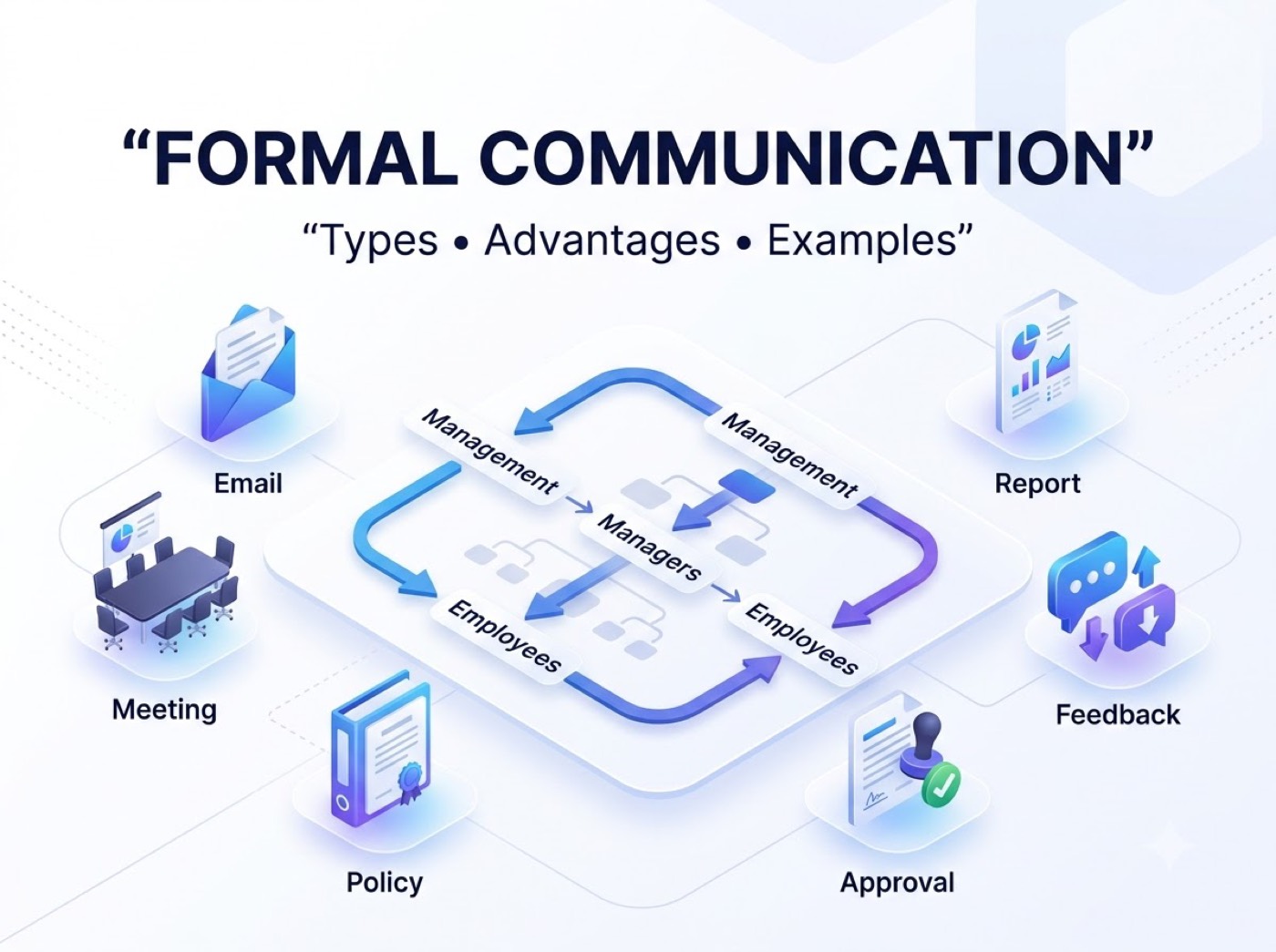
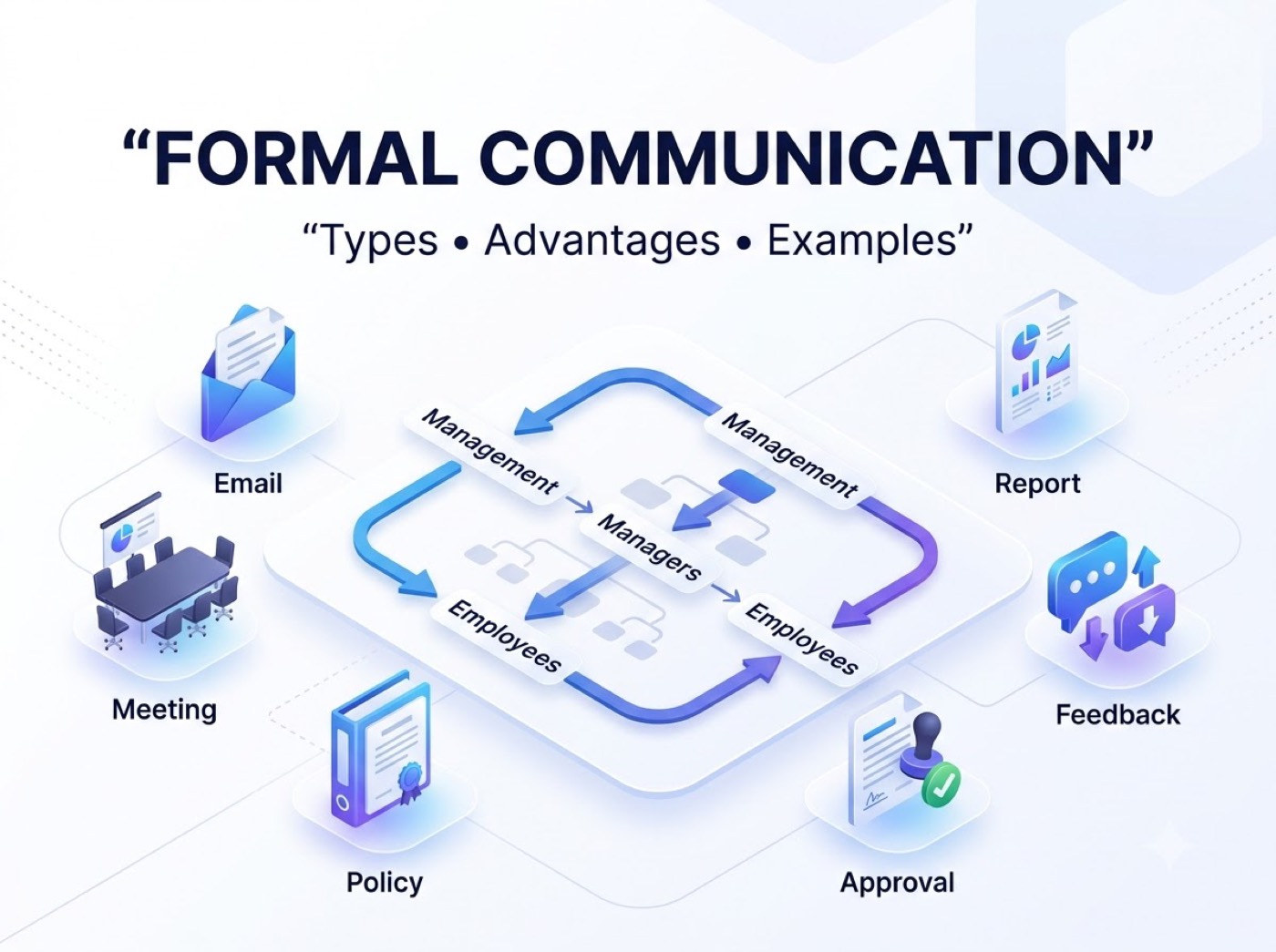
Communication is key for success at any organization. For most businesses, once they reach a certain size, communication has to become more formalized, with information reaching the appropriate people at the correct times.
Out of the different communication systems in organizations, one of the most important is formal communication. It lays out a clear roadmap for communicating work instructions, updates, policies, feedback, and approvals.
In this article, we will explore what formal communication is, its benefits and disadvantages, along with its types, channels, and examples.
What Is Formal Communication?
Formal communication involves the exchange of information in a structured manner within an organization through directly and formally established channels.
This typically mirrors the hierarchy, policies, and procedures followed in an organization, including how employees and managers communicate.
Formal communication is used to communicate:
- Important announcements
- Delegation of tasks and responsibilities
- People updates or news
- Achievements
- Approvals
- Plan changes
- Organizational decisions
- Important information sharing
Formal communication can be verbal or written.
Examples include:
- A conversation between a manager and employee about performance expectations
- An announcement by the Human Resources team introducing a new company policy
- An official update to management about project status
Formal communication allows organizations to keep messaging clear and consistent across teams, maintain accountability across levels of management, and build coordination.
Advantages of Formal Communication
Having a structured formal communication system can lead to better coordination within the workplace and contribute toward establishing professionalism and accountability in an organization.
Enhanced Clarity
Formal communication gives precise information to employees in a structured manner.
Because communication is routed through specific channels and processes, there can be less ambiguity or miscommunication.
Clear communication can also enhance transparency between employees and leadership.
Improved Workplace Efficiency
If employees understand where they can find information or whom to reach out to for approvals, updates, and decisions, everyday workflows can become more streamlined.
Formal communication practices can also help build bridges through regular and consistent feedback, ongoing collaboration between employees and managers, and coordinated performance improvement initiatives.
Better Documentation and Compliance
A lot of formal communication occurs through official documents such as:
- Emails
- Reports
- Policies
- Notices
These records can serve as a helpful reference for:
- Internal processes
- Audits
- Compliance
- Resolving workplace disputes when needed
Promotes Professionalism
Formal communication helps employees and managers maintain a suitable professional tone when sharing workplace information.
A culture of standardized communication can help make a workplace more organized and professional.
Builds Trust and Accountability
Clarity through effective communication helps employees understand their roles, expectations, processes, and critical organizational decisions.
When information is disseminated uniformly through carefully structured records, employees and managers know what was communicated and what actions are required.
This can help strengthen accountability and teamwork in the workplace.
Disadvantages of Formal Communication
While formal communication helps create structure, it may take more time and sometimes make workplace communication more complicated.
Rigidity
Well-structured communication systems can create a bureaucratic workplace.
Organizations with many levels of approval may be slower to react in urgent situations.
Inflexibility
Strict communication procedures can sometimes make it difficult for employees to communicate ideas quickly.
If employees have to follow lengthy processes, it can affect:
- Creativity
- Collaboration
- Employee engagement
Hierarchical Barriers
Organizations with different levels of management can create a communication divide between top-level executives and frontline employees.
When communication has to go through several levels of hierarchy, important feedback or concerns may take longer to reach decision-makers.
Time-Consuming
Formal communication may involve:
- Writing documents
- Scheduling meetings
- Gaining approvals
- Maintaining records
These processes enhance accountability but can also slow down information sharing and decision-making, especially in dynamic workplaces.
Types of Formal Communication
Formal communication is divided into multiple forms based on the purpose, audience, and type of information being shared.
Written Communication
Written communication includes:
- Emails
- Memos
- Reports
- Official letters
- Policies
- Procedures
- Notices
- Employee documentation
Written communication provides a record that employees and managers can reference at a later date.
Verbal Communication
Formal verbal communication takes place through structured conversations such as:
- Team meetings
- Management meetings
- Presentations
- Conferences
- Briefings
- Official discussions
These formats allow organizations to make announcements, provide updates, discuss business-related matters, and coordinate teams.
Policy and Procedure Communication
Policies, procedures, rules, and workplace guidelines are commonly used to communicate expectations to employees.
For example:
- Attendance policies
- Leave processes
- Workplace conduct guidelines
- Security protocols
- Organizational operational procedures
Such communication helps maintain consistency across the organization.
Official Announcements
Official announcements are used to communicate important organizational information such as:
- Leadership changes
- Company policies
- Strategic initiatives
- Organizational updates
- Important business announcements
An officially sanctioned communication channel helps ensure consistency in the messaging employees receive.
Meetings and Briefings
Formal meetings create an environment for discussing business matters in a structured manner.
Examples include:
- Board meetings
- Department meetings
- Team meetings
- Staff briefings
- Project review meetings
- Performance discussions
Such meetings can be used to:
- Share updates
- Discuss issues
- Make decisions
- Create action plans
- Delegate responsibilities
Key Characteristics of Formal Communication
Here are the key characteristics of formal communication:
- It adheres to established organizational processes and communication lines.
- It employs a formal tone and appropriate language.
- It is usually documented for future reference.
- It may follow an organizational hierarchy.
- It follows organizational policies and procedures.
- It can support compliance requirements.
- It focuses on clarity and precision.
- It commonly takes place through emails, meetings, reports, memos, and policies.
- It creates accountability for important workplace communication.
Types of Formal Communication Channels
Formal communication can flow in different directions within an organization.
The four common channels are:
- Downward communication
- Upward communication
- Horizontal communication
- Diagonal communication
Downward Communication
Downward communication refers to communication that flows from upper management toward lower levels of employees within an organizational structure.
Managers and senior leaders may use downward communication to communicate:
- Instructions
- Company goals
- Policies
- Responsibilities
- Performance expectations
- Organizational decisions
For example, a department head communicating new quarterly targets to team members is an example of downward communication.
Upward Communication
Upward communication flows from employees to managers or senior leadership.
Employees can use upward communication to share:
- Feedback
- Suggestions
- Concerns
- Progress updates
- Reports
- Workplace issues
For example, an employee submitting a formal report to their manager is an example of upward communication.
Horizontal Communication
Horizontal communication refers to communication between employees or teams working at similar levels within an organizational hierarchy.
For example, a marketing manager coordinating with a sales manager about a new campaign is an example of horizontal communication.
This form of communication facilitates collaboration and coordination between departments.
Diagonal Communication
Diagonal communication occurs between employees from different departments and different levels of the organizational hierarchy.
It enables employees to communicate directly across functions when their work requires coordination.
For example, an HR executive communicating with a finance manager about employee payroll documentation is an example of diagonal communication.
Formal Communication vs. Informal Communication
Both formal and informal communication serve different purposes in the workplace.
| Formal Communication | Informal Communication |
|---|---|
| Uses official communication channels | Usually happens through unofficial channels |
| Follows organizational processes | Is more flexible |
| Often follows a defined hierarchy | Can occur between employees at different levels of seniority |
| Is generally documented | May not be documented |
| Focuses on official workplace information | May consist of informal or everyday conversations |
| Can be slower because of established processes | Is usually faster |
| Provides greater structure and accountability | Provides greater flexibility |
Most organizations need both types of communication.
Formal communication provides structure, accountability, and transparency, while informal communication can support faster interaction and workplace relationships.
Formal Language vs. Formal Communication
Although the two terms are connected, formal language and formal communication have different meanings.
Formal Language
Formal language describes the use of words, grammar, and vocabulary in professional, academic, or business situations.
It generally avoids:
- Slang
- Excessively casual expressions
- Informal language
Formal Communication
Formal communication refers to how information moves through an organization.
It follows established:
- Channels
- Processes
- Roles
- Communication structures
For example, an HR email announcing a new leave policy is an example of formal organizational communication and generally uses professional language.
Examples of Formal Communication
Organizations use formal communication in many different situations.
Memos
Memos can be used for:
- Internal announcements
- Policy updates
- Instructions
- Important employee information
Emails
Official emails are commonly used for:
- Announcements
- Requests
- Instructions
- Approvals
- Business updates
Reports
Reports provide organized information about:
- Business activities
- Performance
- Projects
- Financial information
- Organizational functions
Meetings
Formal meetings provide a structured environment for discussing business matters, reviewing performance, and making decisions.
Employee Handbooks
Employee handbooks communicate:
- Company policies
- Workplace rules
- Procedures
- Employee expectations
- Workplace guidelines
Presentations
Management meetings, training sessions, conferences, and business reviews often use formal presentations.
Official Letters
Official letters are used for direct and formal correspondence with employees, business partners, customers, and other external parties.
Examples include:
- Appointment letters
- Notices
- Official business correspondence
Enhancing Formal Communication Through HR Technology
As organizations become increasingly digital, HR departments need reliable systems to organize employee information and manage workplace processes.
An HRMS can help centralize important employee communication, documents, policies, attendance information, leave records, and payroll information in one place.
Instead of relying on scattered emails, spreadsheets, and manual records, HR teams can benefit from a centralized system that makes critical information easier to access.
With solutions such as ZestNexus, organizations can consolidate HR processes including:
- Core HR
- Document management
- Attendance management
- Leave management
- Payroll
- Performance management
- Recruitment
- Employee self-service
An HRMS can also help HR teams create more structured workflows while allowing employees to access relevant information more easily.
Frequently Asked Questions
What is formal communication and how is it different from informal communication?
Formal communication is an official method of exchanging information through established organizational channels, processes, and structures.
Informal communication is generally more flexible and relaxed and does not necessarily follow prescribed organizational processes.
What is formal language?
Formal language is the use of professional grammar, vocabulary, and communication styles appropriate for business, academic, or professional situations.
What is formal communication?
Formal communication refers to the exchange of information through officially designated organizational channels.
Examples include:
- Emails
- Reports
- Meetings
- Notices
- Policies
- Official documents
What are some common types of formal communication?
Common examples include:
- Official emails
- Memos
- Business reports
- Meetings
- Employee handbooks
- Presentations
- Company policies
- Official letters
- Workplace notices
What are the four channels of formal communication?
The four commonly used channels are:
- Downward communication
- Upward communication
- Horizontal communication
- Diagonal communication
What is the importance of formal communication in an organization?
Formal communication provides organizations with:
- Structure
- Consistency
- Documentation
- Coordination
- Accountability
- Clear communication channels
It helps employees and managers communicate important workplace information and make decisions through established processes.
Conclusion
Organizations need formal communication to convey critical information effectively.
Formal communication includes management directions, HR policies, workplace protocols, employee feedback, business reports, meetings, and official announcements.
When used effectively, it can improve clarity, consistency, accountability, documentation, and coordination across the workplace.
However, organizations should not complicate communication unnecessarily. The objective should be to maintain the right balance between structure and flexibility.
Modern HR technology allows organizations to store critical employee data in one place, automate processes and paperwork, improve documentation, and support more efficient workplace communication management.
A defined communication process, combined with the right HR technology, can help HR teams reduce administrative work and spend more time developing their people.
Similar blogs you may like