Human Resource Management Scope: A Complete Guide for Modern Business in 2026
Explore the scope of human resource management, from recruitment and payroll to employee development, compliance, and strategic workforce planning.
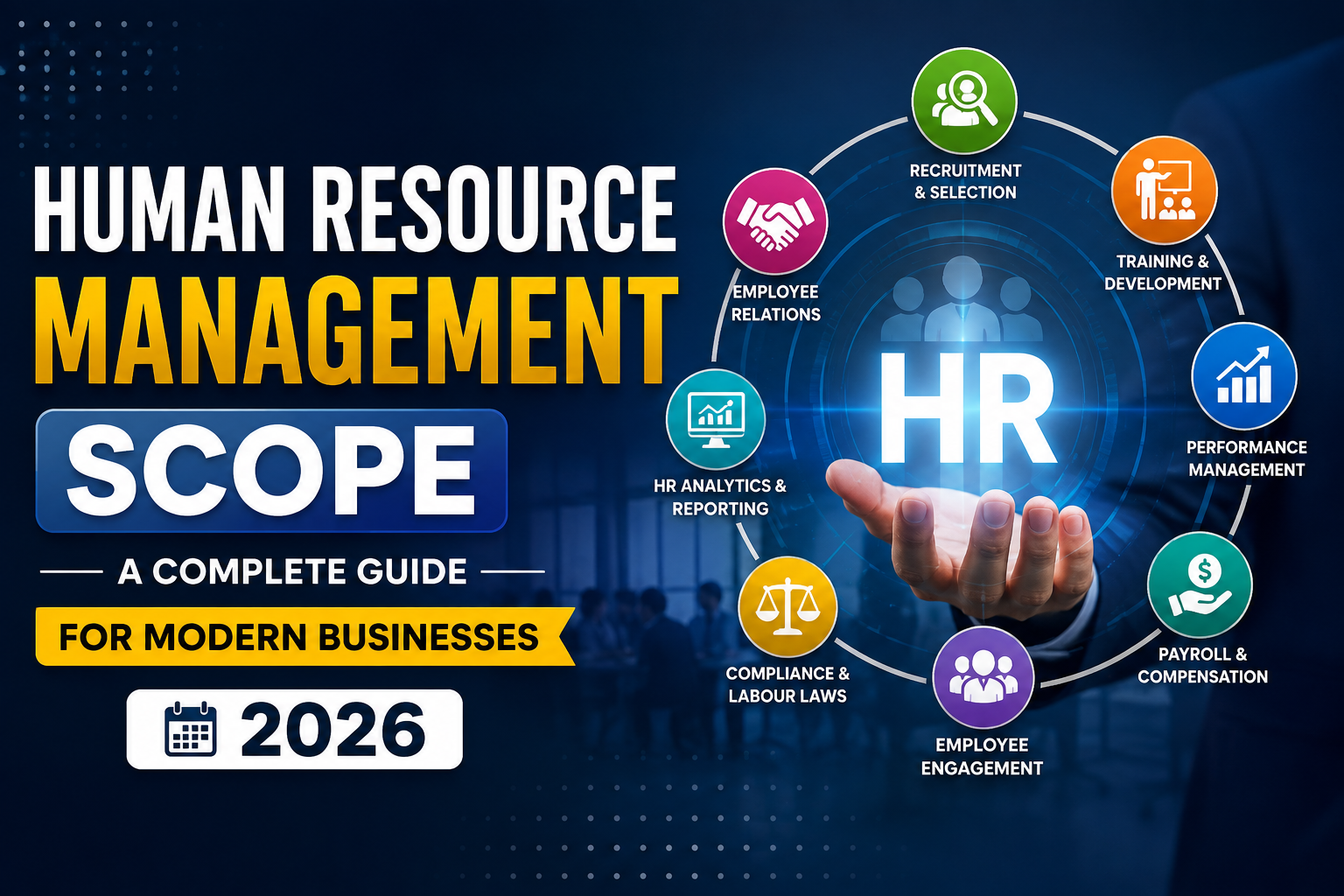
Human resource management (HRM) is the discipline of planning, developing, supporting, and retaining an organisation’s workforce. Its scope is far broader than hiring and payroll: it connects people practices to business performance.
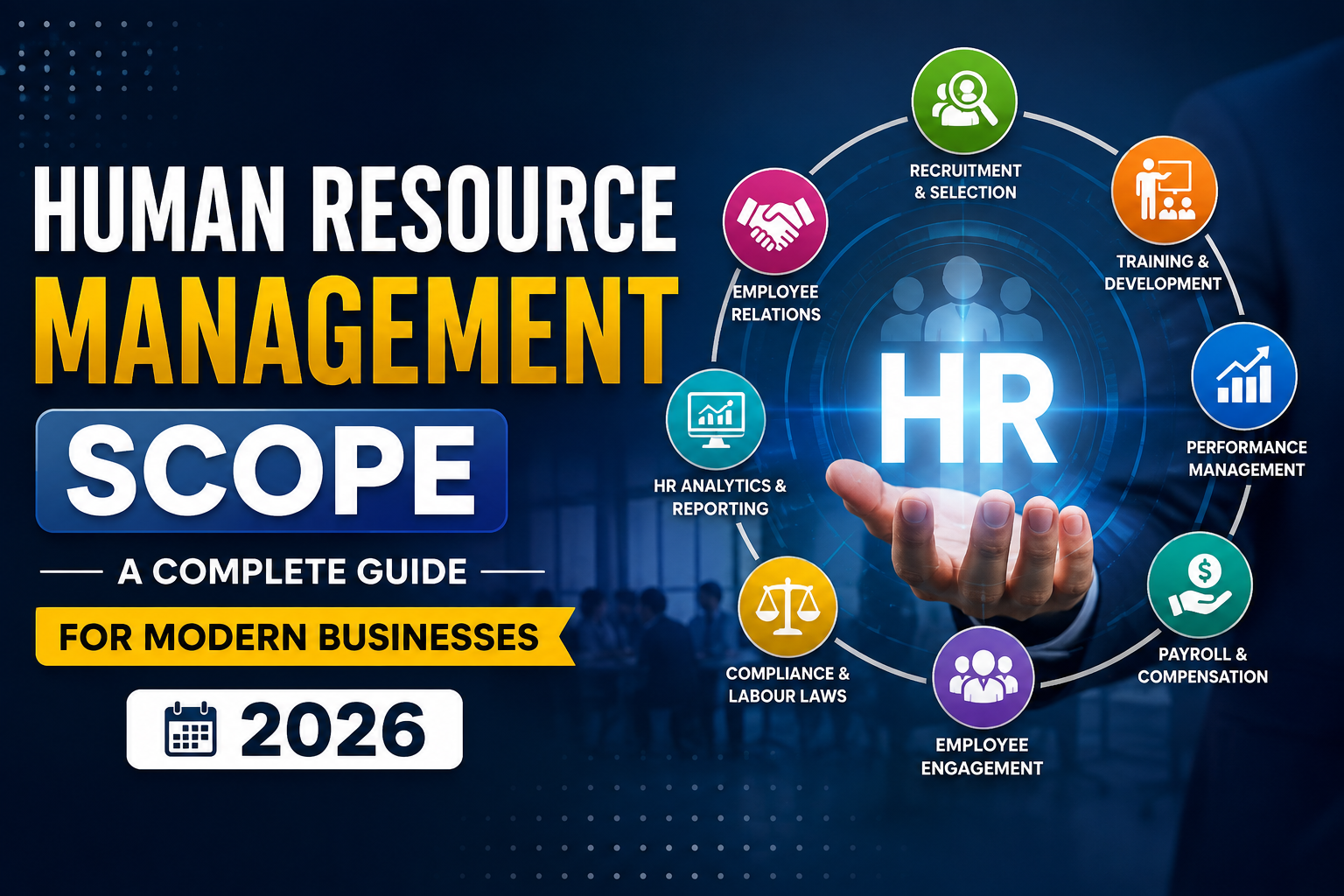
Core scope of HRM
Workforce planning and recruitment
HR forecasts talent needs, defines roles, attracts candidates, manages selection, and ensures new employees receive a strong start. This work helps the organisation maintain the right skills at the right time.
Training and development
Learning programmes, coaching, career paths, and leadership development help employees build capability while preparing the business for future needs.
Performance and rewards
HR designs goal-setting, feedback, appraisal, recognition, compensation, benefits, and promotion processes. Fair, transparent systems support motivation and retention.
Employee relations and wellbeing
This includes communication, grievance handling, workplace culture, engagement, health and safety, and policies that create a respectful and productive workplace.
Payroll, records, and compliance
HR maintains accurate employee data, attendance and leave records, payroll inputs, statutory obligations, and policy documentation. Sound processes reduce risk and build employee trust.
HR analytics and technology
Modern HRM uses data to understand turnover, hiring performance, skills gaps, absenteeism, and engagement. An HRMS makes this information more accessible and helps teams automate routine work.
Strategic role of HRM
HRM contributes to business strategy by aligning workforce capability with growth plans. It supports succession planning, organisational design, change management, and a culture in which employees can perform at their best.
How ZestNexus supports modern HRM
ZestNexus connects recruitment, onboarding, attendance, leave, payroll, performance, and employee records in one platform. By reducing manual administration, it gives HR teams more time for workforce planning and employee development.
Frequently Asked Questions
What is the scope of HRM?
The scope of HRM includes workforce planning, recruitment, development, performance, compensation, employee relations, compliance, and HR analytics.
Why is HRM important for a business?
HRM helps an organisation attract capable people, build skills, create fair processes, maintain compliance, and align workforce capability with business goals.
What is strategic HRM?
Strategic HRM connects people practices and workforce planning to an organisation’s long-term business objectives.
How does HR technology support HRM?
An HRMS centralises employee data and automates routine workflows, giving HR teams better visibility and more time for strategic work.
Similar blogs you may like