What is Seasonal Work? Meaning, Benefits, Rules & Examples
Learn what seasonal work is, how seasonal employment works, its benefits for employers and employees, examples of seasonal jobs, labor laws, payroll rules, and HR best practices.
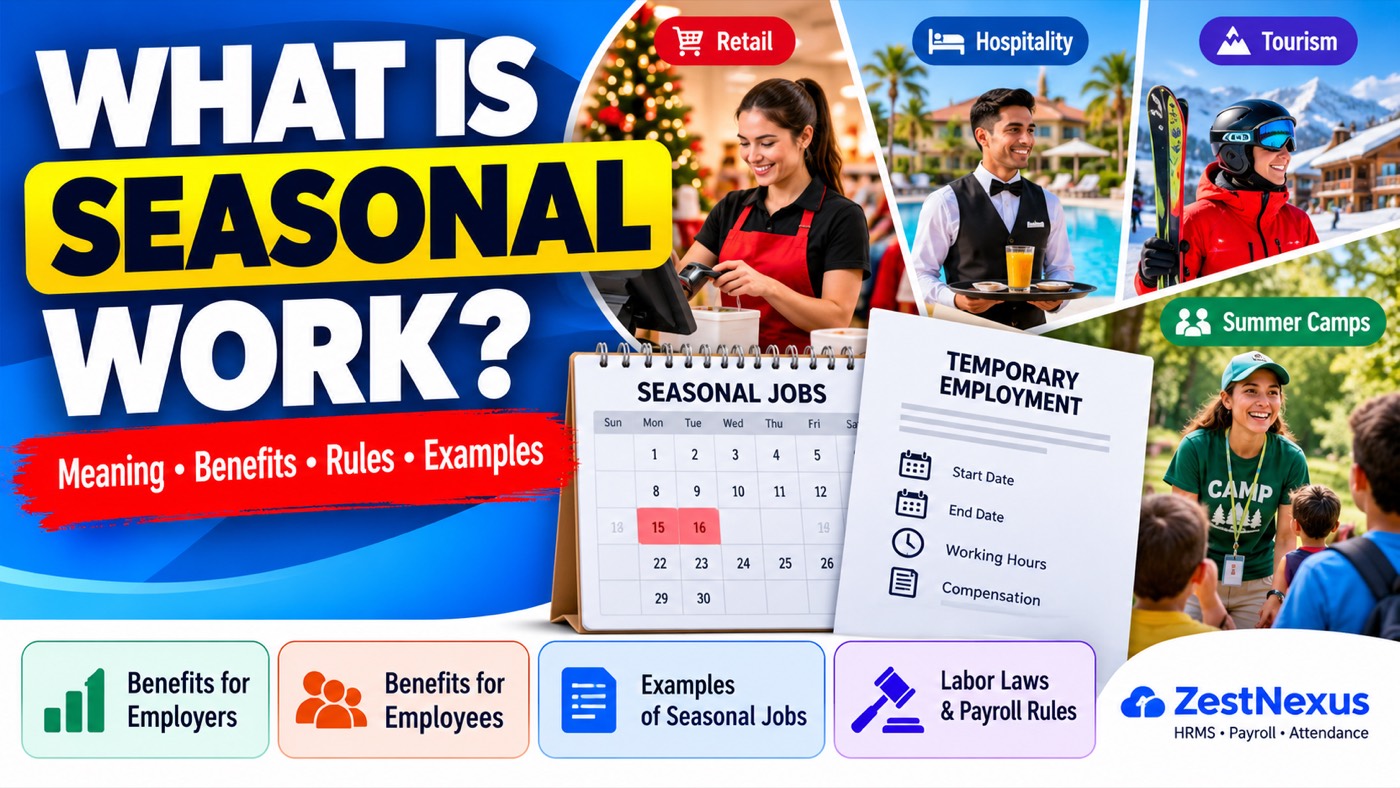
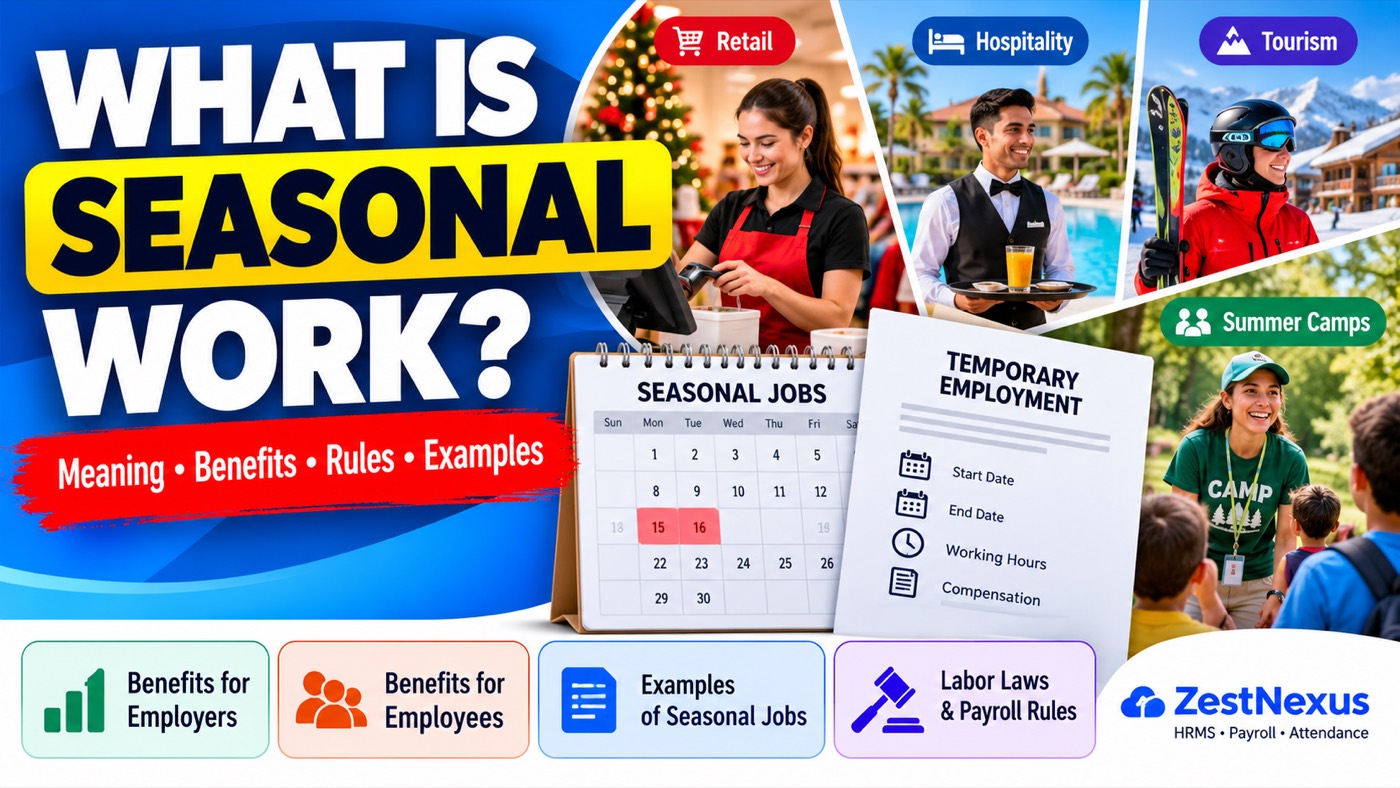
Seasonal work is a form of short-term employment used by organizations to meet temporary business needs during specific periods of the year. Businesses hire seasonal employees when customer demand increases for a limited time, such as during holidays, festivals, tourism seasons, harvest periods, or summer vacations.
Seasonal employment helps organizations manage peak workloads without hiring permanent employees for year-round positions.
What is Seasonal Employment?
Seasonal employment refers to temporary jobs that exist only during a particular season or business cycle. Employers hire workers for a fixed period based on seasonal demand.
Seasonal hiring commonly occurs during:
- Holiday shopping seasons
- Summer vacation periods
- Tourism and travel peak seasons
- Festival and event seasons
- Agricultural harvest seasons
- Tax filing season
Some seasonal jobs are full-time, while many are part-time. The duration can range from a few weeks to several months, depending on the employer and industry.
Seasonal jobs are temporary positions created to handle increased business demand during a specific time of the year.
Benefits of Seasonal Jobs for Employers
Seasonal employment provides flexibility and helps businesses manage workforce requirements efficiently.
Why Employers Hire Seasonal Workers
- Meet increased customer demand during peak seasons
- Reduce labor costs during off-season periods
- Avoid maintaining a large permanent workforce
- Quickly fill temporary staffing gaps
- Keep operations running smoothly during busy periods
Many organizations use seasonal hiring to maintain productivity without increasing long-term payroll expenses.
Employer Benefits at a Glance
| Benefit | How It Helps Businesses |
|---|---|
| Flexible Workforce | Hire employees only when demand increases. |
| Lower Payroll Costs | No year-round salary commitment for seasonal roles. |
| Faster Hiring | Recruit temporary workers quickly for peak demand. |
| Operational Support | Manage workload during holidays, events, or busy seasons. |
| Workforce Scalability | Increase or decrease staff based on business needs. |
Why Seasonal Jobs Are Popular Among Employees
Seasonal jobs offer workers an opportunity to earn income without committing to long-term employment.
Benefits for Employees
- Earn additional income during holidays or vacations
- Gain work experience in different industries
- Flexible working hours for students and part-time workers
- Opportunity to develop new skills
- Possibility of receiving a permanent job offer after the season
Many employers use seasonal hiring as a way to identify talented employees for future full-time positions.
Examples of Seasonal Jobs
Seasonal jobs exist across many industries where customer demand fluctuates throughout the year.
Common Seasonal Employment Examples
| Industry | Seasonal Roles |
|---|---|
| Tourism & Hospitality | Hotel staff, resort staff, restaurant servers, housekeeping. |
| Retail | Sales associates, cashiers, inventory staff during holiday shopping seasons. |
| Entertainment | Theme park staff, amusement park operators, event crew. |
| Education | Summer camp counselors, teachers, activity coordinators. |
| Finance | Tax consultants, accountants, tax preparation assistants during tax season. |
| Agriculture | Harvest workers, packing staff, farm laborers. |
Seasonal Work by Industry
- Hotels and resorts hire additional staff during vacation seasons
- Retail stores recruit temporary employees during festive sales and holiday shopping
- Theme parks hire seasonal workers during spring, summer, and holiday periods
- Summer camps recruit counselors and instructors during school vacations
- Tax preparation firms hire professionals between January and tax filing deadlines
How Long Does Seasonal Work Last?
The duration of seasonal employment depends on business requirements and industry demand.
Typical Duration
- A few weeks
- One to three months
- Entire holiday season
- Summer vacation period
- Peak tourism season
- Agricultural harvest season
Some employment contracts clearly mention a start date and end date, while others depend on business demand and customer traffic.
Seasonal employment usually ends when the seasonal demand decreases.
Do Seasonal Jobs Have Fixed End Dates?
Some organizations specify the employment period in advance, especially for structured seasonal programs like:
- Summer camps
- Holiday retail hiring
- Festival events
- Temporary promotional campaigns
Other employers may extend or shorten seasonal employment depending on business performance and operational needs.
Part-Time vs Seasonal Work
Although seasonal work and part-time work may overlap, they are different employment types.
| Part-Time Work | Seasonal Work |
|---|---|
| Ongoing employment with fewer weekly hours. | Temporary employment for a limited season. |
| May continue throughout the year. | Ends after seasonal demand finishes. |
| Usually fewer than 30 hours per week. | Can be full-time or part-time. |
| Not necessarily temporary. | Temporary by nature. |
Key Difference
- Part-Time Employee: Works reduced weekly hours but may have ongoing employment.
- Seasonal Employee: Works temporarily during a specific season regardless of weekly hours.
Seasonal employees may work either full-time or part-time based on employer requirements.
Seasonal Employment Rules and Labor Laws
Seasonal employees are generally covered by labor laws applicable to temporary workers.
Important Employment Rules
Seasonal employers should comply with regulations related to:
- Minimum wage
- Overtime pay
- Working hours
- Recordkeeping
- Youth employment rules
- Payroll taxes
The exact requirements vary by country, state, and local labor laws.
Minimum Wage for Seasonal Employees
Seasonal employees are generally entitled to at least the applicable minimum wage under employment laws.
Organizations should pay whichever minimum wage is applicable based on:
- National regulations
- State regulations
- Local employment laws
Overtime Rules
Many labor laws require overtime pay when employees work beyond the standard weekly limit.
If a seasonal employee works more than the defined overtime threshold during a busy season, overtime pay may apply according to applicable labor regulations and company policy.
Rules for Young Seasonal Workers
Some labor laws place restrictions on seasonal employment for minors.
Examples include:
- Limited working hours for younger employees
- Restrictions on hazardous occupations
- Age-specific employment eligibility
Employers should follow applicable youth employment regulations in their region.
Payroll and Tax Rules for Seasonal Employees
Seasonal workers are generally treated similarly to other employees for payroll and taxation purposes.
Organizations may need to manage:
- Salary payments
- Payroll deductions
- Income tax deductions
- Attendance records
- Payslips
- Employee records
Payroll treatment depends on applicable tax laws and company payroll policies.
Challenges of Hiring Seasonal Employees
Seasonal hiring creates unique HR and payroll challenges.
Common Challenges
- Recruiting large numbers of employees quickly
- Managing onboarding within a short period
- Tracking attendance accurately
- Handling temporary payroll processing
- Managing employee records for fixed-term contracts
- Scheduling shifts during peak business periods
Without a structured HR process, seasonal hiring can become time-consuming and error-prone.
Best Practices for Managing Seasonal Workers
HR teams can improve seasonal workforce management with a structured hiring and payroll process.
1. Plan Hiring Before Peak Season
Forecast staffing needs early to avoid last-minute recruitment.
2. Create Clear Employment Contracts
Mention:
- Start date
- End date
- Working hours
- Compensation
- Job responsibilities
3. Automate Attendance Tracking
Use attendance software to monitor seasonal employee working hours.
4. Connect Payroll with Attendance
Automated payroll reduces manual calculation errors for temporary employees.
5. Maintain Employee Records
Keep all seasonal employee information in a centralized HR system.
Managing Seasonal Employees with ZestNexus HRMS
Managing seasonal hiring manually through spreadsheets can become difficult during peak business seasons.
ZestNexus HRMS helps organizations streamline seasonal workforce management through one centralized platform.
ZestNexus Helps Manage
- Seasonal employee onboarding
- Employee records
- Attendance tracking
- Shift scheduling
- Leave management
- Payroll processing
- Salary calculations
- HR reports and analytics
Benefits of Using ZestNexus for Seasonal Hiring
- Faster onboarding process
- Centralized employee database
- Accurate attendance records
- Automated payroll calculations
- Reduced manual HR work
- Better workforce visibility during peak seasons
Instead of managing multiple spreadsheets, HR teams can handle seasonal employees, attendance, payroll, and HR reports from one integrated HRMS.
Frequently Asked Questions
What is seasonal work?
Seasonal work is temporary employment offered during a specific season or period of increased business demand.
How long does seasonal employment last?
Seasonal employment may last from a few weeks to several months, depending on business needs and seasonal demand.
Can seasonal employees work full-time?
Yes. Seasonal employees may work either full-time or part-time depending on the employer’s staffing requirements.
What industries hire seasonal workers?
Retail, hospitality, tourism, agriculture, education, entertainment, logistics, and finance commonly hire seasonal employees during peak seasons.
Do seasonal employees receive overtime pay?
Overtime eligibility depends on applicable labor laws, employment contracts, and company payroll policies.
Can seasonal jobs become permanent?
Yes. Many organizations offer permanent employment to seasonal workers who perform well during the seasonal hiring period.
Conclusion
Seasonal work is an effective staffing solution for organizations that experience temporary increases in customer demand. It allows businesses to hire employees for a defined period while keeping workforce costs flexible during off-season months.
For employees, seasonal jobs provide valuable work experience, additional income, flexible schedules, and sometimes opportunities for permanent employment.
As seasonal hiring grows, managing recruitment, attendance, payroll, and employee records manually can become challenging. An integrated HRMS like ZestNexus helps organizations manage seasonal employees efficiently through centralized hiring, attendance tracking, payroll automation, and HR reporting.
Similar blogs you may like