How HRMS Helps HR Executives Save Time
Discover how HRMS software helps HR executives automate routine tasks, improve efficiency, and focus on strategic workforce initiatives.
How HRMS Helps HR Executives Save Time
The Evolution of the HR Executive
The role of an HR executive has evolved significantly over the years. Today’s HR professionals are no longer limited to maintaining employee records and managing administrative tasks. They are expected to contribute to organizational growth through workforce planning, employee engagement, talent management, and strategic decision-making.
However, administrative responsibilities often consume a large portion of an HR executive’s day, leaving little room for strategic initiatives.
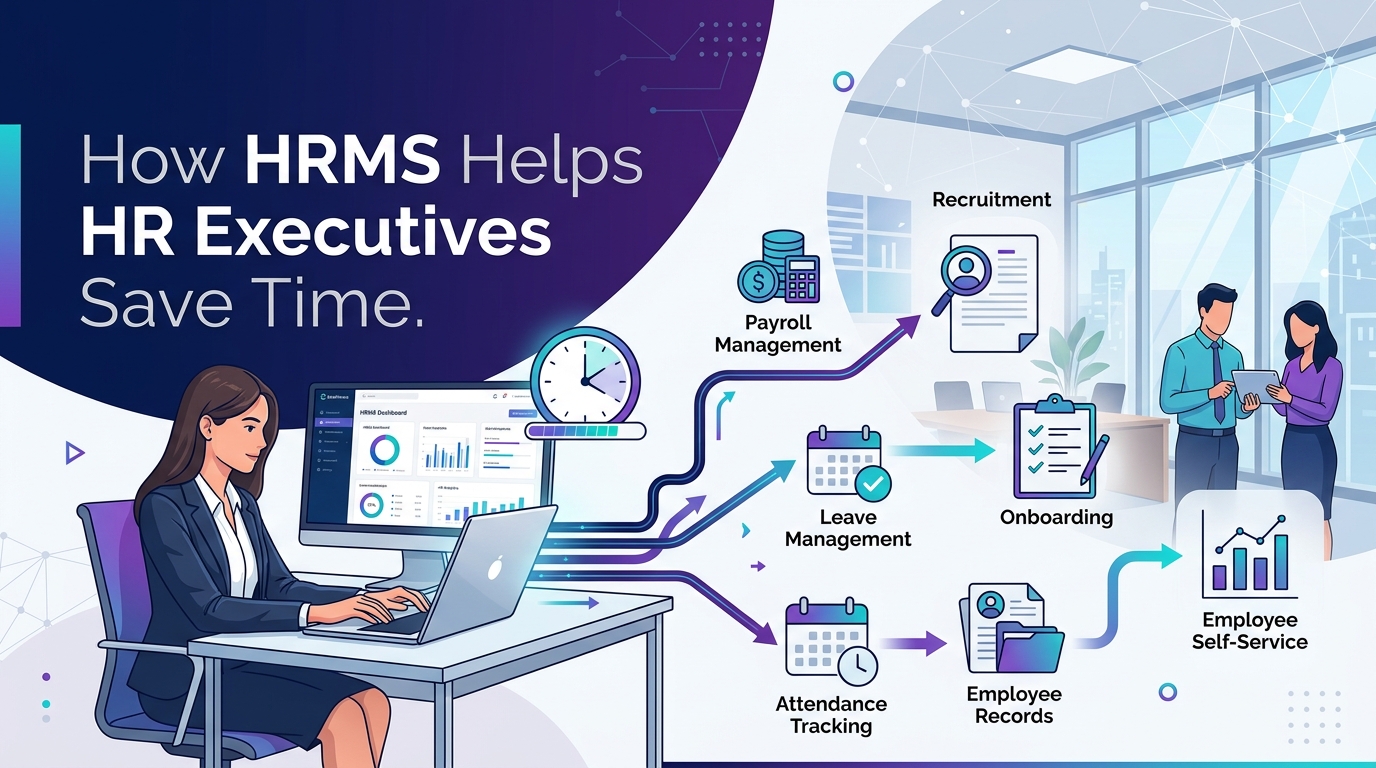
A Human Resource Management System (HRMS) helps solve this challenge by automating repetitive tasks, streamlining HR processes, and improving overall efficiency.
In this article, we’ll explore ten ways an HRMS helps HR executives save valuable time while enhancing productivity across the organization.
Digital HR Transformation and Process Automation
1. Centralized Employee Data Management
Managing employee information manually can be time-consuming and prone to errors.
An HRMS centralizes all employee records into a single, secure platform, allowing HR teams to access information instantly whenever needed.
Benefits
- Single source of employee information
- Reduced paperwork
- Faster data retrieval
- Improved accuracy
2. Recruitment Made Simple
Hiring involves multiple stages, including job posting, candidate screening, interview scheduling, and onboarding.
Modern HRMS platforms often include an integrated Applicant Tracking System (ATS) that automates much of the recruitment process.
Benefits
- Automated job postings
- Candidate tracking
- Interview scheduling
- Reduced administrative workload
This allows HR teams to focus on selecting the best candidates instead of managing repetitive hiring tasks.
3. Faster Employee Onboarding
Traditional onboarding processes involve extensive paperwork and coordination between multiple departments.
With an HRMS, onboarding becomes largely automated.
Features Include
- Digital document collection
- Automated employee profile creation
- Policy acknowledgment workflows
- Employee self-service onboarding
This creates a smoother experience for both HR teams and new hires.
4. Simplified Attendance Tracking
Tracking attendance manually can be tedious and often leads to inaccuracies.
HRMS platforms integrate with biometric devices, mobile attendance apps, and cloud-based systems to automate attendance management.
Benefits
- Real-time attendance tracking
- Instant attendance reports
- Reduced manual effort
- Better workforce visibility
5. Efficient Leave Management
Managing leave requests through emails and spreadsheets can quickly become overwhelming.
An HRMS automates leave applications, approvals, and leave balance calculations.
Benefits
- Self-service leave requests
- Faster approvals
- Automated leave tracking
- Improved transparency
Managers can approve requests with just a few clicks while employees can monitor their leave balances anytime.
6. Payroll Automation
Payroll processing is one of the most time-intensive HR responsibilities.
An HRMS automates salary calculations, deductions, tax compliance, and payroll processing.
Benefits
- Accurate payroll calculations
- Reduced payroll errors
- Compliance management
- Faster salary processing
This significantly reduces administrative effort while ensuring employees are paid accurately and on time.
7. Employee Self-Service Portals
Employee self-service portals empower employees to manage many HR-related tasks independently.
Employees can:
- Update personal information
- Download payslips
- Apply for leave
- Access company documents
- Track attendance
This reduces HR dependency and frees HR executives to focus on strategic priorities.
8. Streamlined Performance Management
Manual performance evaluations often require multiple spreadsheets, forms, and follow-ups.
HRMS platforms centralize performance management activities, including:
- Goal setting
- Performance reviews
- Continuous feedback
- Employee development tracking
Benefits
- Improved visibility into employee performance
- Reduced administrative burden
- Better alignment with organizational goals
9. Real-Time Reporting and Analytics
Generating HR reports manually can take hours or even days.
HRMS software provides real-time dashboards and customizable reports covering:
- Attendance
- Recruitment
- Turnover
- Payroll
- Employee demographics
Benefits
- Faster decision-making
- Data-driven insights
- Accurate reporting
- Improved strategic planning
HR executives can confidently present up-to-date workforce data to leadership teams.
10. Better Compliance Management
Keeping up with labor laws and compliance requirements can be challenging.
An HRMS helps organizations maintain compliance through automated recordkeeping, policy tracking, and audit-ready reports.
Benefits
- Reduced compliance risks
- Automated notifications
- Centralized documentation
- Easier audits
This allows HR teams to spend less time on paperwork and more time supporting business growth.
Why HR Technology Is No Longer Optional
As organizations continue embracing digital transformation, HR professionals must leverage technology to remain effective and competitive.
Modern HR teams are increasingly expected to:
- Use workforce analytics
- Drive employee engagement
- Improve talent retention
- Support strategic business goals
Organizations that implement HRMS software gain significant operational efficiencies while enabling HR leaders to make informed, data-driven decisions.
Conclusion
The responsibilities of today’s HR executives extend far beyond administrative tasks. From recruitment and onboarding to payroll, compliance, and employee engagement, HR teams are expected to manage increasingly complex functions.
An HRMS helps reduce administrative burdens by automating routine tasks, improving accuracy, and enhancing employee experiences.
By adopting the right HRMS solution, organizations can empower HR professionals to focus on strategic initiatives that drive productivity, improve employee satisfaction, and support long-term business growth.
As workplaces continue to evolve, HRMS technology will remain a critical tool for building efficient, future-ready HR operations.
Frequently Asked Questions
What does an HR executive do?
An HR executive manages key HR functions such as recruitment, onboarding, payroll, attendance, employee relations, performance management, and compliance within an organization.
How does an HRMS help HR executives?
An HRMS streamlines HR operations through automation, centralized employee data management, self-service tools, reporting, and process optimization.
Is HRMS knowledge important for HR executives?
Yes. Modern HR professionals are increasingly expected to understand HRMS platforms to improve efficiency, leverage workforce analytics, and support data-driven decision-making.
Does HRMS improve payroll processing?
Absolutely. HRMS software automates payroll calculations, tax deductions, compliance requirements, and salary processing while reducing errors and saving time.
Similar blogs you may like