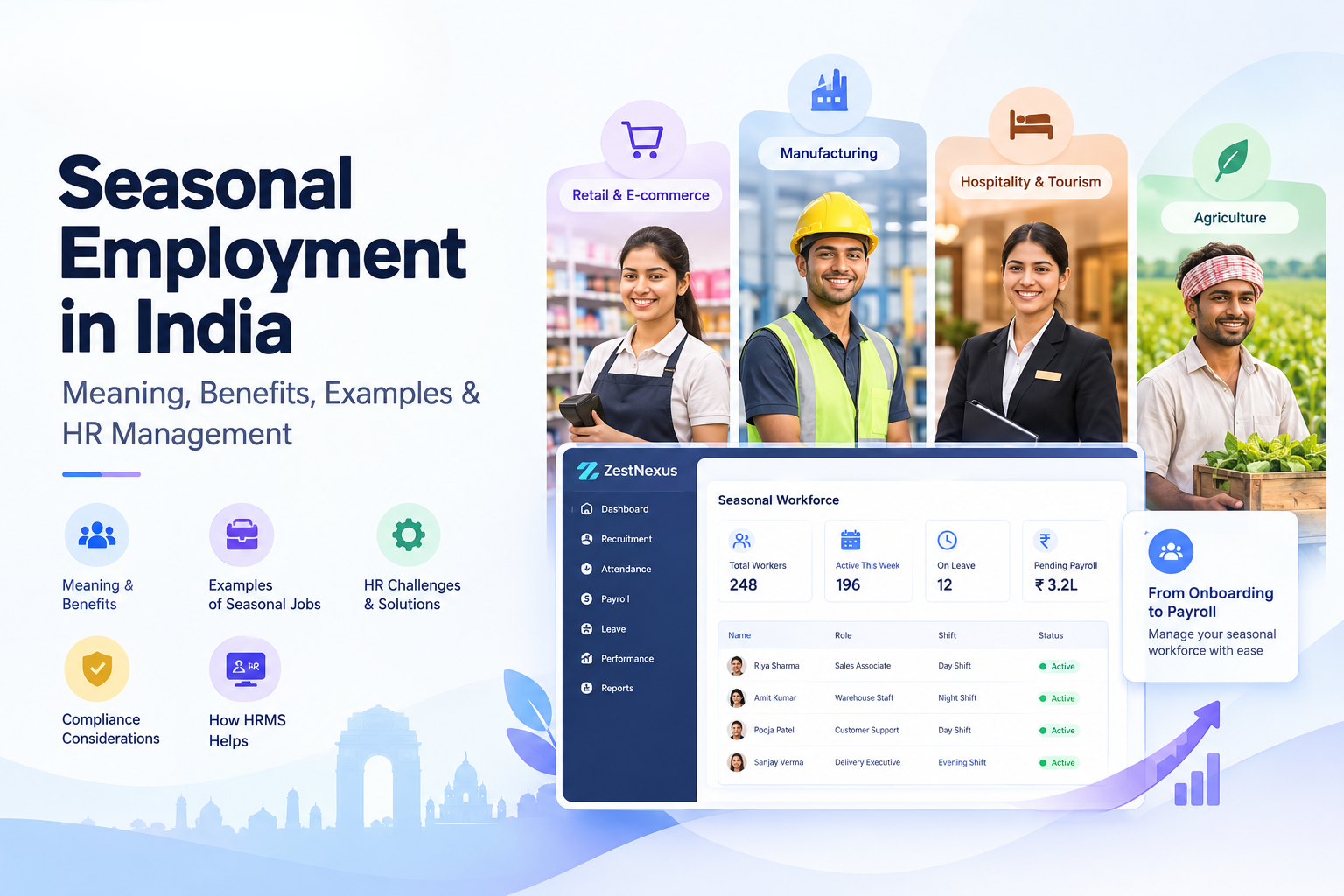
Seasonal Employment in India: Meaning, Benefits, Examples and HR Management
A guide to seasonal employment in India, including common examples, benefits for employers and workers, and HR practices for managing seasonal teams.
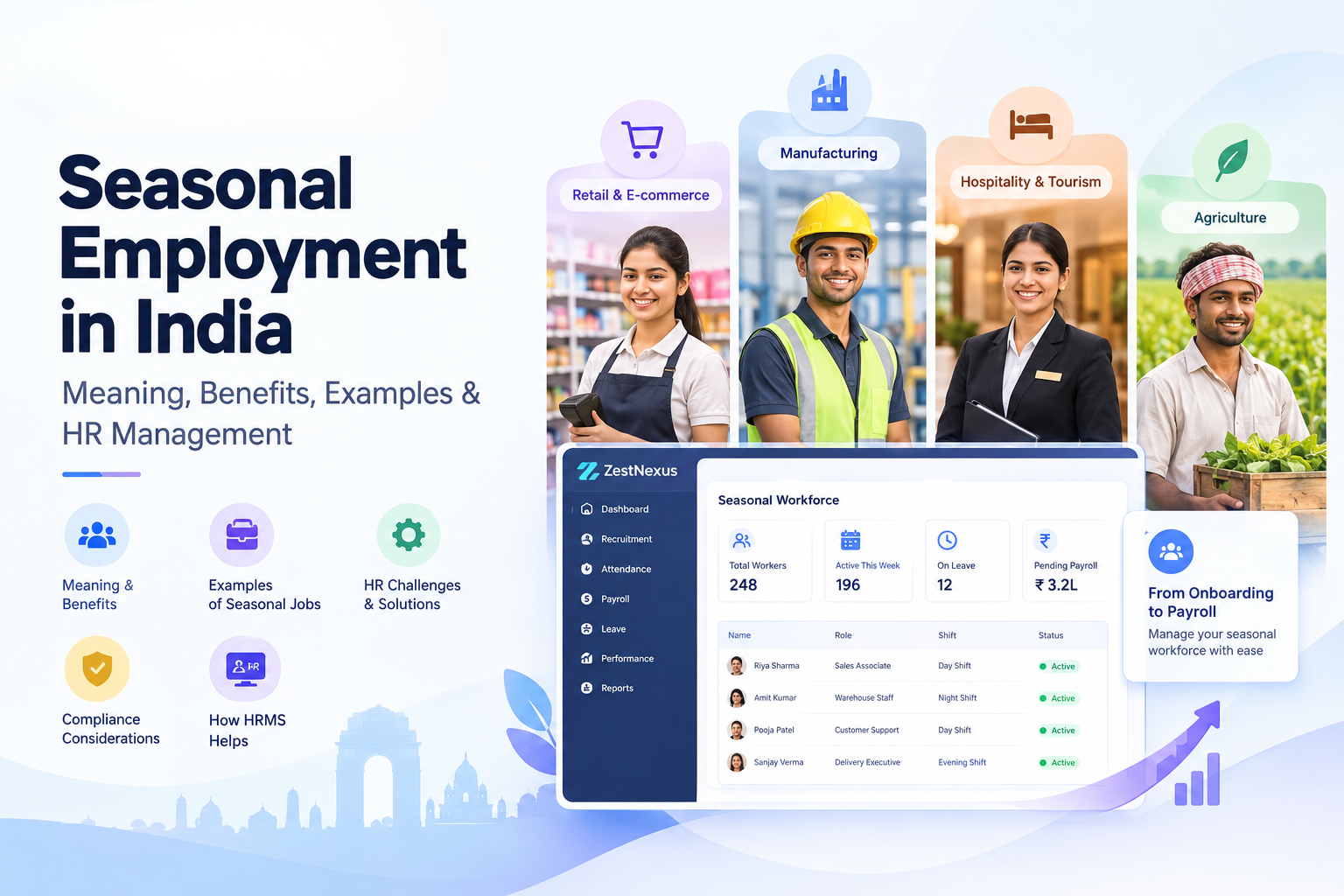
Seasonal employment is work that rises and falls with predictable business cycles. Employers hire people for a limited period to meet higher demand, while workers gain short-term earning opportunities and experience.
Common examples in India
Seasonal roles are common in retail during festive sales, hospitality during travel peaks, agriculture during planting and harvest periods, logistics during high-volume delivery seasons, events, tourism, education, and customer support.
Benefits for employers
- Scale the workforce when demand rises without carrying permanent headcount all year
- Control labour costs during quieter periods
- Bring in skills for a short project or campaign
- Maintain service levels during festivals, harvests, or peak sales
Benefits for employees
Seasonal work can provide income flexibility, exposure to new industries, practical experience, and a pathway to future permanent work. Clear expectations are especially important because the engagement has a defined end date.
HR management best practices
Plan ahead
Use historical demand, sales forecasts, and staffing data to estimate headcount and start recruitment early. Last-minute hiring usually raises cost and reduces candidate quality.
Use clear terms
Document the role, duration, work hours, pay, attendance expectations, reporting manager, and applicable benefits. Treat statutory and local compliance requirements with the same care as for any other employee category.
Onboard for speed and safety
Offer concise role training, workplace policies, safety guidance, and system access. A simple first-day checklist helps seasonal workers contribute sooner.
Schedule and engage fairly
Use transparent shifts, accurate attendance records, and regular manager check-ins. Recognise good work and keep a pool of reliable seasonal talent for the next peak period.
Using HR technology
An HRMS helps teams centralise seasonal employee records, automate attendance and leave tracking, manage payroll inputs, and maintain visibility across multiple locations. ZestNexus makes it easier to plan, onboard, and manage a variable workforce without losing operational control.
Frequently Asked Questions
What is seasonal employment?
Seasonal employment is temporary work that increases during predictable periods of higher business demand.
Which industries commonly use seasonal workers?
Retail, hospitality, agriculture, logistics, tourism, events, and customer support often need additional workers during peak periods.
Can seasonal employees become permanent?
Yes. Strong performers may be considered for future seasonal assignments or permanent vacancies when business requirements allow.
How should employers manage seasonal teams?
Plan demand in advance, document employment terms clearly, provide focused onboarding, maintain accurate attendance and payroll records, and communicate regular expectations.
Similar blogs you may like