HR Analytics: Definition, Benefits, Challenges & Future Trends
Learn what HR analytics is, its benefits, challenges, key metrics, future trends, and how HRMS software can help organizations make data-driven workforce decisions.
Human Resources dictates far more than just hiring employees, keeping records, and payroll. HR teams are today under increasing pressure to understand workforce trends, increase employee performance, reduce attrition, and support better business decisions.
That is exactly where HR analytics comes into the picture.
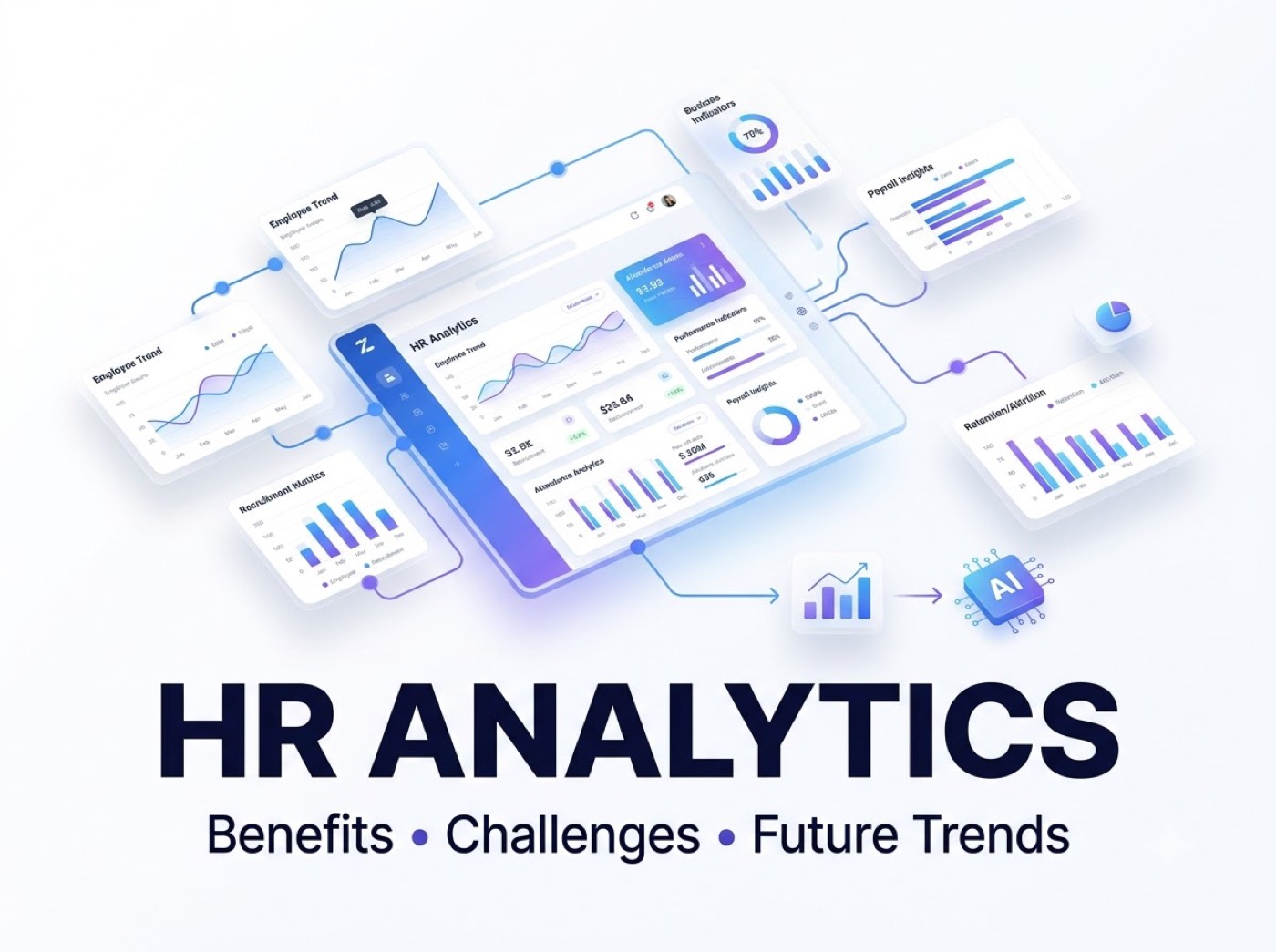
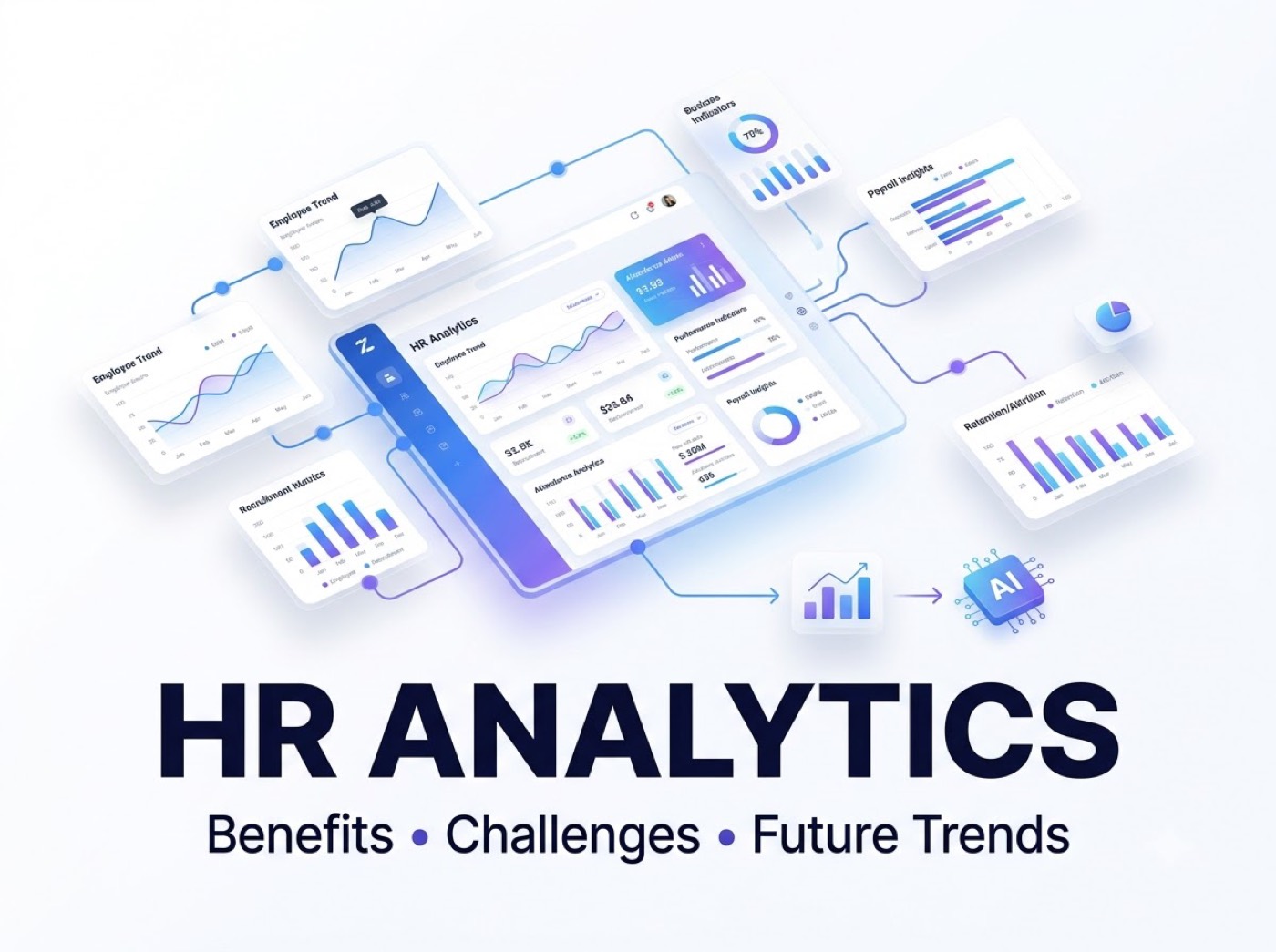
HR analytics enables organizations to convert employee data into informative insights. HR analysis allows organizations to identify patterns by analyzing recruitment, attendance, performance records, payroll information, and employee engagement data to address workforce and retention challenges.
The right HRMS and analytical tools can move organizations toward workforce analytics and reinforce evidence-based decisions.
What Is HR Analytics?
HR analytics is the practice of collecting, analyzing, and interpreting employee and workforce data to make informed HR and business decisions.
Instead of relying only on assumptions or intuition, data helps HR teams answer important questions such as:
- Why do employees leave the organization?
- Which departments have higher absenteeism?
- When do you need to hire employees?
- Which recruitment channels provide the best candidates?
- Which employees or teams are performing well?
- Where are training and development needs emerging?
- How can workforce costs be optimized?
HR analytics combines HR data with business intelligence to highlight trends, patterns, and relationships across the workforce.
Modern HRMS platforms can simplify this process by integrating information from different areas of human resources into one centralized system.
Why Is HR Analytics Important?
The role of HR teams has expanded significantly over the years. Modern HR departments are involved in areas such as:
- Workforce planning
- Employee development
- Performance management
- Recruitment
- Employee retention
- Employee engagement
- Workforce optimization
- Business planning
Without accurate workforce data, it can be difficult to understand what is happening within an organization.
HR analytics provides detailed visibility into workforce performance and can help HR professionals identify potential issues before they become larger problems.
For example, if an organization notices increasing absenteeism in a department, HR can analyze attendance data along with workload information, employee feedback, and other relevant workforce information to better understand the trend.
This supports a shift from a primarily reactive HR function toward a more proactive and data-informed role.
Key Benefits of HR Analytics
When used effectively, HR data can improve several areas of workforce management.
Better Recruitment Decisions
Recruitment generates a significant amount of data, including:
- Applications
- Interview results
- Hiring sources
- Time-to-hire
- Cost-per-hire
- Offer acceptance rates
HR analytics can help organizations analyze this data and understand which recruitment channels are producing better candidates.
HR teams can track recruitment metrics to:
- Monitor time-to-hire
- Track cost-per-hire
- Compare recruitment sources
- Identify hiring bottlenecks
- Improve workforce planning
This can support a more streamlined recruitment process and provide useful information for long-term talent planning.
Improved Employee Retention and Engagement
Employee turnover can be expensive and disruptive for organizations.
HR analytics can help organizations analyze employee attrition patterns based on factors such as:
- Department
- Tenure
- Attendance
- Performance
- Employee feedback
- Other available workforce information
HR teams can use these insights to identify workforce trends that may require attention and take appropriate action to support employee experience and retention.
This allows organizations to identify potentially concerning trends instead of waiting until employees resign.
More Effective Performance Management
Performance data can help HR teams and managers understand how employees and teams are progressing against organizational goals.
Analytics can help identify:
- Employees who may need additional support
- Training and development requirements
- Team performance trends
- Progress against goals
- Areas where managers can improve feedback
This can make performance management more continuous and data-driven.
Improved Workforce Planning
HR analytics can provide organizations with a clearer view of their current workforce and help them prepare for future needs.
By analyzing:
- Employee numbers
- Attrition trends
- Hiring requirements
- Attendance data
- Workforce metrics
organizations can make more informed decisions about workforce allocation and future hiring.
Common HR Analytics Challenges
While HR analytics can provide valuable insights, implementing a data-driven strategy can also present challenges.
Common challenges include:
- Poor data quality
- Lack of analytics skills
- Data privacy and security
- Resistance to data-driven decision-making
Poor Data Quality
Analytics is only as reliable as the data being analyzed.
HR teams may find it difficult to generate meaningful insights when employee information is:
- Incomplete
- Outdated
- Duplicated
- Fragmented across multiple systems
A centralized HRMS can help organizations maintain more consistent workforce data and make information easier to access.
Lack of Analytics Skills
Not all HR professionals have a background in data analysis.
While HR teams may not need advanced technical skills to create simple reports, complex analytics tools can become difficult to use if they require extensive technical knowledge just to access basic metrics.
Therefore, simplicity and easy-to-understand dashboards are important considerations when selecting an HR analytics solution.
Data Privacy and Security
Employee data is highly sensitive.
Organizations should ensure that workforce information is accessed, stored, and processed responsibly.
HR technology should provide appropriate:
- Access controls
- Data protection
- Security measures
- Privacy controls
Organizations also need to consider applicable compliance requirements when managing employee information.
Resistance to Data-Driven Decision-Making
Moving from experience-driven HR toward a data-informed approach may require a change in organizational culture.
Some managers and HR professionals may initially prefer relying on their own experience or assumptions.
The goal should not be to eliminate human judgment. Instead, organizations can combine professional expertise with reliable workforce data to support better-informed decisions.
Role of HRMS Software in Supporting HR Analytics
When HRMS data is centralized, employee information can be connected and managed more efficiently.
An HRMS can consolidate important HR information such as:
- Attendance
- Payroll
- Recruitment
- Performance
- Employee records
Instead of maintaining separate spreadsheets and systems for each function, organizations can use a centralized HR platform.
Modern HR management systems can support HR teams across several areas.
Centralize HR Data
Keep employee information in a single system and reduce dependence on fragmented files and spreadsheets.
Create Actionable Reports
Reports and dashboards can help HR teams track important workforce metrics and identify trends.
Improve Data Accessibility
A centralized platform allows HR professionals and managers to access relevant workforce information more easily, supporting timely decision-making.
Reduce Manual Work
Automating repetitive HR processes can help reduce manual effort and administrative work.
Support Better Decision-Making
When workforce data is structured and accessible, HR leaders can use objective information to support workforce and business decisions.
HR Analytics Metrics That HR Teams Should Track
The most relevant metrics depend on an organization’s objectives. However, several HR metrics can provide useful insights into workforce performance.
Recruitment Metrics
- Time-to-hire
- Cost-per-hire
- Number of applicants
- Recruitment source performance
- Offer acceptance rate
Attendance Metrics
- Absenteeism rate
- Attendance trends
- Leave utilization
- Late arrivals
- Department-wise attendance
Employee Retention Metrics
- Employee turnover rate
- Attrition rate
- Average employee tenure
- Department-wise attrition
- Retention trends
Performance Metrics
- Goal completion
- Performance ratings
- Employee progress
- Training requirements
- Team performance trends
Payroll Metrics
- Payroll costs
- Overtime
- Salary trends
- Statutory deductions
- Payroll-related discrepancies
When these metrics are tracked together, HR teams can develop a more holistic view of workforce health.
Future Trends in HR Analytics
As organizations adopt more advanced HR technology, HR analytics continues to evolve.
AI and Predictive Analytics
Artificial intelligence and machine learning can help organizations analyze large amounts of workforce data and identify patterns.
HR teams can potentially use AI-supported analytics to:
- Identify workforce trends
- Understand patterns
- Anticipate workforce needs
- Support proactive decision-making
This represents a shift from simply understanding what happened toward identifying what may happen next.
Employee Experience Analytics
Employee experience has become an important part of workforce strategy.
Employee data and feedback can help organizations understand different stages of the employee journey and identify opportunities to improve engagement and workplace experience.
Data-Driven Diversity and Inclusion
HR analytics can help organizations track workforce diversity and identify potential gaps in areas such as:
- Hiring
- Employee development
- Career advancement
When used appropriately, workforce data can help organizations evaluate whether workplace initiatives are producing the intended results.
Real-Time HR Dashboards
HR teams increasingly need timely workforce information instead of relying only on manually prepared reports.
Real-time or regularly refreshed dashboards can allow HR leaders to respond more quickly when workforce metrics change.
HR Analytics and the Future of HR
HR analytics is not about replacing HR professionals with numbers.
It is about providing HR professionals with better information to support decision-making.
Data can help reveal what is happening across the workforce, while HR leaders provide the human context needed to understand why something is happening and determine what actions may be appropriate.
The combination of technology, analytics, and human judgment can help organizations build more productive, engaged, and resilient workplaces.
How ZestNexus Makes HR Management Easier for Organizations
When HR processes are integrated into a single platform, managing workforce data can become more streamlined.
ZestNexus combines key HR functions such as:
- Core HR
- Employee document management
- Attendance management
- Leave management
- Payroll
- Performance management
- Recruitment
- Employee self-service
Centralized HR information and analytics can help HR teams spend less time managing spreadsheets and repetitive administrative work and more time focusing on people and business priorities.
ZestNexus brings together daily HR information such as:
- Attendance data
- Payroll information
- Employee performance
- Workforce trends
- HR reports
This centralized approach can help organizations use workforce information to support day-to-day HR and business decisions.
Conclusion
HR analytics is an important part of modern workforce management.
By analyzing HR data related to recruitment, attendance, performance, payroll, and employee retention, organizations can identify workforce trends and use these insights to improve processes and manage their workforce more effectively.
However, simply collecting data is not enough for successful HR analytics.
Organizations also need:
- Accurate data
- Secure systems
- User-friendly reporting tools
- Centralized HR information
- A data-driven culture
With a centralized HRMS such as ZestNexus, organizations can bring core HR processes together and make workforce data easier to manage and understand.
The future of HR analytics is not simply about having more data.
It is about making better-informed decisions with the right data.
Similar blogs you may like