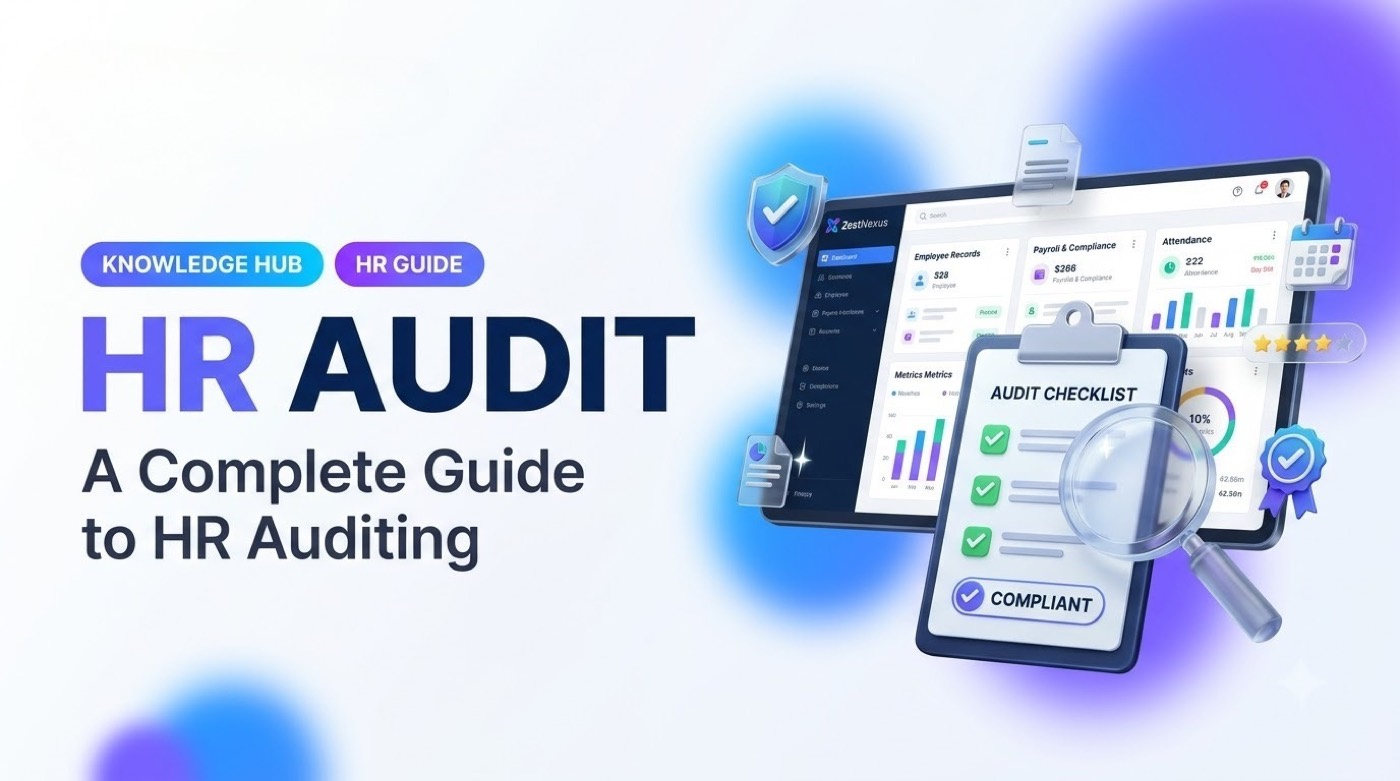
What Is an HR Audit?
Learn what an HR audit is, which HR processes it reviews, and why organisations use it to find policy gaps and strengthen compliance.
An HR audit (Human Resource Audit) is a systematic evaluation of an organization’s human resource policies, programs, practices, processes, and records. It helps determine how effectively HR functions are operating, identify areas for improvement, and ensure compliance with applicable employment laws and regulations.
An HR audit evaluates whether an organization has effective HR operations and whether its employees are being managed in alignment with business objectives.
The process of conducting an HR audit typically involves reviewing various HR functions, including:
- Employee recruitment and hiring processes
- Employee records and personnel documentation
- Payroll practices and salary calculations
- Work schedules and attendance management
- Leave and vacation policies
- Employee performance evaluations
- Employee benefits and compensation
- Employee training and development programs
- Compliance with applicable labour laws and regulations
Example of an HR Audit:
An organization conducts an HR audit to review employee records, payroll calculations, leave policies, and compliance with the Employees’ Provident Funds (EPF) and Employees’ State Insurance (ESI) Acts.
During the audit, the HR department discovers that some employees have incomplete documentation and that attendance is being tracked inconsistently across departments.
Based on these findings, the organization updates its HR procedures, improves employee record management, and standardizes attendance tracking to address the identified issues.
Why Is an HR Audit Important?
An HR audit helps organizations evaluate their HR practices, minimize compliance risks, and improve overall workforce management. Some of its key benefits include:
- Identifies Gaps in HR Policies and Procedures: Helps organizations discover outdated policies, inefficient processes, and areas that require improvement.
- Maintains Statutory and Regulatory Compliance: Ensures HR practices align with applicable labour laws, employment regulations, and statutory requirements.
- Improves Employee Record Management: Helps maintain accurate, complete, and up-to-date employee documentation.
- Evaluates Recruitment and Retention Practices: Assesses hiring strategies and employee retention efforts to identify opportunities for improvement.
- Enhances HR Efficiency: Identifies opportunities to streamline administrative tasks, improve workflows, and optimize HR operations.
Similar blogs you may like